


The phrase tablet babysitter makes parents bristle because it sounds judgmental. It is also the phrase many parents quietly use when the tablet has become the only thing that reliably buys ten peaceful minutes.
This is the uncomfortable part: the tablet works. It calms a room fast, it travels easily, and it keeps kids absorbed while adults cook dinner, answer messages, fold laundry, or recover from a long day. The problem is not that parents are lazy. The problem is that the easiest tool in the house is often the stickiest one.
That is why the backlash is growing. Not a dramatic throw-the-tablet-away backlash. A practical one. Parents are starting to ask whether every bored moment needs a glowing rectangle, and whether paper puzzles, coloring pages, mazes, word searches, and simple activity books deserve a bigger place on the table again.
The Uncomfortable Truth About Tablet Calm
Tablet calm can look like peace from across the room. The child is quiet. The adult gets a break. No one is arguing. But some kinds of quiet come with a hidden cost: when the screen turns off, the room can feel louder than it did before.
Paper activities create a different kind of quiet. A maze, coloring page, word search, or kid-friendly puzzle book still gives the child something to do, but the pace is slower. There is no autoplay. There is no endless next video. There is a visible stopping point.
That visible stopping point matters. A page can be finished. A word list can be circled. A Sudoku grid can be solved. A coloring section can be completed. The child gets a small win, and the adult gets an activity that does not have to escalate into one more episode.
Why Paper Puzzles Hit Differently
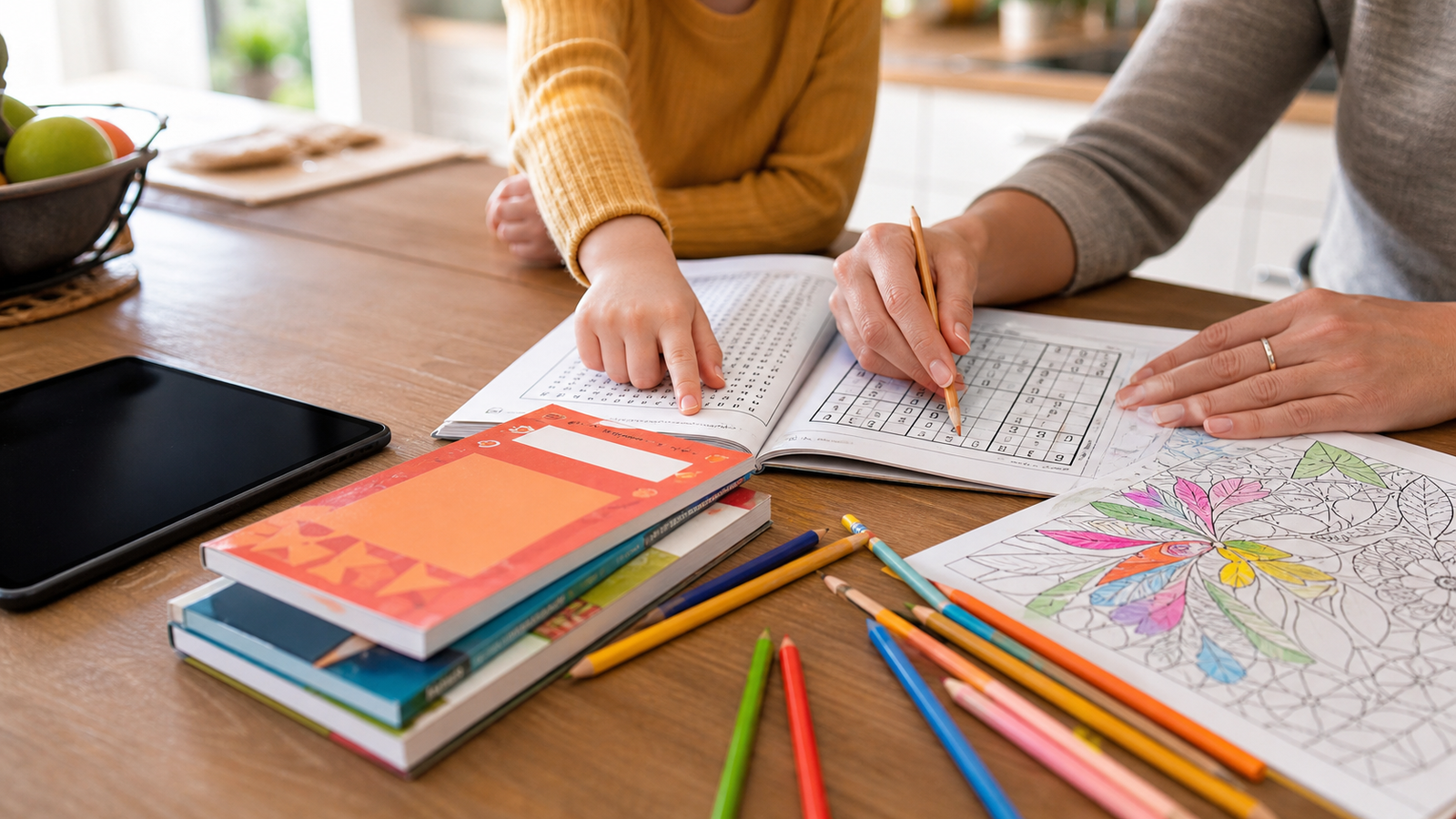
Paper puzzles are underrated because they look too simple. That is the point. A printed page makes the rules obvious: find the word, follow the path, shade the shape, place the number, finish one corner. The activity does not need a password, update, charger, algorithm, or subscription.
The best paper activities also invite nearby adults to join without taking over. A parent can circle one word. A grandparent can color one flower. An older sibling can race through a maze. The table becomes shared without demanding that everyone do the same thing.
This is where puzzle books beat most screen-time arguments. They do not require a moral lecture. They only require availability. If the tablet is the only visible option, it wins. If the table has a basket with pencils, coloring pages, word searches, mazes, Sudoku, and activity books, the choice changes.
The 15-Minute Swap That Actually Works
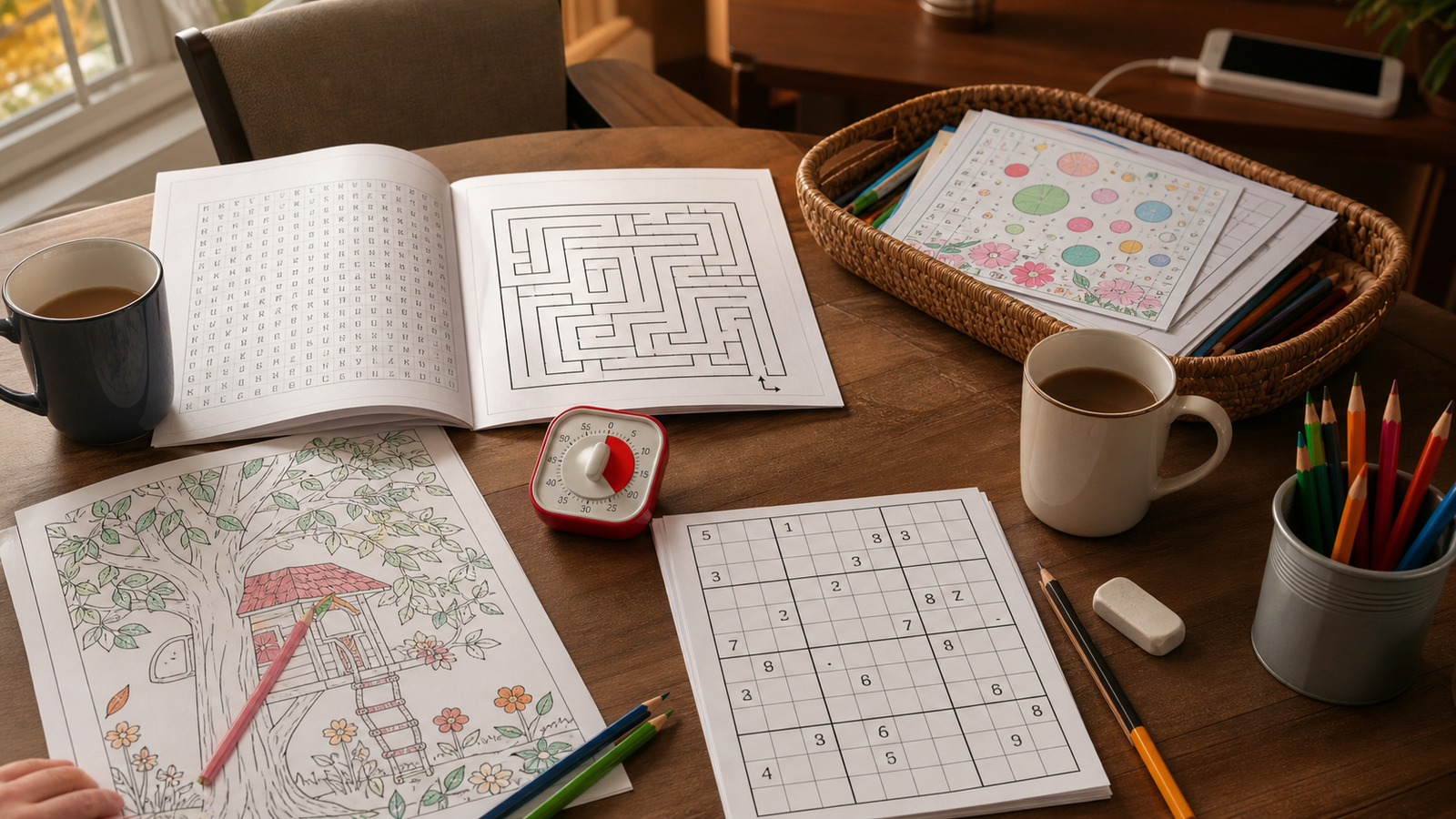
Do not start with a total screen ban. Start with a trade that is too small to fail: fifteen minutes of paper before the next screen. Put the tablet or phone on a charger away from the table, then put two or three paper options within reach.
For a preschooler, choose an ABC coloring page, a dinosaur activity page, or a simple maze. For an older child, choose harder mazes, word searches, hidden-picture pages, or beginner Sudoku. For adults and seniors, add large-print word search, adult coloring, or a Sudoku book so the reset does not feel like a kids-only rule.
The key is choice. Let the child pick the page, the pencil color, or the first puzzle. Choice gives ownership without handing over an infinite feed. Once the timer ends, stop while the activity still feels good. A screen-free routine lasts longer when it feels like an invitation instead of a punishment.
What to Put on the Table
A strong paper basket does not need much. Add sharpened pencils, an eraser, colored pencils, a few printable coloring pages, one kids activity book, one word search book, and one logic puzzle option such as Sudoku or mazes.
Keep the mix visible and easy to grab. If the basket is buried in a closet, it will not compete with the tablet. If it lives near the kitchen table, couch, or homework spot, it becomes part of the room's default setup.
Rotate the options every week. Kids notice novelty, even when the activity is old-school. A new dinosaur page, ocean maze, silly word list, or fantasy coloring page can feel fresh without requiring a new app.
Make the Argument Without Making It a Fight
The fastest way to lose this argument is to turn paper into medicine and screens into candy. Kids understand that framing immediately, and many adults do too. Paper puzzles should feel enjoyable, not virtuous.
Try language that keeps the pressure low. Say, one page before one video. Say, pick a puzzle for the table. Say, color with me for ten minutes. The goal is not to prove that screens are bad. The goal is to make the first non-screen choice easier.
Parents also deserve honesty. Some days the tablet will win. Travel days, sick days, deadline days, and exhausted days are real. The backlash is not about perfect parenting. It is about refusing to let the most addictive option become the only reliable routine.
Where PuzzlePlay Books Fits
PuzzlePlay Books is built for that exact middle ground: practical paper activities that are easy to start, gift, share, and repeat. Kids can use coloring books, ABC activity pages, dinosaur themes, and printable playroom pages. Adults can reach for Sudoku, word search, large-print puzzles, or detailed coloring books.
That mix matters because family screen habits are rarely solved by one rule. They change when the room has better defaults. A puzzle book on the table is not dramatic, but it is visible. It asks for a pencil, not a password.
The Takeaway
The tablet babysitter backlash is not really about hating tablets. It is about noticing that convenience has been doing too much of the parenting, relaxing, and entertaining. Paper puzzles will not solve every family fight, but they can give bored hands somewhere better to land.
Put the tablet down for one page. Not forever. Just one page. That is how a backlash becomes a routine.