
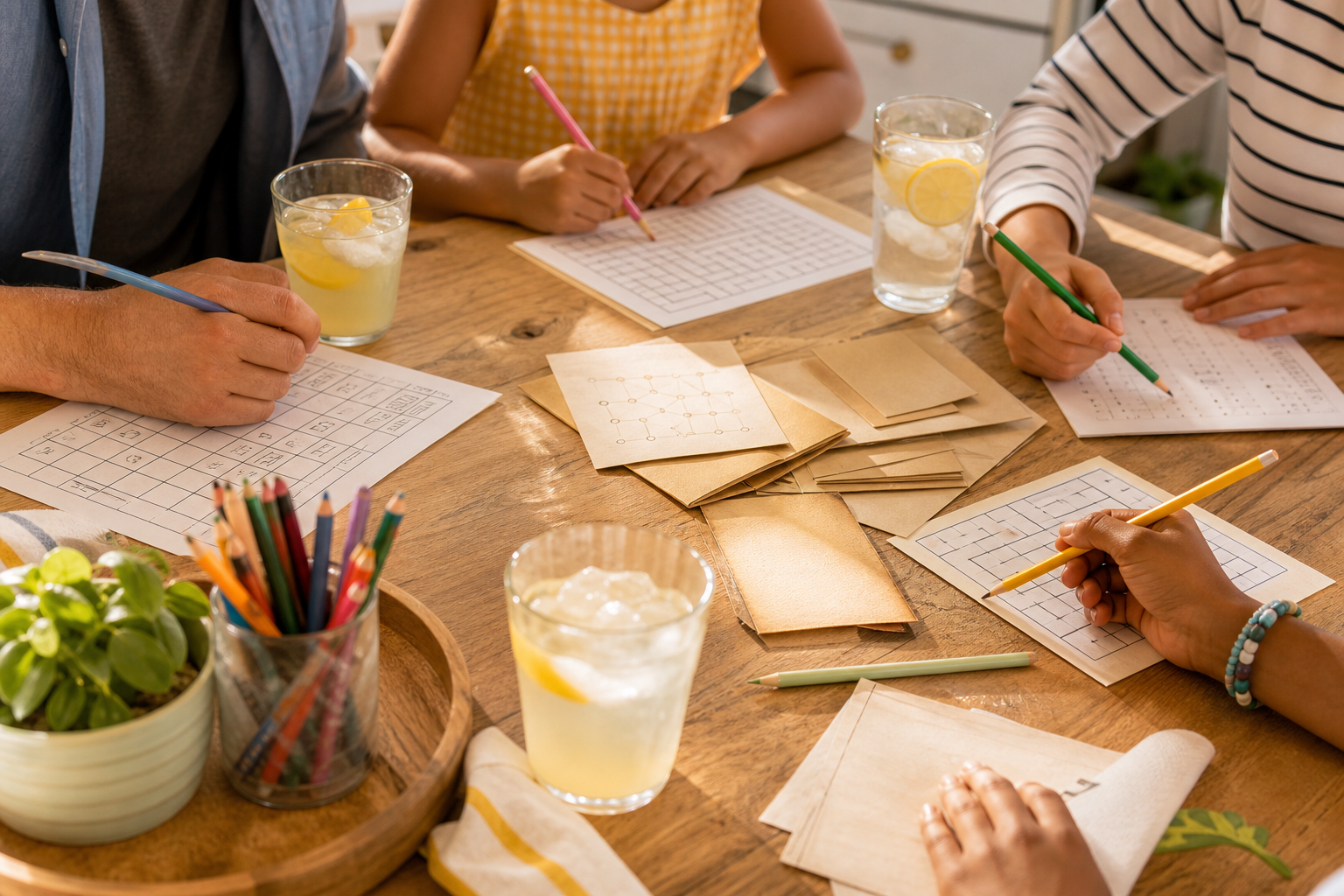


Summer does not need another vague activity list. When kids are restless, parents are busy, and camps or classrooms need something that feels fresh, a printable puzzle circuit gives everyone a simple promise: solve five short challenges, collect five clues, and earn a finish-line reveal.
The idea is easy to run at a kitchen table, library program, summer camp, tutoring session, or family game night. Instead of handing out one worksheet and hoping it holds attention, you build five small stations that feel like a game. Each station takes five to seven minutes, uses paper and pencils, and gives kids a visible win before they move on.
Why This Topic Fits Summer Right Now
Families are looking for screen-free structure during long summer days, but structure only works when it feels doable. The American Academy of Pediatrics Family Media Plan encourages families to make media choices intentionally instead of letting devices fill every gap. Common Sense Media also frames screen-time conversations around habits, balance, and family expectations rather than one-size-fits-all rules.
That makes printable puzzles a useful middle path. They are not a lecture about screens. They are a ready alternative: open the envelope, solve the clue, check the answer, and move to the next station. For educators and camp leaders, the format also fits summer learning goals because kids practice reading directions, pattern recognition, spatial reasoning, vocabulary, and teamwork without feeling like they have been assigned extra school.
The Best Use Case
Use this plan when you need thirty to forty-five minutes of low-prep activity for kids ages seven and up. Younger kids can join with simpler mazes, picture word searches, and adult reading help. Older kids, teens, and adults can handle harder ciphers, logic grids, and timed team play.
The format works especially well for rainy afternoons, heat-wave indoor breaks, library tables, classroom centers, road-trip stops, birthday parties, tutoring warmups, and family nights when nobody wants to learn a complicated board game.
What to Print First
Start with one page per station, one answer card, and one final reveal. You do not need props, locks, or expensive supplies. A strong setup can be made with printer paper, envelopes, pencils, colored pencils, scissors, sticky notes, and a timer.
If you want the activity to feel more like an event, place each puzzle in a numbered envelope. Add a simple scoreboard where teams write the answer from each station. Keep the answer key separate so an adult, teacher, or game host can give quick hints without taking over the solve.
Build the 5-Station Puzzle Circuit
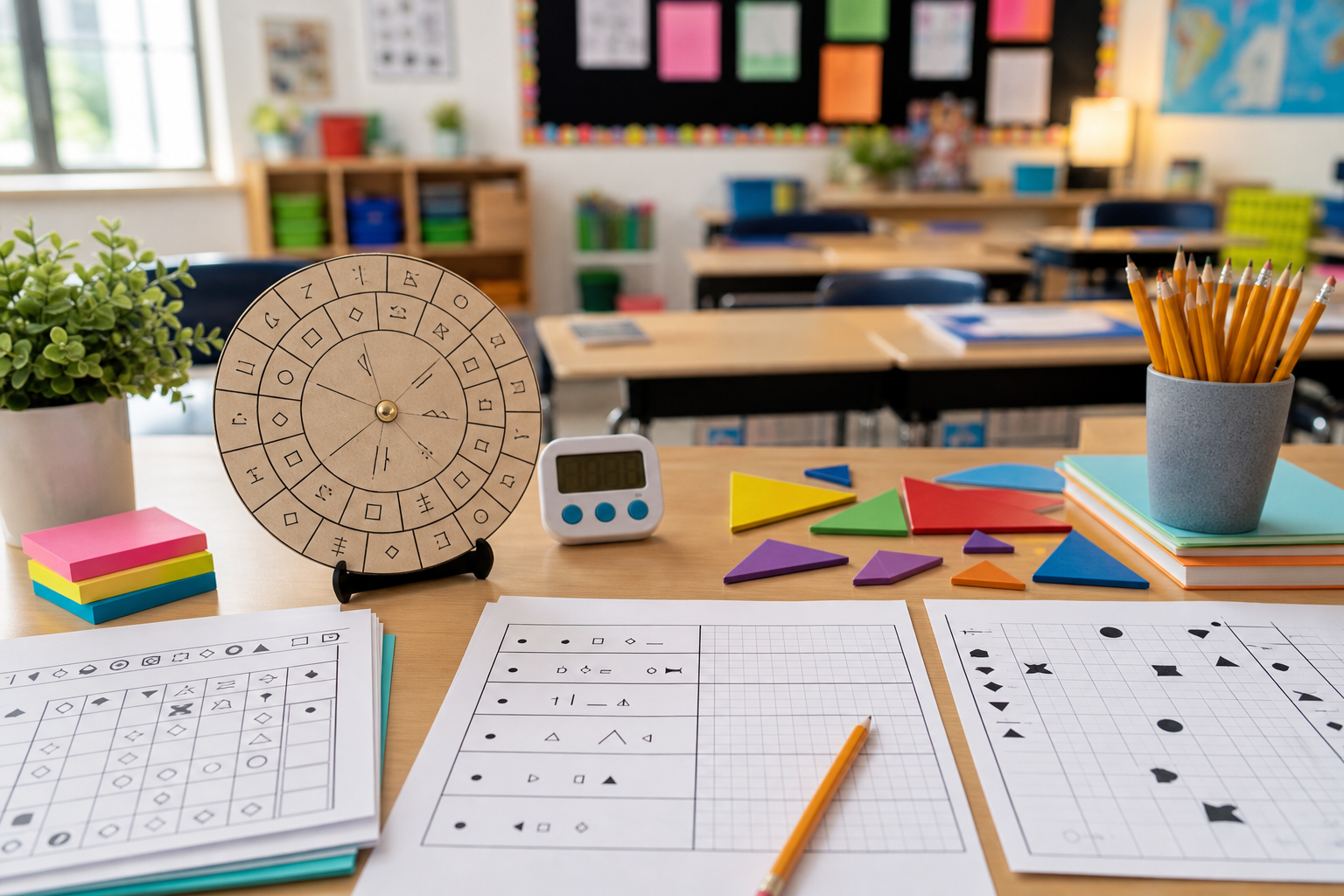
Station 1: Quick Word Hunt. Give solvers a short themed word search with eight to twelve words. Choose a theme that matches the day: beach, backyard, campfire, animals, space, mystery, or kitchen table. The hidden bonus can be the unused letters spelling a short word such as LEMON, CAMP, or NORTH.
Station 2: Maze Map. Print a maze that leads from a start icon to one of several exits. Each exit has a symbol. The correct path gives the team its next symbol for the final code. For younger solvers, keep the maze open and friendly. For older teams, add false paths with decoy symbols.
Station 3: Logic Ladder. Use a small grid or three-clue deduction puzzle. Example: Ava, Ben, and Nia each brought one snack and solved one puzzle first. Ava did not bring grapes. The Sudoku fan brought pretzels. Nia solved the maze. Which snack belongs to each person? Keep the answer small enough to check quickly.
Station 4: Cipher Card. A simple substitution cipher, pigpen-style symbol key, or Caesar shift makes the circuit feel like an escape room. Give the key on the same page for beginners. Hide the key at another station for advanced teams. The decoded message should be short: CHECK THE BLUE ENVELOPE or WRITE 4 AS THE THIRD DIGIT.
Station 5: Pattern Builder. Use tangram shapes, matchstick-style lines, cutout tiles, or a picture sequence. The task might be to build a square from five pieces, spot the next pattern, or arrange four cards in the only order that makes sense. The answer becomes the last piece of the final reveal.
A Simple 35-Minute Schedule
Use five minutes for setup and instructions. Give teams twenty-five minutes to rotate through the stations. Save five minutes for answer checking, the reveal, and a quick celebration. If you are working with a class or camp group, add a two-minute reset between rotations so pencils, cards, and envelopes return to the right place.
The best pacing rule is simple: hints should keep teams moving, not solve the puzzle for them. Try a three-hint ladder. First hint: point to the part of the page they should reread. Second hint: remove one wrong path or option. Third hint: give the next step, but not the final answer.
Practical Examples You Can Use
Backyard Mystery: Station answers spell out the location of a final envelope, such as PORCH or COOLER. Use nature words, a bug maze, a picnic logic puzzle, a leaf-symbol cipher, and a pattern made from garden shapes.
Space Rescue: Teams collect five coordinates to rescue a lost rover. Use planet words, a starfield maze, a rocket-part logic grid, a symbol cipher, and a constellation pattern challenge. The final reveal can be a printable badge or a silly mission certificate.
Classroom Review Quest: Turn vocabulary, math facts, geography, or science terms into puzzle stations. A word search reviews terms, a maze follows correct answers, a logic puzzle sorts facts, a cipher decodes a key sentence, and a pattern station checks visual reasoning.
Make It Work for Classrooms, Camps, and Game Night
For classrooms, treat each station like a center. Put directions at the top of the page, include an example answer, and assign roles: reader, recorder, checker, and materials manager. Roles prevent one fast solver from doing every task and help quieter students contribute.
For camps and libraries, make the first station very easy. Early success lowers the room noise because teams understand the loop. If the group is large, print duplicate station sets so nobody waits too long for a turn.
For family game night, remove the classroom language and add atmosphere. Dim the lights slightly, use envelopes, play instrumental background music, and let everyone choose a team name. Keep the goal cooperative: beat the timer together rather than making one child feel eliminated.
Turn the Circuit Into a Mini Escape Room
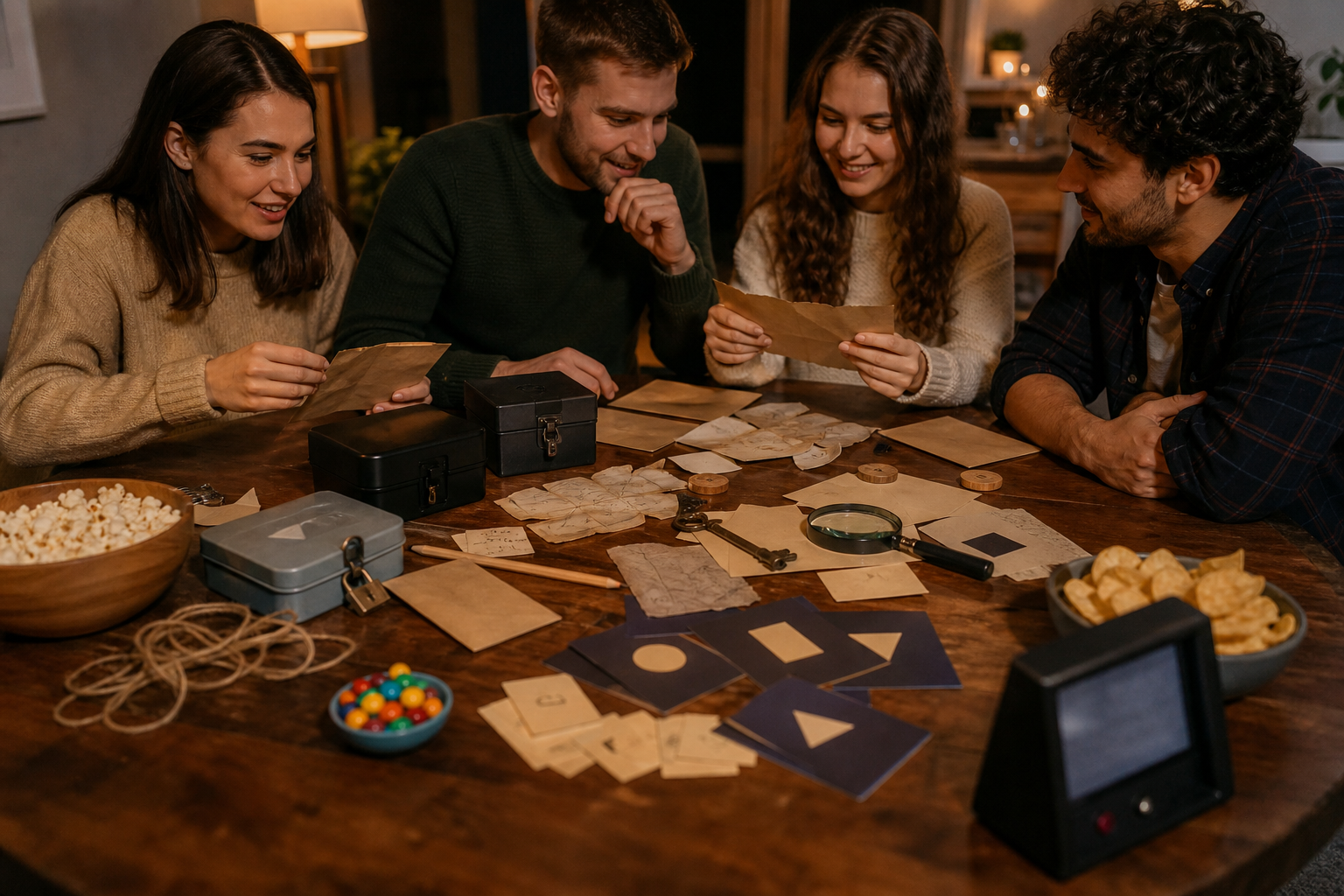
To make the circuit feel like a printable escape room, give every station answer one job in the final code. A word search might reveal the location word. A maze might reveal a shape. A logic puzzle might reveal a number. A cipher might reveal an instruction. A pattern puzzle might reveal the order.
The final reveal does not need a real lock. It can be a folded certificate, a snack clue, a hidden joke, a printable crown, a bonus puzzle, or permission to pick the next family game. The prize should be small. The solve is the event.
Difficulty Tweaks by Age
Ages 5 to 7: Use picture mazes, short word lists, matching cards, and adult-read directions. Let kids circle, color, trace, and sort more than decode.
Ages 8 to 11: Use short ciphers, small logic grids, hidden words, easy Sudoku-style placement, and two-step clues. This is the sweet spot for independent station play.
Ages 12 and up: Add timed rounds, red herrings, layered clues, harder deductions, and answer combinations. Teens and adults enjoy the format more when the puzzles require a little debate.
Keep the Puzzle Circuit Going
Use the Puzzle Book Finder when your family wants a ready-made book after the printable game. Try the Free Puzzles and Games page for quick warmups, the Road Trip Puzzle Kit for travel-ready pages, or Mini Paper Escape Rooms for a deeper party-style version.
Start With Five Envelopes
Want the easiest version? Pick one word search, one maze, one logic puzzle, one cipher, and one pattern challenge, then place them in five envelopes tonight. For more ready-to-use screen-free ideas, browse PuzzlePlayBooks.com puzzle guides, printable activities, and book picks built for family tables, classrooms, and game nights.