
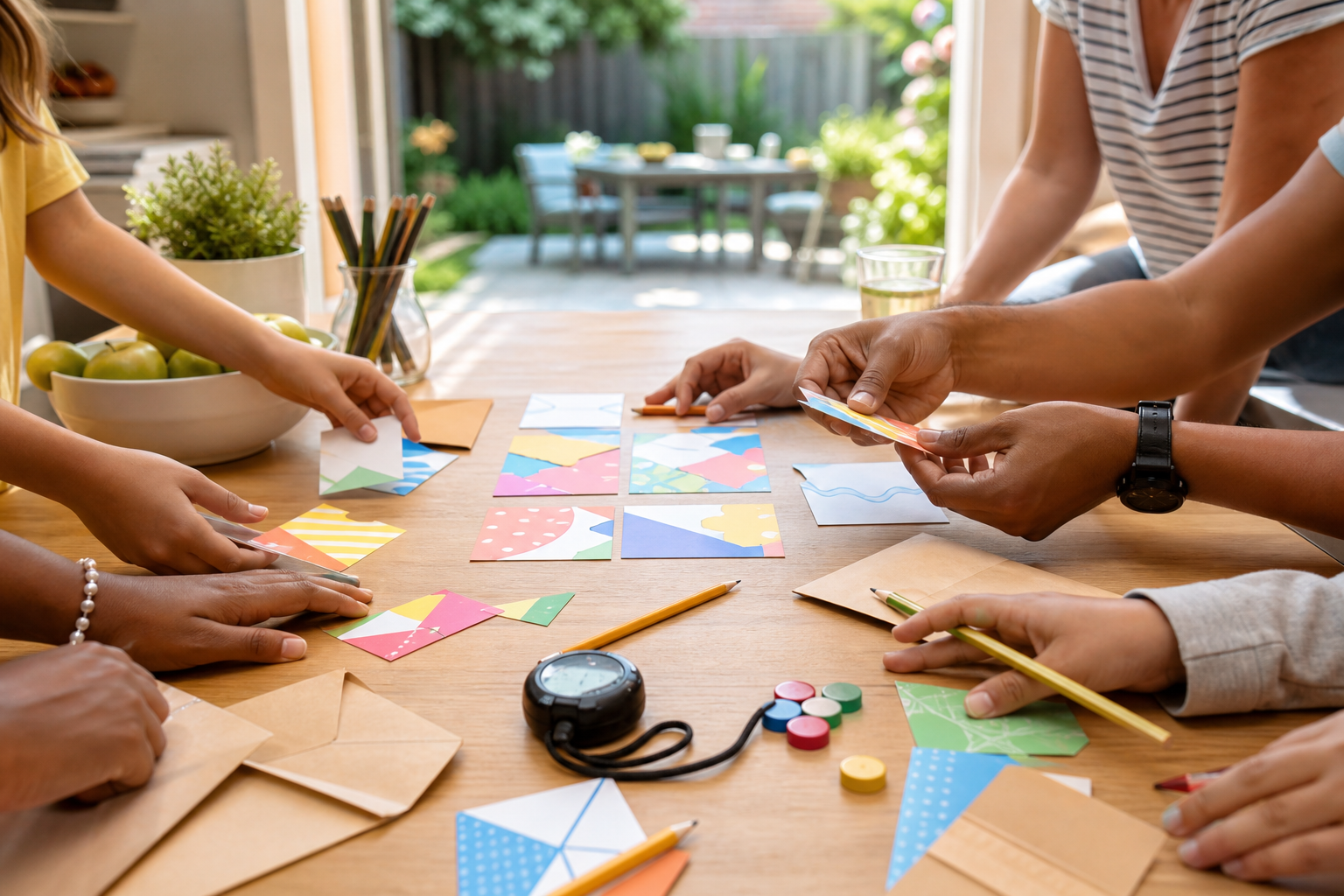


Late July and early August are when schools, homeschool groups, libraries, and parent organizations start looking for one family event that feels lively without becoming a full carnival build. A STEM night puzzle pack fits that moment because it gives adults a table-ready activity that feels interactive, easy to print, and simple to run in short waves.
The timing also lines up with resources adults already use. NASA keeps a live learning-resources hub for hands-on discovery, the U.S. Department of Education keeps family-partnership resources easy to reach, National PTA continues surfacing family resources for school-year planning, and the American Academy of Pediatrics Family Media Plan remains a useful reminder that screen-light defaults work better when adults decide on them before the event starts. In practical terms, this is a strong moment for printable stations that can sit beside a classroom visit, a family science table, a library event, or a homeschool co-op night.
That is why this kind of printable works. It gives families something visible to solve together, lets mixed ages share the same table, and helps organizers run a stronger event without needing one more app, login, or supply-heavy demo.
One important note first: these pages work best during seated, supervised activity windows such as family event tables, classroom centers, library programs, after-school clubs, and kitchen-table follow-up time. They are not for crowded hallways, parking lots, stairwells, pickup lines, or any moment when kids need full attention on moving safely through a shared space.
Why a STEM night puzzle pack works
The best family STEM events feel welcoming, not intimidating.
Printables help most in moments like these:
• while families arrive in waves and need a station they can join without hearing a five-minute speech first.
• while one table finishes fast and another needs a challenge that still feels clear.
• while adults want a hands-on station that does not depend on fragile builds, batteries, or a full cart of supplies.
• while siblings, cousins, and mixed-age pairs need the same theme with different entry points.
• while schools and co-ops want a family event that does not automatically turn into device time.
That is also why the packet should stay practical. Good STEM-night pages should feel like invitations to notice, sort, compare, predict, decode, and explain. They do not need to become mini textbooks before anyone can begin.
What makes a good printable STEM-night packet
The best packet is not the biggest packet. It is the one a host can explain quickly and a family can actually finish.
Aim for:
• one clear task per station.
• familiar household, classroom, or nature vocabulary instead of dense technical language.
• black-and-white friendly layouts that still make sense on common home and school printers.
• one obvious answer box or finish line per page.
• variety across patterns, maps, codes, sorting, comparison, and light logic.
• pages that still work if families join late, rotate early, or pause mid-solve.
If a printable depends on a fragile tower build, one exact classroom kit, or a hidden online answer, it is probably the wrong STEM-night printable. Good family stations survive interruptions and still feel complete.
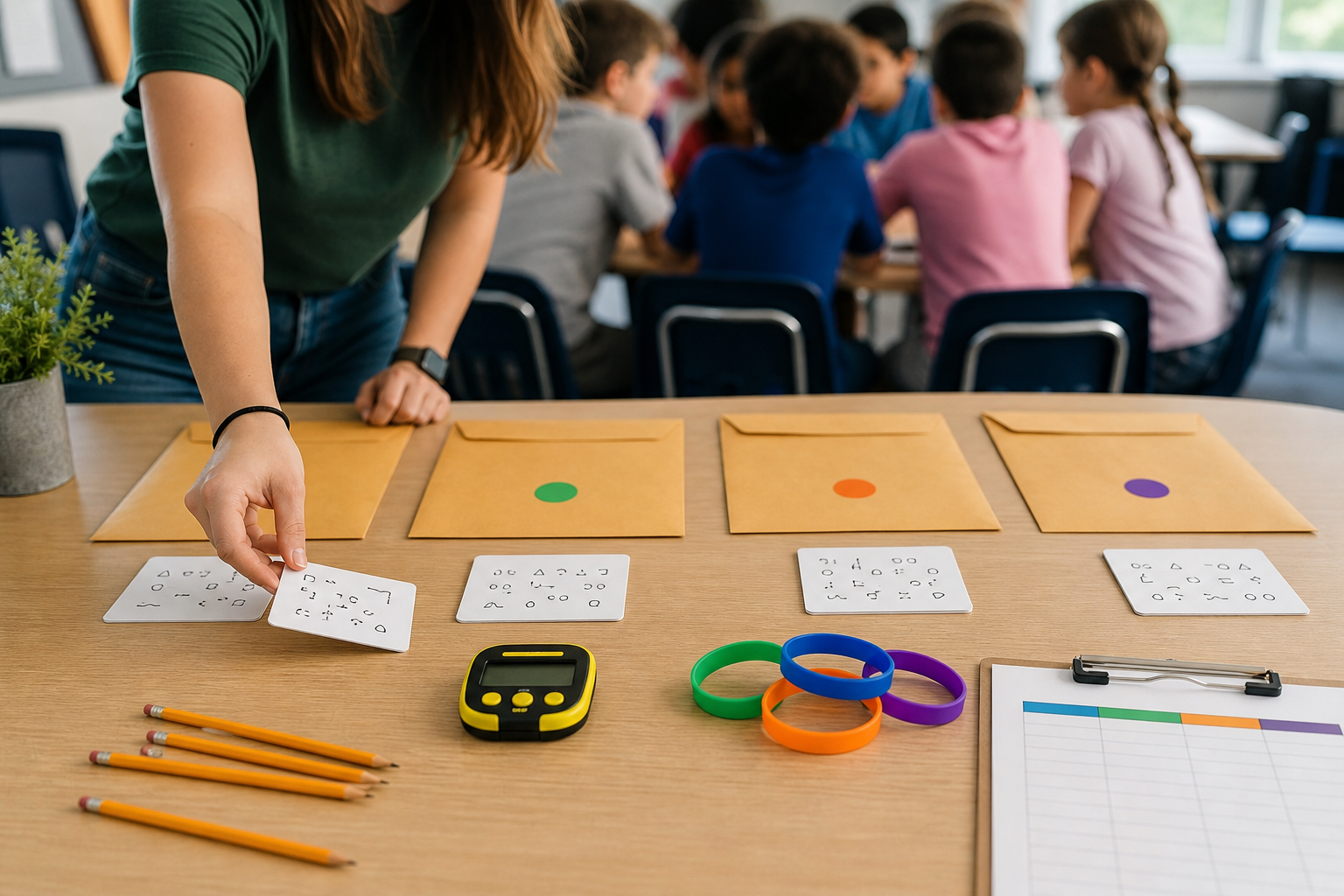
The 15 printable family challenge stations worth building first
1. Pattern-launch strip
Start with a simple shape, color, or icon pattern that gets harder one row at a time. This is a quick confidence builder for younger solvers and late arrivals.
2. Rover route maze
Create a path from launch pad to research site without crossing blocked squares, cliffs, or storm zones. A rover maze feels on-theme and still works with only a pencil.
3. Measure-it estimation boxes
Show lines, paper clips, cubes, or simple classroom objects and ask players to circle the best estimate. Keep the page visual so families can talk through the guess together.
4. Battery-bulb-switch symbol match
Use a basic symbol key and ask players to match a battery, bulb, switch, and wire path to the correct word or picture. This adds STEM flavor without needing a full electronics kit.
5. Planet-order rebus
Use simple pictures, first letters, and clue boxes to reveal words such as MARS, MOON, ORBIT, or VENUS. Rebus pages work well when reading levels vary.
6. Weather-tool category sort
List broad prompts such as rain gauge, thermometer, wind sock, umbrella, cloud chart, and map, then ask families to sort them into tools, weather clues, or helper items. Keep the categories visible so the page feels fair.
7. Build-a-bridge logic mini
Use three builders, three bridge names, and three materials with a few clues. Keep it short enough to solve in under three minutes so the table still keeps moving.
8. Constellation coordinate clue
Build a tiny letter-number grid with stars in different squares. Players decode coordinates to reveal a short word or symbol. This gives older solvers a satisfying map-style challenge.
9. Magnet-or-not picture sort
Ask players to sort common objects such as paper clip, banana, key, spoon, leaf, and crayon into likely magnet or unlikely magnet. The point is conversation and prediction, not a trick question.
10. Shadow-length comparison page
Show three or four simple shadow bars and ask families to rank them from shortest to longest or match them to morning, noon, and late-day scenes. This keeps the task visual and approachable.
11. Robot path codebreaker
Use arrows, letters, or numbers to move a pretend robot across a grid until it lands on the correct square. A small path puzzle feels game-like without needing a screen.
12. Lab-note odd-one-out
Show four small sets of pictures or words and ask which one does not belong. Think goggles, ruler, beaker, and sandwich, or moon, star, cloud, and backpack. Quick comparison pages are easy to explain in ten seconds.
13. Family data-tally card
Give players icons such as rockets, leaves, gears, light bulbs, and stars to count and compare. Then ask one extra question such as which symbol appeared most often or how many more stars than gears were shown.
14. One-letter STEM word ladder
Build a short ladder such as MATH to PATH or GEAR to PEAR with one-letter changes. This gives older readers a stronger language-and-logic challenge without extra supplies.
15. Final LAB password page
Let answers from earlier stations reveal one letter each so the packet ends with LAB, STAR, CODE, or TEAM. A final password makes the event feel finished without needing prizes to do all the work.
Three ready-to-use mini examples
These are simple enough to build before the next family STEM night, school open house, or library challenge table.
Example 1: quick riddle
Clue: I help you test an idea, but I am not the answer. What am I? Answer: a question.
Example 2: tiny codebreaker
Use A=1, B=2, C=3.
12 - 1 - 2
Answer: LAB.
Example 3: mini logic clue
Maya, Theo, and June each picked one page: maze, rebus, and codebreaker.
• Maya did not pick the maze.
• Theo did not pick the codebreaker.
• June did not pick the rebus page.
Answer: Maya picked the codebreaker, Theo picked the rebus page, and June picked the maze.
How to package it for families, teachers, and event planners
A strong STEM-night packet usually needs only six to ten pages.
Start with:
• 2 quick pattern, match, or comparison pages.
• 2 map, measure, or sort pages.
• 2 logic or code pages.
• 1 family tally or reflection page.
• 1 final password page.
• 1 answer key.
That mix is enough for a school event table, co-op night, library challenge corner, classroom STEM week, or kitchen-table follow-up folder without making the packet feel bulky.
A short reusable folder also makes it easier to stay intentional about screens. The AAP Family Media Plan is useful here because the same principle applies before the event starts: if one or two paper stations are already visible, adults do not have to improvise a backup every time a line gets long or a younger sibling needs something to do right now.
School event, classroom, and library version
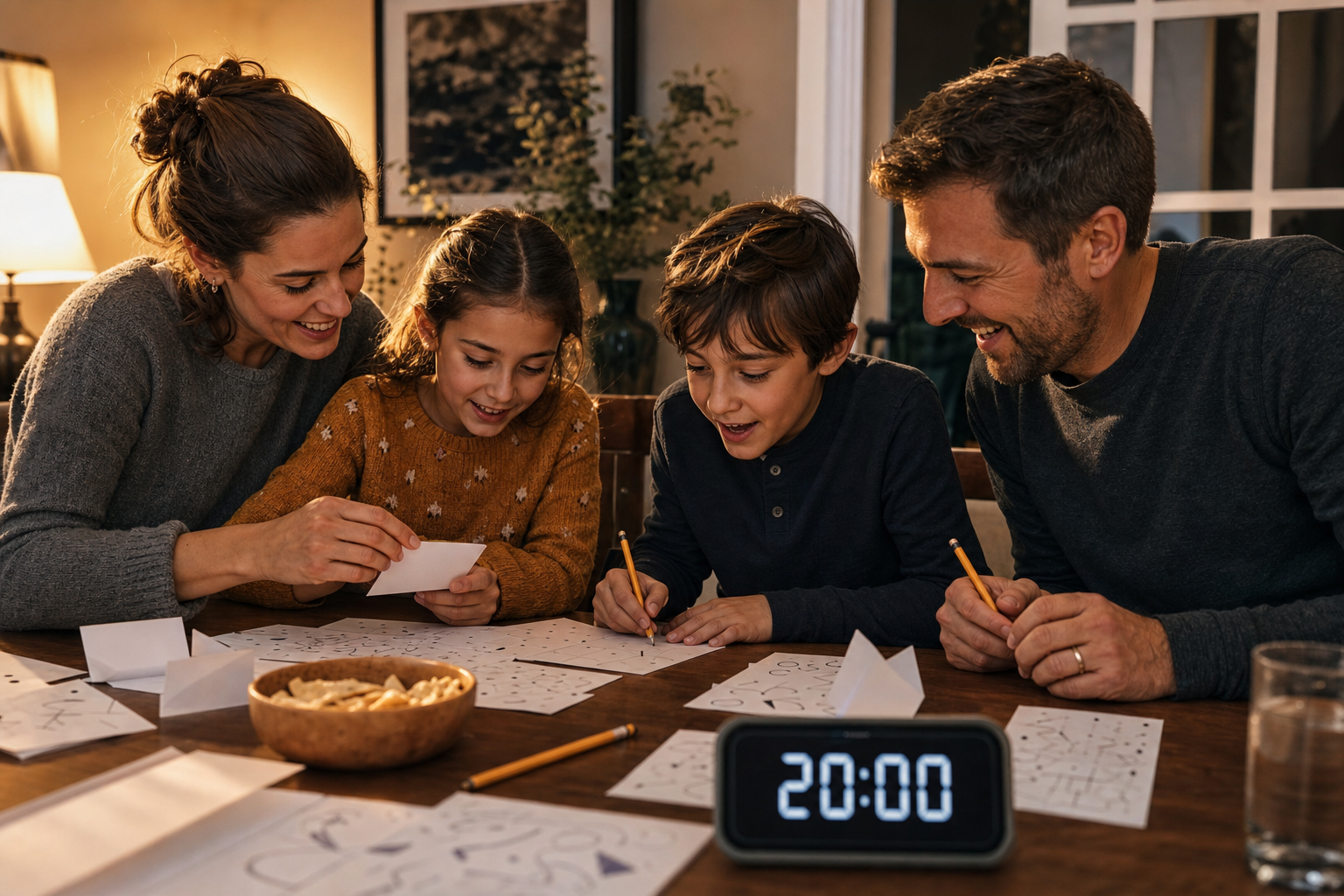
For school events, start families with the pattern strip, symbol match, and data-tally card while the room is still filling. Save the logic mini, codebreaker, and final password for the table where older siblings or adults want a slightly stronger challenge.
For teachers, librarians, homeschool planners, and co-op leaders, this theme works well for family STEM nights, classroom centers, makerspace warmups, library drop-in tables, and mixed-age enrichment blocks. Use the coordinate clue, sort page, one codebreaker, and the final password as short stations, then keep the answer key nearby so the activity stays self-directed.
Because the theme is broad, it also keeps working after the event. Families can reuse the same pages at home, teachers can slide them into a STEM basket, and library staff can bring them back for another seasonal challenge night without rewriting the whole idea.
Fast answers to common buyer questions
What ages work best for STEM-night printables?
Most packs work best for ages 6 and up, with easier pattern, match, and tally pages for younger kids and logic or code pages for older kids, tweens, and mixed-age family groups.
What supplies should the packet assume?
Assume only a printer, pencil, and optional clipboard or folder. If a page needs markers, scissors, devices, or a specialty science kit to function, make that obvious before anyone prints it.
How long should a family STEM puzzle station last?
Five to ten minutes per page is usually enough for a school event table, family station rotation, library drop-in challenge, or classroom center. Shorter stations are easier to explain and easier to reuse.
Do these stations need prizes?
No. A stamp, check mark, sticker, or final password reveal is usually enough. The stronger reward is that families finish something together without the event feeling too long.
Common mistakes to avoid
Do not write directions that read like a standardized test when one short example would do more work.
Do not build every station around one exact science kit, app, or classroom tool that families may not have seen before.
Do not overload pages with dense clip art, tiny labels, or decorative color that makes home printing harder.
Do not let every station become a competition. A family event usually works better when the page invites teamwork first and speed second.
Internal link suggestions
Pair this topic with the Back-to-School Puzzle Hunt, the Printable Puzzle Relay team game, the Summer Brain Camp printable stations article, the Back-to-School Rebus Puzzle Pack, the Brain Break Puzzle Pack, and the free puzzles and games page. Readers who like this theme often want one more low-prep station idea for classrooms, family nights, or mixed-age activity tables.
Call to action
Want more printable-style puzzle ideas that work at family events, classroom tables, library stations, and real after-school schedules? Browse PuzzlePlay Books for family-friendly puzzle guides, low-prep printables, free games, and practical screen-light activities that are easy to print and easy to reuse.