


A state fair day has the same problem as a road trip and a library program at the same time. There is excitement, walking, waiting, snack breaks, and at least one stretch where kids want something to do right now.
This is where a printable state fair puzzle pack helps. It gives families, teachers, camp leaders, and activity buyers a pencil-first way to fill the drive, the ticket line, the picnic table, and the wait before a show without carrying a giant game bag.
The timing is strong right now. Official 2026 fair pages already show the Illinois State Fair, Iowa State Fair, and Missouri State Fair all running August 13 through August 23. That makes a fair-themed printable pack timely for late-July planning, camp calendars, library tables, agriculture units, and family day trips that need one easy paper activity before the midway starts.
A fair packet also works because the setting already provides natural puzzle material: maps, rides, barns, ribbons, food stands, exhibit halls, schedules, and animal names. You do not have to invent a fantasy theme. The fair gives you one.
Why a state fair puzzle pack works
Most fair days are not one continuous thrill ride. They are a chain of short waits and short transitions.
Printables work best in those in-between moments:
• the car ride there.
• the ticket or shuttle line.
• the table break between exhibits.
• the wait for a grandstand show, parade, or judging event.
• the ride home when everyone is tired but not ready to nap.
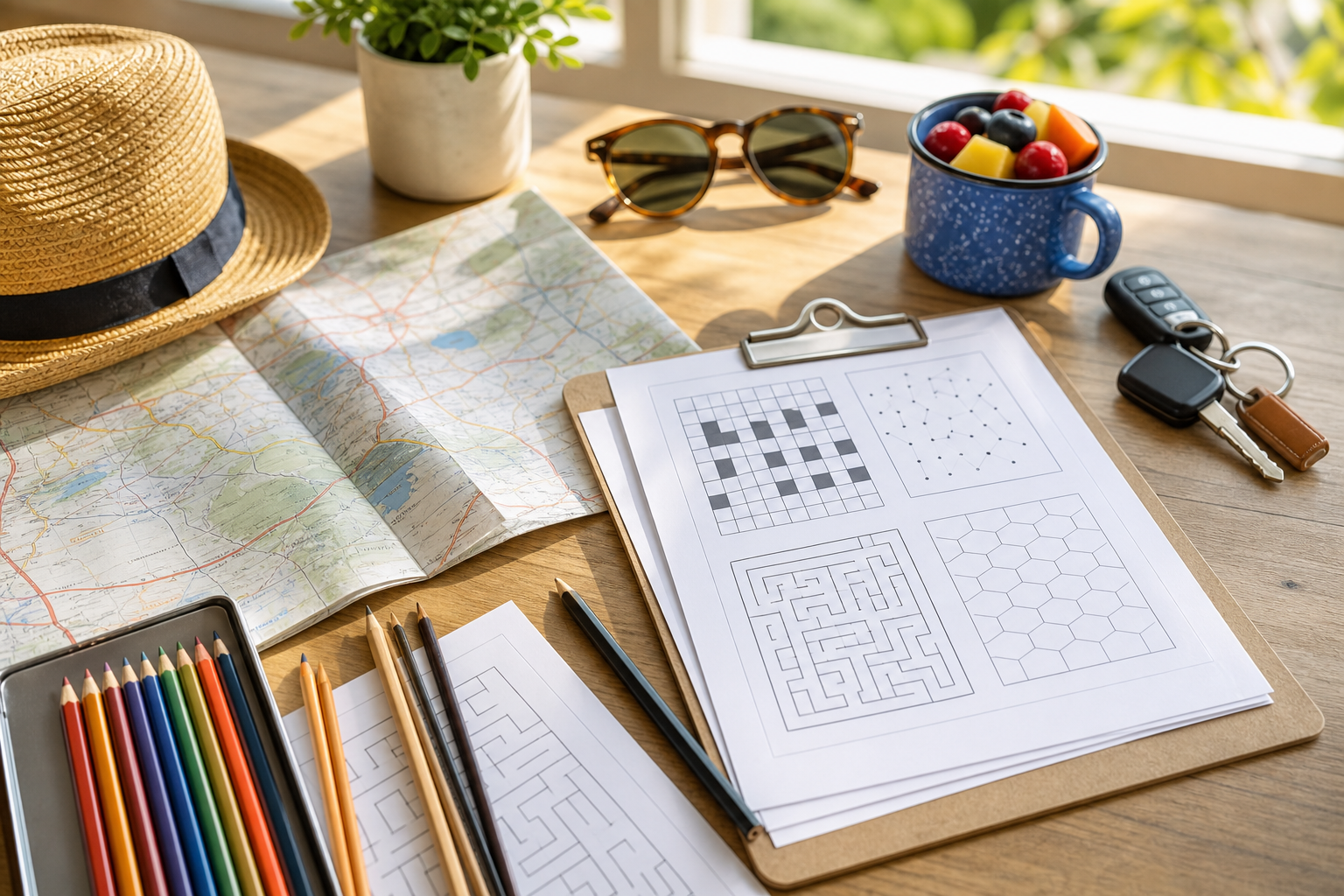
That is also why the packet should stay simple. Use pages that work with a pencil, a clipboard, and a lap. Save scissors, glue, and complicated props for home.
Build around real fair-day constraints
Outdoor events bring practical limits, and the packet should respect them. CDC heat guidance says that if you are outside for a long time and the HeatRisk is red or above, staying in the shade and taking breaks can help. CDC Healthy Pets guidance also emphasizes handwashing, which is a good reminder after barn visits, animal-contact exhibits, or snack breaks near livestock areas.
That means the best fair packet is not fifteen full worksheets in a row. It is a short stack people can pull out, finish fast, and put away when the next event starts.
What to print first
The strongest pack usually needs only six to ten pages.
Aim for:
• one quick opener for the drive or first line.
• one observation page that makes the grounds feel like part of the game.
• one mixed-age page with pictures or simple categories.
• one challenge page for older kids, teens, or adults.
• one final password or mini answer reveal.
• one answer key.
If the packet needs a table, long instructions, or internet access, it will probably stay in the bag.
The 15 printable fair games worth building first
1. Midway word search
Hide approachable words such as ferris wheel, ticket, ribbon, barn, lemonade, music, pie, tractor, and judge. This is a low-friction opener for mixed ages.
2. Blue-ribbon category sort
Give sixteen words and ask solvers to group them into four fair categories such as rides, farm animals, fair foods, and contest items.
3. Fair map route maze
Draw a simple grounds map with the gate, barn, food court, exhibit hall, and stage, then ask players to trace the shortest path through three stops.
4. Livestock letter hunt
Ask solvers to find animal names inside a larger grid or circle only the animals they might see in a livestock barn.
5. Prize-stand math riddle
Use simple price clues for lemonade, tickets, or corn dogs so the page feels practical without becoming a long worksheet.
6. Ribbon-color pattern page
Give a line of ribbons and ask players to continue the color or symbol pattern. This works well for younger solvers and mixed reading levels.
7. Guess-the-booth clue match
Write short clue cards such as smells sweet, plays music, or has handmade art, then match each clue to the most likely fair booth or area.
8. Tractor and tool scramble
Turn farm and fair words into a quick scramble page using terms such as tractor, shovel, hay, stall, grain, and arena.
9. Barn bingo
Fill a small bingo board with broad fair sights such as red ribbon, boots, wagon, sunflower, banner, pie sign, and goat.
10. Midway mini maze
Make a tight one-page maze from the ticket booth to the ferris wheel or carousel. A short maze is easier to finish on a clipboard than a giant one.
11. Which item does not belong
List four items and ask which one does not fit the fair category. Example: saddle, hay bale, ribbon, submarine.
12. Grandstand timeline puzzle
Give four fair-day events and ask solvers to place them in a reasonable order such as gate, barns, lunch, and evening show.
13. State-fair alphabet race
Challenge players to fill the alphabet with fair words, one per letter when possible. This works well in the car or at a picnic table.
14. Fair photo checklist code
Turn a photo checklist into a code page where each completed sight gives one letter toward a final answer such as RIBBON or MIDWAY.
15. Final fair-day password
Let the answers from earlier pages supply letters for one last word such as BARN, BLUE, FAIR, PRIZE, or AUGUST. This is the page that makes the packet feel complete.
How to package it for families, teachers, and activity buyers
A strong fair packet usually works best in three versions.
Family day-trip version
Keep it to six or seven pages, use larger answer spaces, and make sure at least two pages can be solved by a younger child with adult reading help. Put the packet on a clipboard with two pencils and a clear zipper pouch.
Classroom or camp version
Use the fair theme for summer school agriculture units, county-fair field-trip previews, indoor heat-break stations, or library activity tables. Start with the category sort, the map route maze, the ribbon pattern page, and the final password so the set feels practical and easy to rotate.
Buyer-friendly printable version
If you are sharing or selling a fair-themed packet, make the supply list obvious before anyone prints. Assume only paper, pencil, and optional crayons. If a page requires walking around to observe the grounds, label that clearly so it is not mistaken for a sit-down page.
Fast answers to common buyer questions
What ages work best for state fair printables?
Most pages work best for ages 6 and up, with picture-heavy pages and simpler patterns for younger kids and wordplay or logic pages for older kids, teens, and adults.
Do these pages have to be used at a real fair?
No. The same packet can work before a trip, on the drive, during a farm-theme classroom week, at camp, or at a kitchen table that wants a seasonal summer theme.
What supplies should the packet assume?
Assume a printer, pencil, clipboard, and optional crayons. If the page only works with scissors, glue, or a phone, say that before anyone prints.
How long should a fair puzzle session last?
Ten to twenty minutes is usually enough for a line wait, food break, car ride segment, or quiet table window between exhibits.
Common mistakes to avoid
Do not make every page dependent on walking the grounds.
Do not use tiny type that becomes useless in bright sun.
Do not build the whole packet around food-branded mascots, copyrighted characters, or one specific fair layout.
Do not forget shade, water, breaks, and handwashing in the real plan even if the packet itself is on paper.
Do not promise that a printable will carry an entire twelve-hour fair day. The real value is that it rescues the small waiting stretches that usually trigger boredom.
A good state fair packet should feel portable, seasonal, and easy to finish. That is enough to make it useful for August fair calendars, summer family trips, camp activity bins, and classroom farm-theme weeks.