

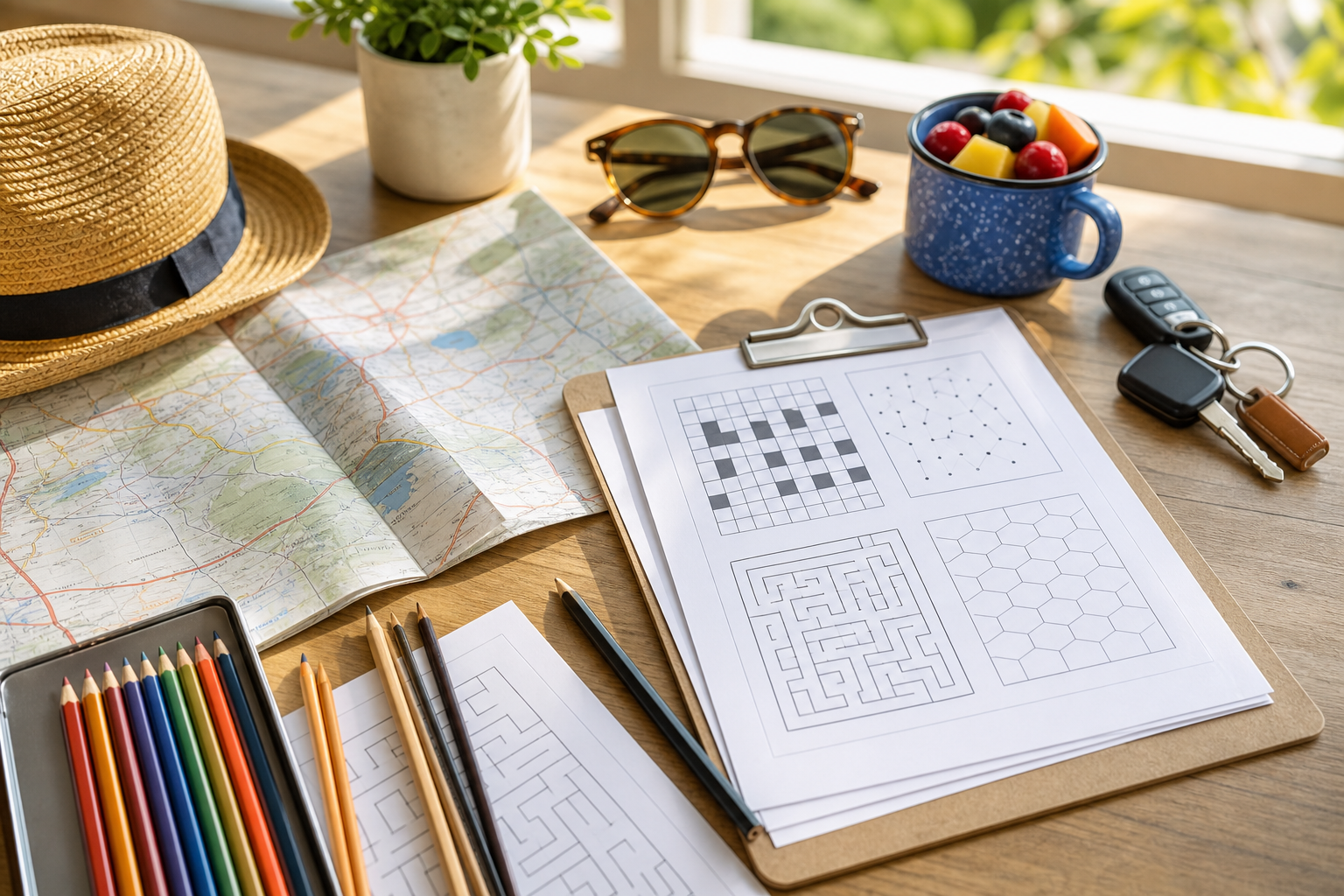


A useful family travel activity does not need a new app, a subscription, or a bag full of plastic prizes. It can be twelve printed pages, two pencils, a clipboard, and one rule: solve something before the next screen comes out.
That is the road trip puzzle kit.
It fits the moment because late June is prime travel-planning season. Live Google News results on June 29, 2026 showed fresh AAA Fourth of July travel coverage, including reports that AAA expected 72.2 million Americans to travel during the holiday week. More people in cars, airports, hotels, camps, and guest rooms means more parents and hosts looking for activities that are portable, quiet, and easy to start.
A printable puzzle kit is also useful for Puzzle Play Books readers. It turns familiar formats, word searches, mazes, Sudoku-style logic, scavenger hunts, and mini escape-room clues, into a travel-ready pack families can print, repeat, and customize.
Why Road Trip Puzzle Kits Work Now
Most road trip activities fail because they ask tired people to organize too much. The best kit works because it is visible, finite, and low-friction.
A child can pull one page from a folder. A parent can explain the first challenge in ten seconds. A grandparent can use the same pack at a cabin table. A camp counselor can turn the pages into station games when rain keeps everyone inside.
The format also helps with screen boundaries without turning the car into a lecture. The American Academy of Pediatrics family media guidance emphasizes planning around media use instead of treating screens as an all-or-nothing battle. A paper kit gives the family a clear first move before the next video, game, or scroll.
The 12-Page Road Trip Kit
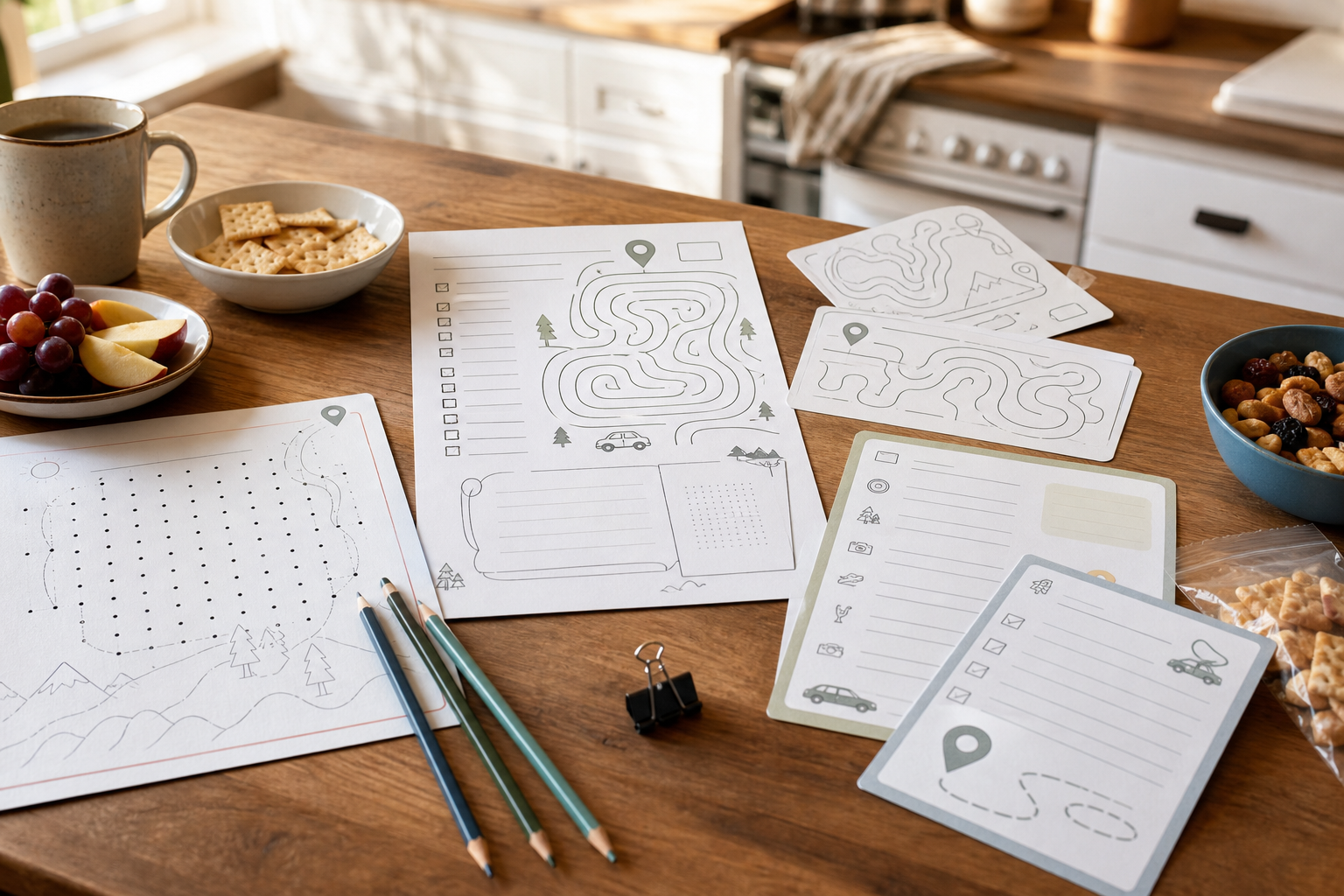
Start smaller than you think. A huge printable bundle sounds generous, but a road trip kit has to survive cup holders, snack crumbs, tired hands, and one missing pencil.
Use twelve pages: one cover/checklist, two word games, two visual hunts, two mazes, two logic puzzles, one mini mystery, one blank create-your-own page, and one score sheet.
The cover page should tell the solver exactly what to do: pick any page, write your name, finish the challenge, and mark the score sheet. Do not make parents explain a rulebook from the front seat.
The two word games can be a travel word search and a category sort. The two visual hunts can be a license plate alphabet hunt and a roadside shape search. The mazes can use map-style paths. The logic pages can be small deduction puzzles, not dense grids. The mini mystery can be four clues that reveal a final destination word.
Keep the blank create-your-own page in the kit because it gives bored kids ownership. Ask them to design a five-word hidden word list, a small maze, or a three-clue riddle for someone else in the car.
What to Print Before You Leave
Print on regular paper if the kit is disposable. Use cardstock only for cards that will be reused. If the drive is long, place pages in a slim folder and clip the active page to a clipboard.
Pack two pencils, one eraser, a small pencil sharpener, and three paper clips. Skip markers unless the car has a stable tray. Colored pencils are calmer, but they still roll away; keep them for hotel tables or campsite downtime.
If multiple kids are using the kit, print one shared score sheet and one copy of each page per solver. Shared pages cause arguments when one person wants to circle and another wants to write tiny notes.
Three Ready-to-Print Puzzle Sets
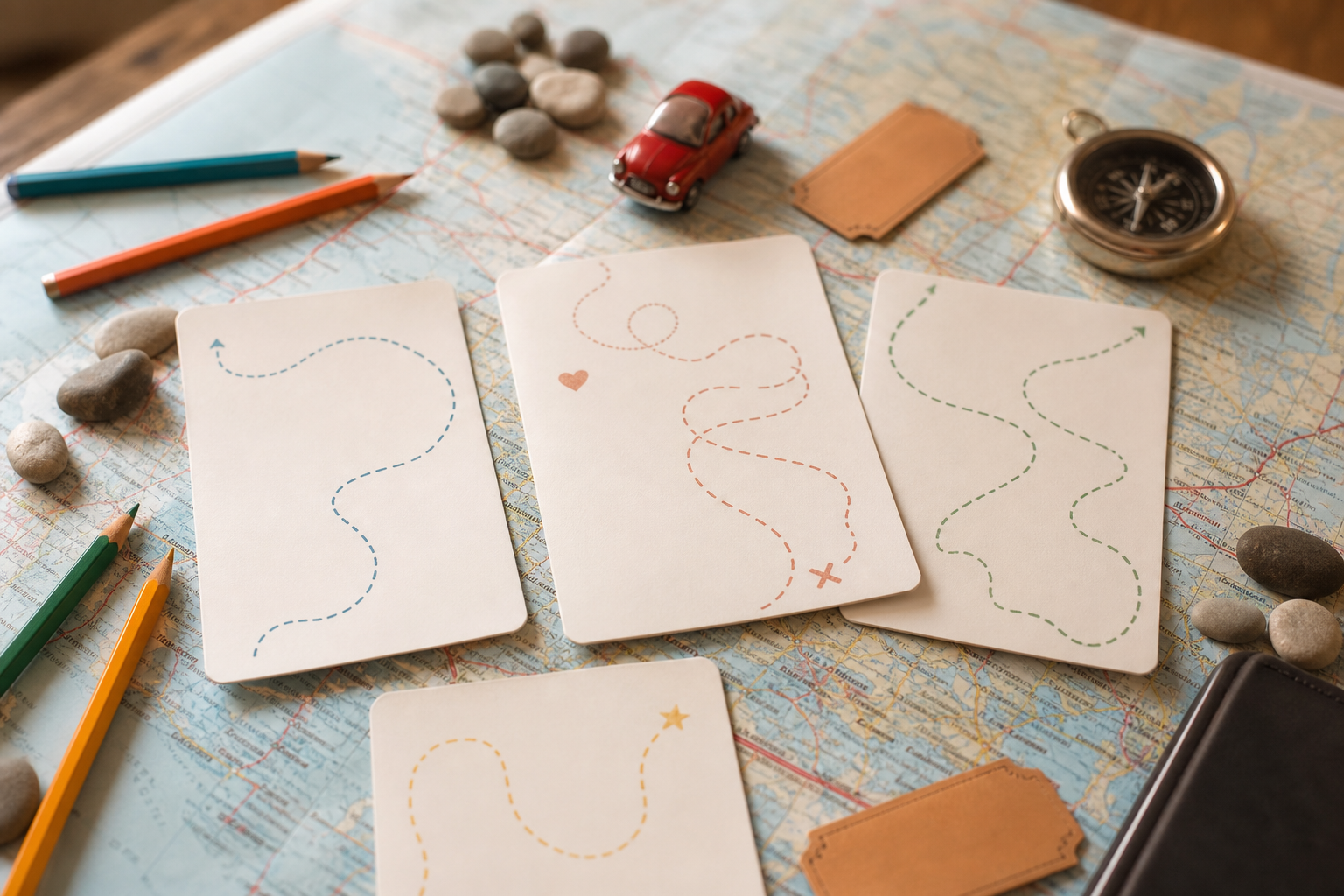
Set 1: License Plate Word Ladder. Start with the word ROAD. Every time a solver spots a license plate with one of the needed letters, they may change one letter to move toward CAMP. A clean ladder is ROAD, READ, BEAD, BEAM, TEAM, TAMP, CAMP. For younger solvers, allow any sign or plate letter. For older solvers, use only plates from different states.
Set 2: Map Maze Snack Stop. Draw a simple map with five roads and three possible snack stops. Each intersection has a clue: turn toward the road with the word that rhymes with lake, avoid the bridge marked by an even number, and stop only after passing a triangle sign. The answer can be a letter, number, or place name at the correct stop.
Set 3: Backseat Mini Mystery. Four clue cards reveal one final travel word. A word search circles H, a maze path lands on O, a symbol key decodes T, and a short logic clue says the last letter is the first letter of lunch. The final code is H-O-T-L, then the host prompt asks solvers to fix the missing vowel and write HOTEL.
These examples are deliberately original and simple. Do not copy a daily puzzle, a branded game board, a commercial escape-room pack, or copyrighted characters. The shareable idea is the structure, not someone else's clues.
Difficulty Settings by Age
For ages five to seven, use picture hunts, big mazes, very short word lists, and pages where coloring counts as progress. The win condition can be finding five things, not finishing the whole page.
For ages eight to eleven, mix word searches, map mazes, secret codes, category sorts, and clue cards. This is the sweet spot for road trip puzzle kits because kids can read the instructions and still enjoy visible progress.
For teens, make the kit feel less childish. Use deduction, trivia-free logic, two-step ciphers, route planning challenges, and timed family rounds. Avoid babyish art unless the whole family is playing it for laughs.
For adults and grandparents, add large-print options, crosswords, word search pages, Sudoku, and shared riddles. A good family kit should let an adult join without feeling like they are only supervising.
How to Run It Without Car-Seat Chaos
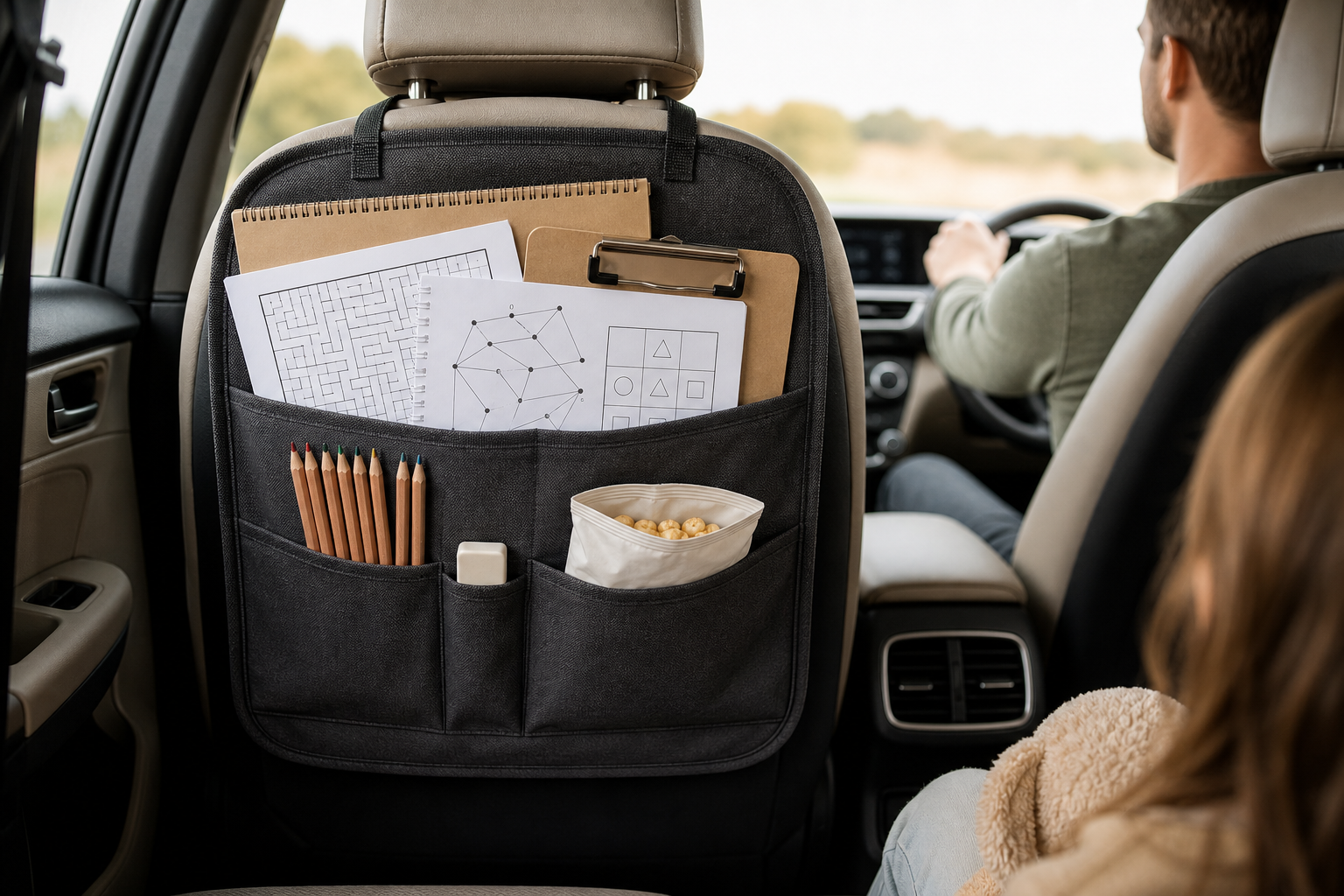
Do not hand over the whole folder at once. Put three pages in reach and keep the rest in a bag. Choice is useful; a paper avalanche is not.
Use a one-page score sheet instead of prizes. Award one point for finished pages, one point for a clever explanation, and one point for making a new puzzle someone else can solve. The point system should create momentum, not competition that ends in tears.
For car rides, use quiet challenges: word search, maze, spot-five, category sort, and mini logic. Save cut cards, envelopes, and anything with tiny pieces for the hotel, campsite, rental house, or kitchen table.
For mixed-age groups, pair solvers. One child spots objects while another writes. One adult reads clues while a younger child traces the maze. Shared roles keep the kit from turning into one confident kid racing ahead while everyone else quits.
A Five-Minute Hotel Table Version
When the family arrives tired, do not launch a full game night. Use a five-minute reset instead.
Put one page in the middle of the table. Set a five-minute timer. Everyone adds one answer, one circled word, one maze line, or one clue idea. When the timer ends, stop while the page still feels easy.
That tiny reset works because travel fatigue often needs a transition, not a lecture. Paper gives everyone a shared object to look at while the room settles down.
Make It Printable and Buyer-Friendly
If you are creating a printable pack, make the first page visually obvious. Parents should know at a glance whether the kit is for car rides, camp, classrooms, hotel rooms, or family night.
Include large-print versions for grandparents and younger solvers who need more space. Keep the answer key separate. Use high contrast. Avoid putting essential clues only in color, because many families will print in black and white.
A reusable kit could include five route themes: beach drive, mountain cabin, city weekend, national park, and rainy-day hotel. Each theme can use the same structure with new word lists, mazes, objects, and final codes.
More Road Trip Puzzle Ideas
Use the Puzzle Book Finder and Free Puzzles and Games hub to extend the kit, or add Mini Paper Escape Rooms, printable category sort puzzles, word search books, Sudoku books, and screen-free gift ideas that fit your family.
Common Mistakes to Avoid
Do not make every page a worksheet. Add game framing, score boxes, timed rounds, and tiny reveals.
Do not use tiny type in a moving car. If the page requires squinting, it belongs at a table.
Do not require internet access for the main activity. A road trip kit should still work in a dead zone.
Do not make one answer depend on a landmark only one route will pass. Use common travel objects unless the kit is local on purpose.
Do not let the kit become another parent chore. If setup takes longer than five minutes, simplify it.
Start With a Six-Page Kit
Print one road trip puzzle kit before the next drive: one word search, one maze, one license plate hunt, one category sort, one mini mystery, and one score sheet. Put it beside the snacks, not buried under luggage.
If the first three pages get used, build the next screen-free stack with PuzzlePlayBooks.com: use the Puzzle Book Finder, browse Free Puzzles and Games, add a word search or Sudoku book for longer trips, and keep one mini paper escape room ready for the hotel table.
Sources and Further Reading
- Google News RSS search for AAA Fourth of July travel coverage, consulted June 29, 2026
- American Academy of Pediatrics Family Media Plan guidance, consulted June 29, 2026
- National Summer Learning Association homepage, consulted June 29, 2026
- PuzzlePlayBooks.com sitemap and article library, consulted June 29, 2026