


If the first week of school always feels like a mix of clipboards, seating charts, repeated directions, and restless energy, the best bell ringer is not the fanciest one. It is the one students can start in under 30 seconds.
That is why printable puzzle bell ringers work so well right now. They feel like a game, not a lecture. They give early arrivers something to do immediately. They lower the “What are we doing?” noise level. And they help teachers set a classroom tone that feels focused without feeling stiff.
The goal is simple: short puzzles, clear instructions, and a visible finish line.
Why puzzle bell ringers work in the first week
The first week is rarely the moment for dense academic worksheets. Students are learning routines, names, movement patterns, and expectations. A strong bell ringer should do three things:
• start fast.
• include everyone.
• create a small win.
Puzzles do that better than most traditional warm-ups. A word challenge, mini maze, symbol Sudoku, or category sort gives students an obvious entry point. They do not need a long explanation to begin. That matters when some students are early, some are late, and the room is still becoming a room.
Just as important, puzzle bell ringers are flexible. A teacher can make them collaborative, quiet, timed, themed, or tied to subject review later. In week one, they are classroom glue. In week three, they can become routine.
The 7 printable puzzle bell ringers worth using first
1. Name Search Sprint
What it is:
A simple word-search style page using student names, classroom objects, or school words like pencil, library, recess, schedule, and notebook.
Why it works:
It feels familiar instantly. Even students who claim they “hate puzzles” understand the task.
Best use:
Day 1 or Day 2, especially in upper elementary and middle grades.
Quick example:
Hide 8 to 12 words in a medium-size grid:
• Maya.
• Jordan.
• Pencil.
• Folder.
• Science.
• Lunch.
• Bus.
Pro tip:
Mix class-relevant words with easy wins. The first bell ringer should build momentum, not prove difficulty.
2. Classroom Category Sort
What it is:
A printable list of 12 to 16 words that students group into 3 or 4 categories.
Why it works:
Students can begin alone, then compare answers with a partner. It naturally creates discussion without forcing full-class participation.
Best use:
Great for Day 2 through Day 5.
Quick example categories:
• school supplies.
• classroom jobs.
• subjects.
• places in school.
Sample words:
marker, librarian, math, cafeteria, glue, line leader, music, gym, ruler, office, art, eraser
Why teachers love it:
It doubles as a soft vocabulary check and helps students practice reasoning out loud.
3. Desk-to-Door Maze
What it is:
A simple printable maze themed around school spaces: desk to cubby, classroom to library, bus line to front door, lunch tray to recycling bin.
Why it works:
Mazes are one of the fastest “settle the room” tools because the rules are obvious at a glance.
Best use:
Perfect for younger students, tired afternoons, or mixed-readiness groups.
Quick twist:
Add tiny icons students have to collect on the route:
• pencil.
• apple.
• book.
• backpack.
That makes the page feel more like a mission than a worksheet.
4. Symbol Sudoku for Beginners
What it is:
A mini 4x4 Sudoku using shapes or school icons instead of numbers.
Why it works:
It introduces logic without making students freeze at the word “Sudoku.”
Best use:
Grades 2 through 6, homeschool groups, logic centers, and early finishers.
Example icon set:
• pencil.
• star.
• book.
• bus.
How to frame it:
“Each row and box needs one of each symbol. No repeats.”
That single sentence is usually enough.
Why this one spreads well:
Parents and teachers love activities that feel smart but are still easy to print and explain.
5. Find the Rule Puzzle
What it is:
A short pattern or sequence puzzle where students decide what comes next.
Why it works:
It rewards observation quickly and works across ages.
Best use:
Math classrooms, tutoring sessions, or mixed-age learning groups.
Quick examples:
• 2, 4, 8, 16, __.
• red triangle, blue circle, red triangle, blue circle, __.
• clap, snap, clap, snap, __.
Make it stronger:
Use one easy pattern, one medium pattern, and one “make your own rule” line at the bottom.
That gives fast solvers somewhere to go without turning the page into busywork.
6. Partner Logic Card
What it is:
A tiny clue puzzle students solve in pairs. Think: “Ava sits by the window. Ben does not sit in the first row. Who sits closest to the bookshelf?”
Why it works:
The first week needs low-stakes partner interaction. This gives students something to talk about besides “I don’t know anyone.”
Best use:
Day 3 or later, once the room is ready for quick collaboration.
Keep it small:
Use 3 people, 3 clues, 1 answer. Do not build a giant logic grid on week one.
Why it helps socially:
Students talk to a partner with a purpose. That is often easier than open-ended icebreakers.
7. Friday Puzzle Relay Card
What it is:
A one-page mini challenge with four tiny sections: one word clue, one visual clue, one pattern clue, and one final answer box.
Why it works:
By Friday, students are ready for something that feels like an event.
Best use:
End of the first week, small groups, centers, or homeroom.
Sample format:
1. Unscramble a school word
2. Circle the different icon
3. Finish a short pattern
4. Use all three answers to reveal the final word
Why it lands:
It gives the room a sense of payoff. Teachers get energy without chaos, and students feel like they completed something bigger than a normal warm-up.
How to build a one-week bell-ringer pack
You do not need a giant printable bundle. In fact, smaller is better.
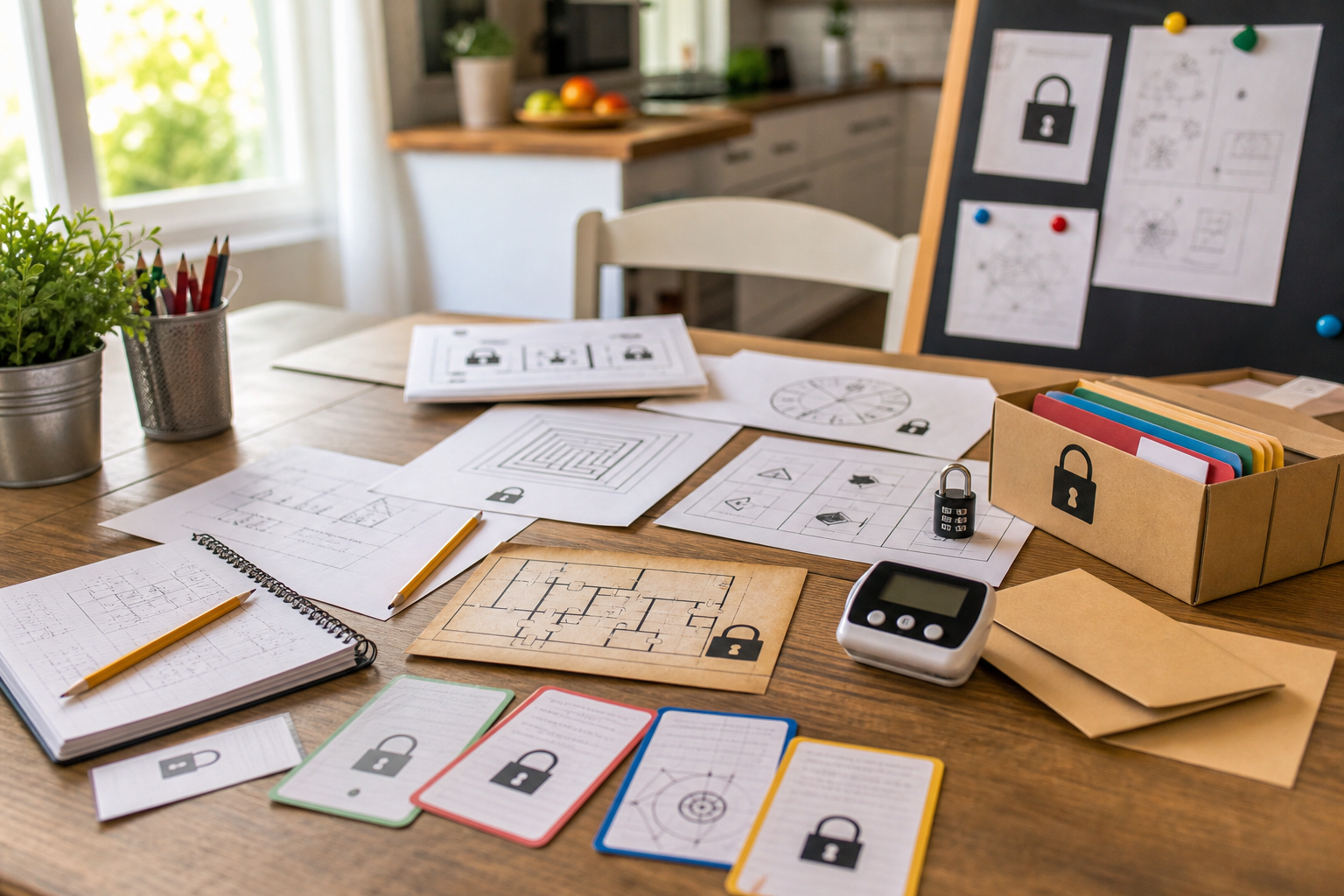
A strong first-week pack includes:
• 5 to 7 one-page puzzles.
• one answer key.
• one teacher note page with timing.
• optional easier/harder version for two readiness levels.
A simple weekly flow could look like this:
• Monday: Name Search Sprint.
• Tuesday: Classroom Category Sort.
• Wednesday: Desk-to-Door Maze.
• Thursday: Symbol Sudoku.
• Friday: Puzzle Relay Card.
That gives variety without making the teacher reinvent the morning every day.
Make the pages feel inviting, not schoolish
The biggest mistake with printable puzzles is overdesigning them. The second biggest is overexplaining them.
Keep the format clean:
• one bold title.
• one-line directions.
• plenty of white space.
• one puzzle goal per page.
Students should feel like they can begin before you finish attendance.
A few easy upgrades:
• add school-theme icons.
• use a “You solved it” box.
• include a bonus star challenge.
• let students color one small section when finished.
These tiny touches make a printable feel more shareable and less disposable.
Grade-band tweaks that make a big difference
K-2
Use:
• mazes.
• picture matching.
• simple pattern puzzles.
• icon-based searches.
Keep reading light and directions visual.
Grades 3-5
Use:
• category sorts.
• symbol Sudoku.
• short word searches.
• mini clue chains.
This age range loves puzzles that feel independent but still fair.
Middle school
Use:
• logic cards.
• faster category puzzles.
• coded messages.
• “spot the rule” sequences.
Older students respond better when the page looks clean and not babyish.
What makes a bell ringer go viral with teachers
The most shareable classroom ideas usually have the same features:
• low prep.
• printable.
• reusable.
• flexible by grade.
• easy to explain to another teacher in one sentence.
That is why puzzle bell ringers travel so well in teacher groups, parent communities, Pinterest boards, and staff chats. They solve a real problem: how to start class without starting the day in chaos.
Practical takeaway
If you only make one back-to-school printable this season, make a five-page puzzle bell-ringer pack.
Not fifty pages. Five.
One word game. One maze. One category sort. One logic page. One Friday challenge.
That is enough to test what your students actually like. It is enough to make the room calmer. And it is enough to give you a repeatable routine before the year gets loud.
Conclusion
The first week of school does not need more complexity. It needs better openings.
Printable puzzle bell ringers work because they give students a fast start, a visible task, and a small success before the real lesson begins. For teachers, that means less drift, less repeated redirecting, and a classroom tone that feels steadier from the start.
In other words: a pencil, one page, and a two-minute puzzle can do more than a lot of elaborate first-week plans.