
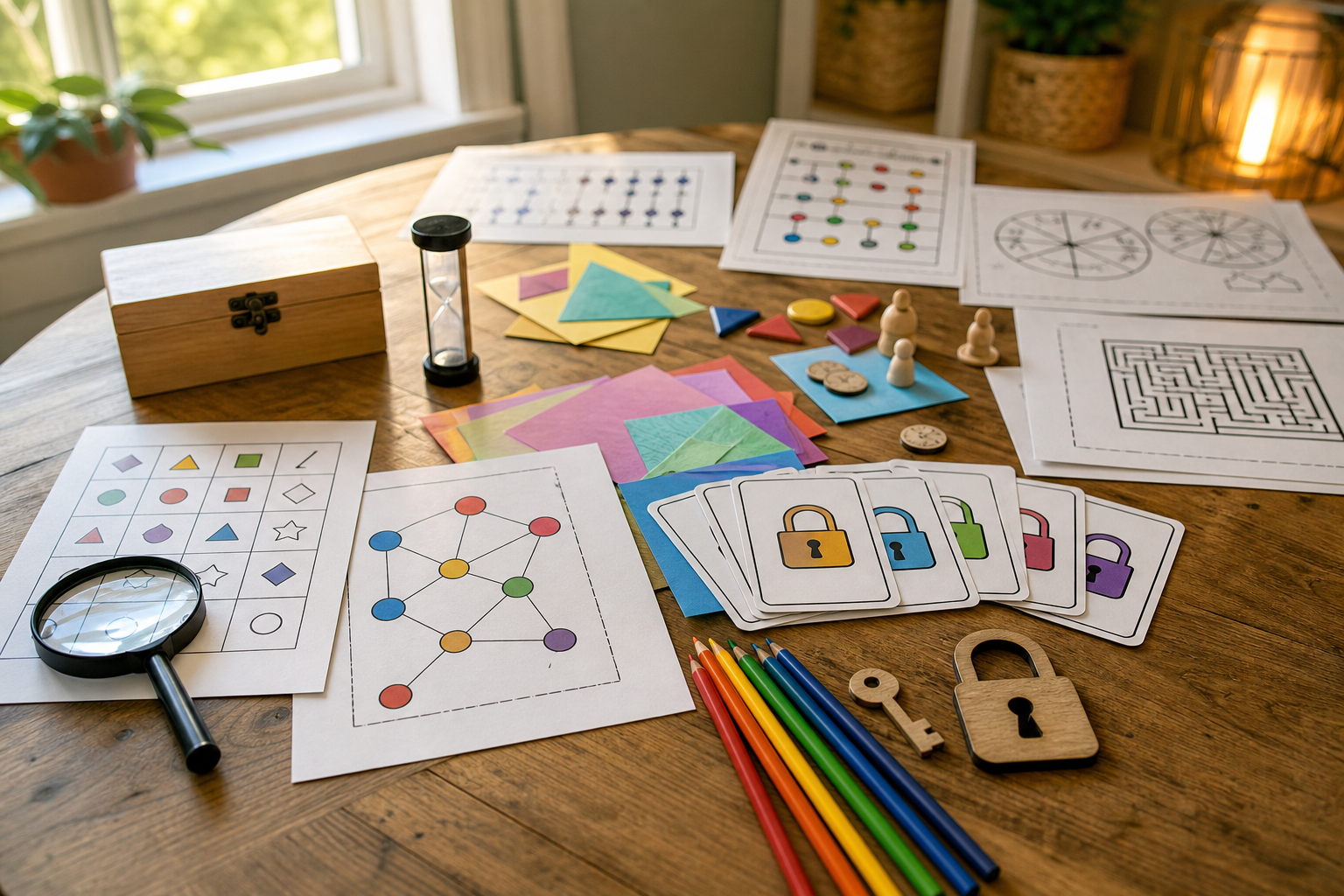


Printable escape rooms are having a useful moment because they combine three things puzzle fans already like: a timer, a shared goal, and clues that feel more exciting than a worksheet. You do not need padlocks, props, or a decorated classroom to get the effect. A few printed clue cards, one answer key, and a clear sequence can turn a 30-minute block into a team puzzle challenge.
This guide shows how to build a printable classroom escape room that also works for library programs, summer camps, homeschool co-ops, birthday party arrivals, and family game night. The goal is not to imitate a commercial escape room. The goal is to create a low-prep, repeatable paper game that gives players a satisfying chain of small wins.
Why Printable Escape Rooms Fit the Current Puzzle Moment
Puzzle attention is broad right now. The New York Times Games page continues to foreground daily, habit-forming word and logic games, including Connections and other short-form puzzles. Google News results for classroom puzzle searches surface brain games, classroom math activities, and escape-room-style ideas from education and family activity publishers. Education.com organizes printable puzzle resources by familiar game types such as mazes, crosswords, dot-to-dot, worksheets, games, and offline games. Common Sense Education’s game-based learning coverage also frames games as tools teachers use to support engagement and achievement when the activity is purposeful.
The practical takeaway: people do not only want one more puzzle. They want a puzzle experience that is easy to start, social enough to share, and simple enough to run without special technology. A printable classroom escape room matches that demand because it packages familiar puzzle types into a mission.
What Makes It Shareable
A plain worksheet is usually private. An escape room is public: players compare roles, ask for hints, cheer when a code opens, and remember the final reveal. That social wrapper is why a simple cipher or word ladder can feel bigger when it is part of an escape sequence.
Best Audiences
Use this format with upper elementary students, middle schoolers, teens, adult puzzle groups, mixed-age family nights, library clubs, and camp cabins. For younger players, reduce reading and use picture clues. For adults, keep the same structure but tighten the clue logic and reduce hints.
The 30-Minute Printable Escape Room Format
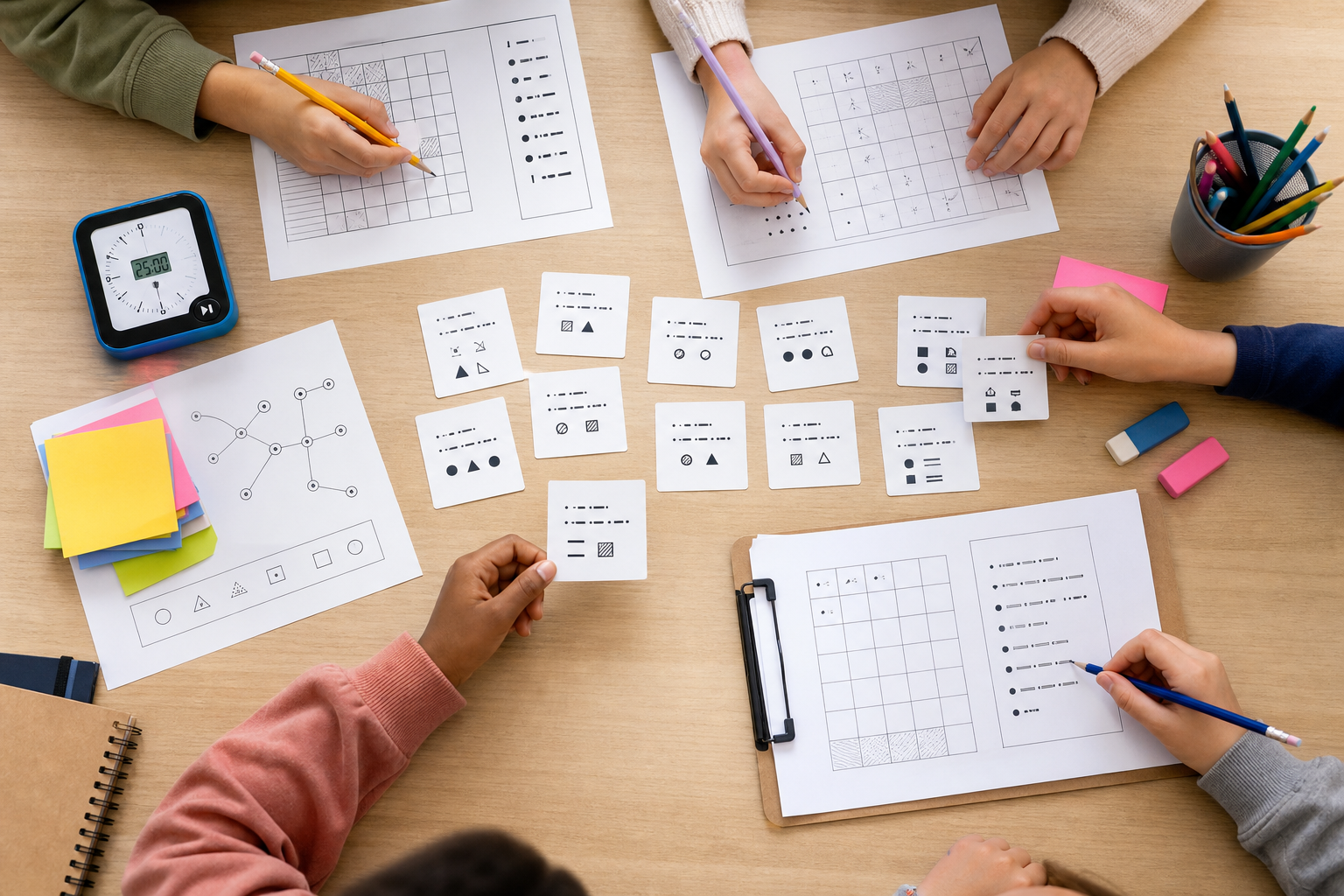
The easiest printable structure is four locks in 30 minutes. Each lock is not necessarily a physical lock. It can be an envelope, a folded answer flap, a station card, or a host checkpoint. Players solve Clue 1 to earn Code 1, use Code 1 to open Clue 2, and continue until the final message is revealed.
Use five minutes for setup, twenty minutes for solving, and five minutes for reveal and reset. If you are running a classroom, split players into teams of three or four. If you are running family night, everyone can play as one team against the clock.
The Four-Lock Template
Lock 1: a quick visual search that produces a three-digit number. Lock 2: a word ladder or category sort that reveals a word. Lock 3: a simple symbol cipher that turns the word into a phrase. Lock 4: a final logic clue that combines the number, word, and phrase into the escape answer.
Materials Checklist
Print one mission sheet per team, one set of clue cards per team, one answer key for the host, and one hint sheet. Add pencils, erasers, envelopes or folded paper pockets, a visible timer, and a small final card that says the team escaped. Optional props like boxes and combination locks are fun, but the game should still work if every lock is just a checkpoint.
A Ready-to-Use Mini Scenario
Theme: The Missing Puzzle Key. The class or family has 30 minutes to recover the key before game night begins. The key is not a real key; it is a final answer phrase assembled from four paper clues.
Clue 1 is a maze map. Players trace the only path from START to KEY and record the numbers they pass in order. Example answer: 4-1-7. Clue 2 is a word ladder from LOCK to GAME. Every legal word step gives one circled letter. Clue 3 is a symbol cipher where the circled letters unlock the cipher key. Clue 4 asks players to combine the number from Clue 1 and the decoded word from Clue 3 to choose one of four final messages.
Sample Clue Types
Try a hidden-word list, a pattern grid, a two-column match, a mini logic table, a simple substitution code, a rebus clue, a category sort, a word ladder, a route maze, or a find-the-difference puzzle. Keep each clue short enough to explain in one sentence.
Difficulty Control
Make the first clue easy. The first win creates momentum and tells players they understand the game. Put the hardest reasoning in Clue 3 or Clue 4, when the team is already invested. If a clue requires more than eight minutes during your test solve, simplify it or add a hint.
How to Build Better Clue Cards
Good clue cards are clear, generous, and testable. Put the instruction at the top, the puzzle in the center, and the answer box at the bottom. Do not hide the rule in a paragraph. If players need to change one letter at a time, say that directly. If every answer is a number, show the number of blanks.
Avoid obscure trivia unless the event is explicitly a trivia game. Printable escape rooms work best when the challenge is reasoning, pattern spotting, vocabulary, sequencing, or teamwork. Players should lose time because the puzzle is clever, not because they have never heard of the answer.
The Three-Hint System
Prepare three hints per clue. Hint 1 restates the rule in a new way. Hint 2 points to the first useful step. Hint 3 gives the missing bridge but not the final answer. This lets the host keep the room moving without turning the game into a lecture.
Reset-Friendly Design
Do not require cutting tiny pieces unless the pieces can be reused. Number every clue card. Put each team set in a folder or envelope. Keep the answer key on one page. A printable escape room becomes much more valuable when you can reset it for another class period, camp group, or sibling team in under five minutes.
Family Night Version: One Table, Four Locks
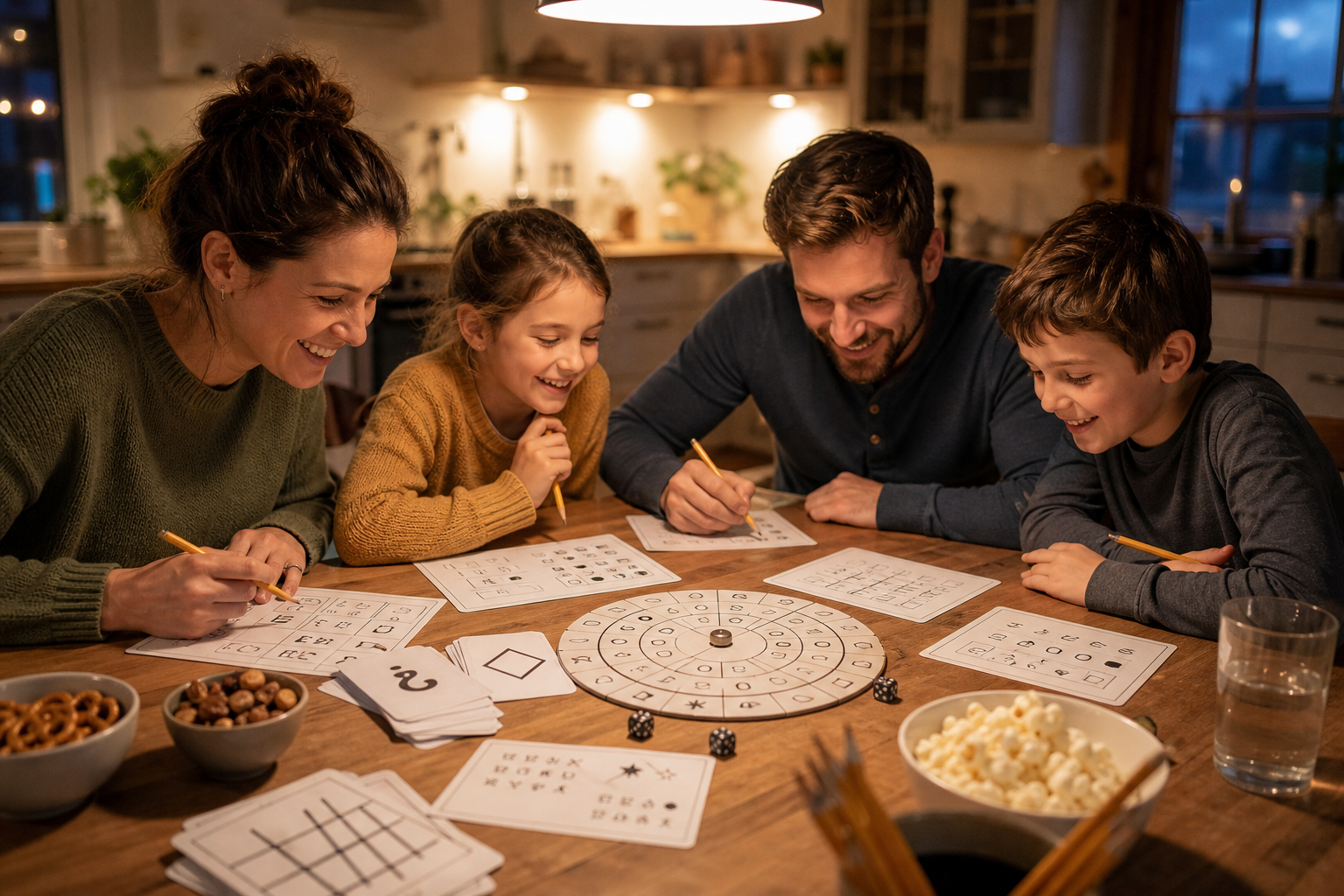
At home, run the same game on one table. Put four sealed envelopes in the middle. The first envelope is open; each solved clue tells the family which envelope to open next. If you do not want envelopes, fold the clue cards and write numbers on the outside.
Use a softer timer for younger kids. Instead of 'escape before time runs out,' try 'beat the snack timer' or 'unlock the final joke before dessert.' The stakes should add energy, not stress. A printable escape room is most memorable when everyone feels useful.
Role Cards
Give each player a role: Reader, Recorder, Pattern Spotter, Hint Manager, or Timer Captain. Roles prevent one fast solver from taking over. They also make mixed-age groups smoother because younger players can own a job even when the clue logic is harder.
Replay Twist
After the first run, ask players to design one replacement clue for the next team. The creator must provide the answer and one hint. This turns the activity from solving into puzzle making, which is often where the best learning and family conversation happens.
Classroom and Camp Management Tips
For classrooms, make every team solve the same sequence but use different answer colors or team numbers so cards do not get mixed. For camps and libraries, set up stations around the room and let teams rotate. If noise matters, use a silent version where teams can talk only when they request a hint.
Keep scoring simple. Escaped in time is enough. If you need a tiebreaker, use fewest hints or best teamwork explanation. Avoid ranking every team publicly, especially with younger players. The point is collaborative momentum, not embarrassment.
Safety and Accessibility Notes
Do not actually lock players in a room. Keep paths clear. Use large type, strong contrast, and enough writing space. Offer a no-running rule for station versions. For players who dislike timed pressure, let them be Hint Manager or Recorder so they can contribute without being first to solve.
More Escape-Room Puzzle Ideas
Pair this guide with the printable puzzle passport for a mission-stamp version.
Use the 10-minute word ladder race as one station or warmup clue.
For a more active team game, connect it with the printable puzzle relay.
Start With Four Clue Cards
Want a screen-free puzzle event without buying props? Start with four printable clue cards, one timer, and a one-page answer key. Puzzle Playbooks readers can turn that structure into a classroom warmup, a camp challenge, or a family game night that feels bigger than a worksheet.
Sources and Further Reading
- Google News search for classroom escape room, printable puzzles, brain teasers, and game-based learning, consulted July 6, 2026
- New York Times Connections page, consulted July 6, 2026
- Education.com puzzle worksheets page, consulted July 6, 2026
- Common Sense Education game-based learning article/results page, consulted July 6, 2026