

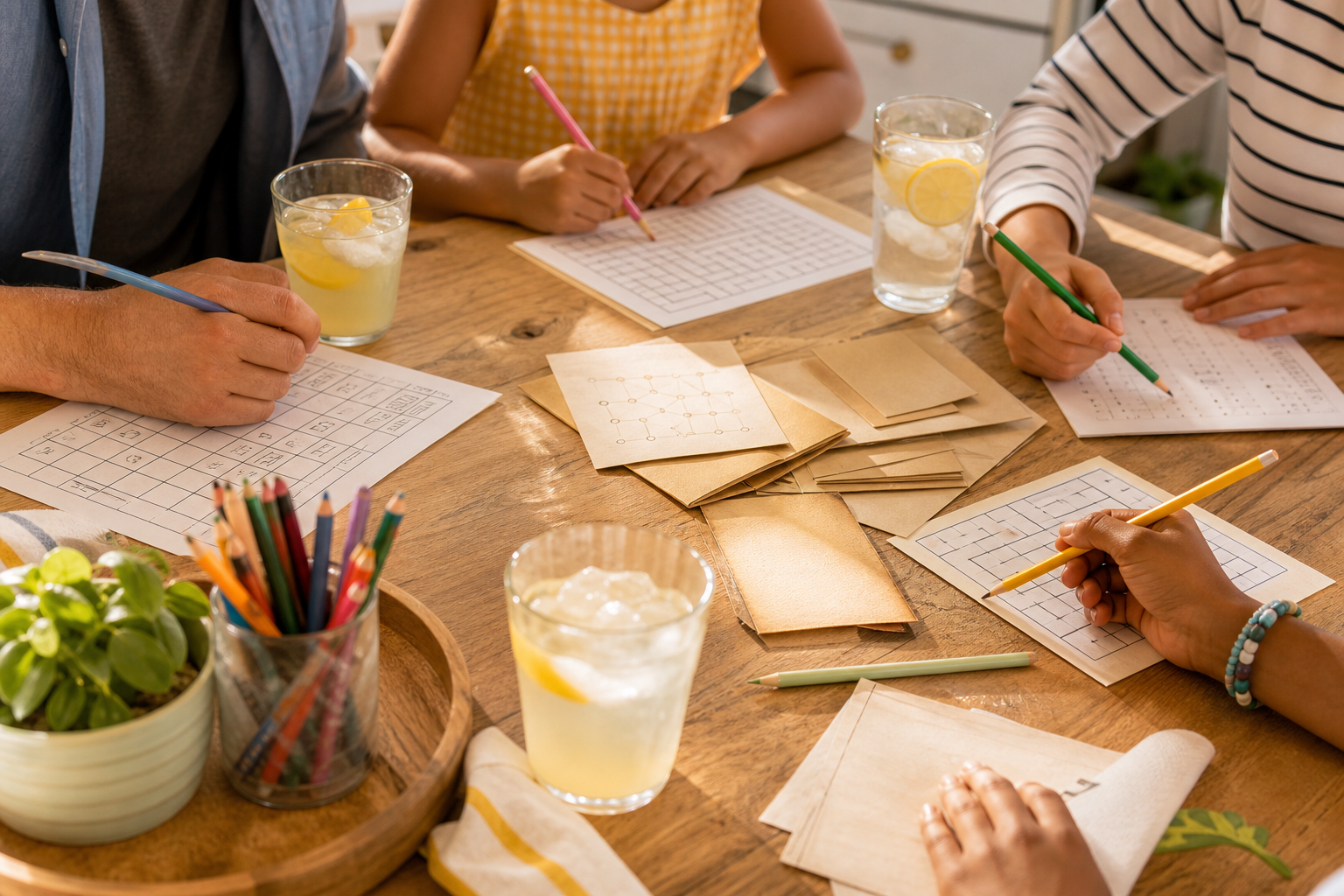


A pool day is supposed to feel easy, but real pool days have a lot of in-between time. Someone finishes sunscreen first. Someone else is waiting for the lesson to start. A younger sibling is done swimming before the older one wants to leave. Thunder changes the plan. Snack break stretches longer than expected. The grown-up in charge still needs something that feels simple, portable, and worth printing.
That is why a pool day puzzle pack can be more useful than it sounds. It gives kids a visible job during the pauses that usually drift toward random scrolling, whining about waiting, or wandering too far from the table. One short printable page can carry a shade break, a swim-meet gap, a hotel-pool reset, or a backyard rest window without turning the day into a full scheduled program.
The timing makes sense right now. The United Nations keeps World Drowning Prevention Day on its observance calendar, CDC Healthy Swimming pages note that water-based exercise can support health while also carrying real risks, and National Weather Service lightning safety guidance is another reminder that summer water plans can change quickly. In practical terms, that means families, camps, and activity leaders need easy non-water backup plans that still fit the mood of the day.
That is why this kind of printable works. It is low prep, easy to pause, simple to reuse, and flexible enough to move from a backyard table to a camp clipboard, a hotel lobby, a swim-lesson bench, or an after-pool kitchen table.
Why a pool-day puzzle pack works
Pool days are full of short waiting windows.
Printables help most in these moments:
• while kids wait for a lesson, lane turn, or buddy check.
• while one swimmer still has energy and another already needs a quieter break.
• while adults need a low-drama backup during weather pauses, snack breaks, or sunscreen resets.
• while a teacher, camp leader, or program host wants one summer-themed page that does not require batteries, glue, or a long explanation.
• while a hotel, neighborhood pool, or backyard party needs a calmer table option that still feels seasonal.
That is also why the packet should stay simple. Good pool-day pages should work with a printer, pencil, clipboard, folder, or cafe-style table. They should not need wifi, scissors, wet markers, or anything fragile that turns the break into another setup problem.
What makes a good printable pool-day packet
The best packet is not the biggest packet. It is the one someone can print quickly and actually use on a real summer day.
Aim for:
• one clear task per page.
• black-and-white friendly layouts that do not waste ink.
• answer spaces large enough for clipboards, tote bags, and damp-day handling.
• a mix of fast visual wins and one or two slightly slower logic pages.
• prompts tied to real pool-day moments such as towels, goggles, snack breaks, lane ropes, flip-flops, shade, and swim bags.
• pages that still make sense later at home if the break ends before the puzzle is finished.
If a printable depends on one exact pool layout, one exact rule poster, or a perfect uninterrupted twenty minutes, it stops being a practical helper.
The 15 printable splash-break games worth building first
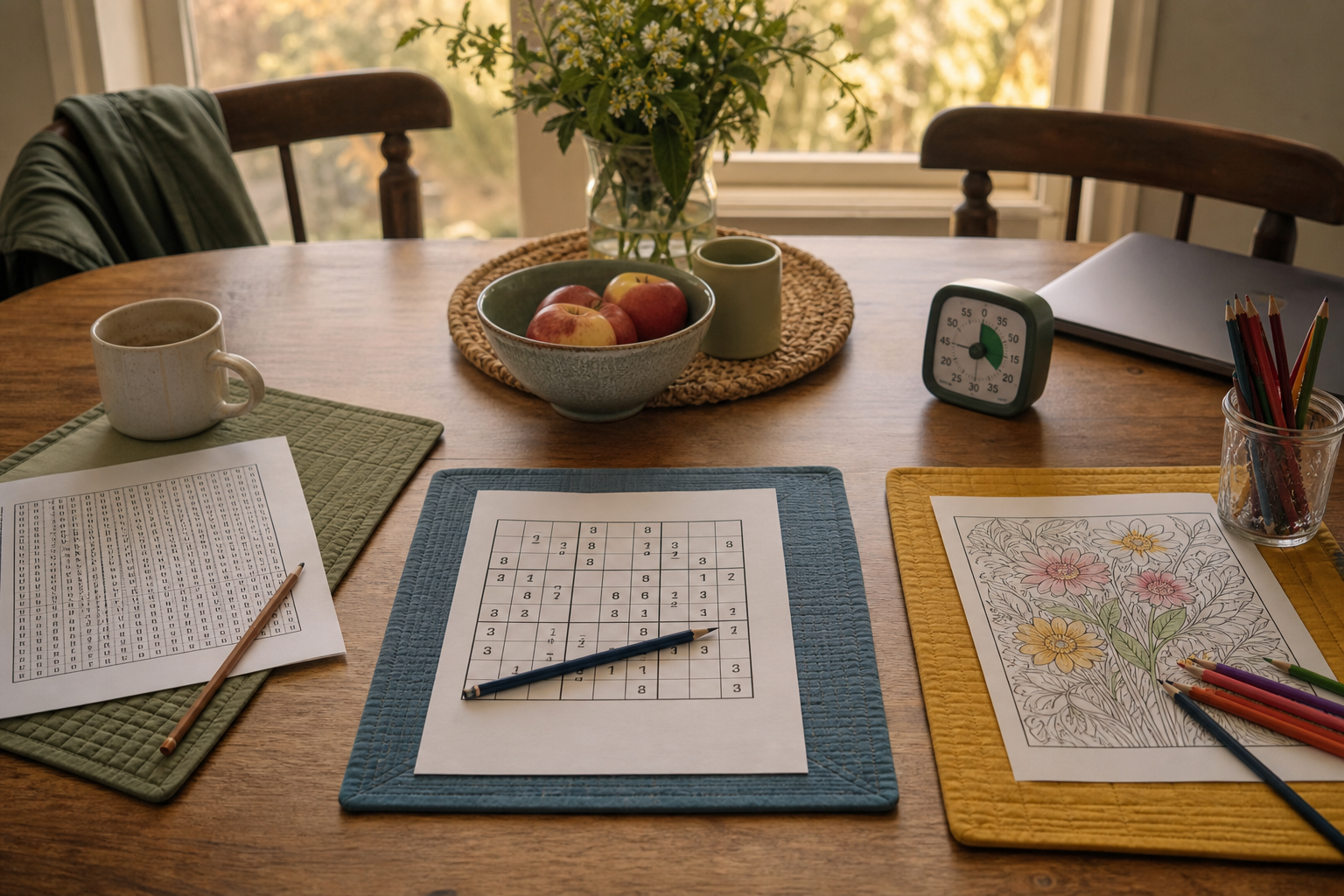
1. Poolside word search
Hide approachable words such as towel, goggles, float, whistle, shade, snack, lesson, and splash. This is an easy opener for mixed ages and for kids who need a quick win before heading back to the water.
2. Flip-flop maze
Draw a path from the swim bag to the towel chair without crossing blocked squares. Add icons such as goggles, sunscreen, and a water bottle so the page feels playful instead of generic.
3. Towel-stripe pattern page
Use repeating stripe, wave, and dot patterns, then ask players to finish the next section. This works well for younger solvers who want something visual and fast.
4. Snack-break tally chart
Give players a row of fruit cups, crackers, sandwiches, water bottles, and juice boxes, then ask them to tally each category. It is simple, practical, and easy to explain mid-break.
5. Goggles codebreaker
Use a simple letter-number key to reveal words such as SHADE, BREAK, FLOAT, READY, or SPLASH. This gives older kids a slightly stronger challenge without needing extra materials.
6. Lane-rope directional path
Create a small grid with north, south, east, and west moves that guide a swimmer from the bench to the kickboard rack or starting block. It sneaks in directional language without feeling school-heavy.
7. Lifeguard-chair spot the difference
Show two simple pool scenes with a few changed details such as one missing whistle, swapped towel stripe, or extra beach ball. This is quick to explain when the group is restless.
8. One-letter splash ladder
Build a short ladder such as POOL to FOOL to FOOT or WAVE to SAVE with one-letter changes. This gives older solvers a word challenge that still fits a short break.
9. Swim-bag category sort
Give players a short list of items and ask them to sort each one into groups such as things you wear, things you carry, things you dry with, or things you snack on. This keeps the page grounded in real objects kids recognize.
10. Dive-sequence order strip
Use broad steps such as check in, set down bag, sunscreen, swim, dry off, and snack, then ask players to put them in order. Keep the wording flexible so the page works across lessons, camps, and casual family swims.
11. Shade-break scavenger card
Use broad prompts such as find something blue, spot a striped towel, count a pair of flip-flops, notice a whistle, or circle something that keeps you cool. Broad prompts travel better than anything tied to one exact pool.
12. A=1 cool-down code
Use a simple number key to reveal words such as WATER, BREAK, TOWEL, SHADE, or REST. It feels more like a puzzle than another instruction.
13. Mini swim-meet logic card
Use three swimmers, three snack choices, and three towel colors with a few clues. Keep it short enough to solve in under three minutes so it feels satisfying instead of heavy.
14. Quiet reset prompt card
Give players three short lines to write one thing they already did today, one thing they still want to do, and one thing they want the next break to feel like. This adds a reflective page without making the whole packet writing-heavy.
15. Final pool password
Let answers from earlier pages supply letters for one last word such as READY, SPLASH, SHADE, FLOAT, or WATER. This is the page that makes the whole packet feel complete.
Three ready-to-use mini examples
These are simple enough to build before the next pool trip.
Example 1: quick riddle
Clue: I help you see underwater, but I am not your eyes. What am I? Answer: goggles.
Example 2: tiny codebreaker
Use A=1, B=2, C=3.
19 - 8 - 1 - 4 - 5
Answer: SHADE.
Example 3: mini logic clue
Mia, Theo, and June each picked one break activity first: snack, puzzle, and swim.
• Mia did not pick snack first.
• Theo did not pick swim first.
• June did not pick puzzle first.
Answer: Mia picked puzzle first, Theo picked snack first, and June picked swim first.
How to package it for families, teachers, and activity buyers
A strong pool-day packet usually needs only six to ten pages.
Start with:
• 2 quick word, count, or pattern pages.
• 2 browse-and-notice pages such as the scavenger card or spot the difference.
• 2 logic or code pages.
• 1 short sequencing or reflection page.
• 1 final password page.
• 1 answer key.
That mix is enough for a swim bag folder, camp clipboard, hotel activity tote, or backyard break basket without making the stack feel bulky.
Backyard pool, camp, and hotel version
For families, start with the word search, tally page, and flip-flop maze while everyone still has snack-break energy. Save the logic page, the quiet reset prompt, and the final password for later in the day when the weather shifts, one child needs a longer rest, or the group is back inside but still wants one more summer-themed activity.
For teachers, camp leaders, librarians, swim-program hosts, and family activity buyers, this theme works well for summer-school enrichment bins, pool-party welcome tables, day-camp quiet hours, hotel-lobby folders, and end-of-day cool-down stations. Use the category sort, one codebreaker, the shade-break scavenger card, and the final password puzzle as short stations, then keep the answer key nearby so the activity stays self-directed.
Because the theme is broad, it also works beyond one exact pool visit. Kids can use the same pages to talk about categories, sequencing, observation, and summer routines without needing one exact destination on the paper.
Fast answers to common buyer questions
What ages work best for pool-day printables?
Most pool-themed printable packs work best for ages 5 and up, with easier count, match, and pattern pages for younger solvers and logic or code pages for older kids, tweens, and mixed-age family groups.
What supplies should the packet assume?
Assume only a printer, pencil, and optional clipboard or folder. If a page needs markers, scissors, or internet access to function, make that obvious before anyone prints it.
Do these pages only work at the pool?
No. The same packet can work at a swim lesson, on a shaded deck, in a hotel lobby, during a camp weather hold, at a backyard table, or later at home when kids want one more summer-themed activity.
How long should a pool-day puzzle session last?
Ten to twenty minutes is usually enough for a sunscreen break, lesson wait, snack stop, or weather pause. Shorter sessions are often easier to repeat than one long packet marathon.
Common mistakes to avoid
Do not make every page depend on one exact pool map, one exact lesson schedule, or one age band.
Do not use tiny type or cramped answer spaces that fail on a clipboard, tote bag, or damp table.
Do not promise that a printable will teach swim skills or replace close adult supervision. The real value is that it gives kids a visible job during a real break.
Do not forget the reuse case. Some of the best pages are the ones that still make sense back at home, in camp downtime, or during the next weather delay.
Internal link suggestions
Pair this topic with the Beach Day Puzzle Pack, the Watermelon Puzzle Pack, the Road Trip Puzzle Pack, the Camping Trip Puzzle Pack, the free puzzles and games page, and the Kids Coloring Playroom. Readers who like this theme often want another practical printable for the next summer outing, shade break, or travel stop.
Call to action
Want more printable-style puzzle ideas that work in real family schedules, real camp tables, and real travel breaks? Browse PuzzlePlay Books for family-friendly puzzle guides, summer activity ideas, and practical screen-light printables that are easy to print and easy to reuse.