

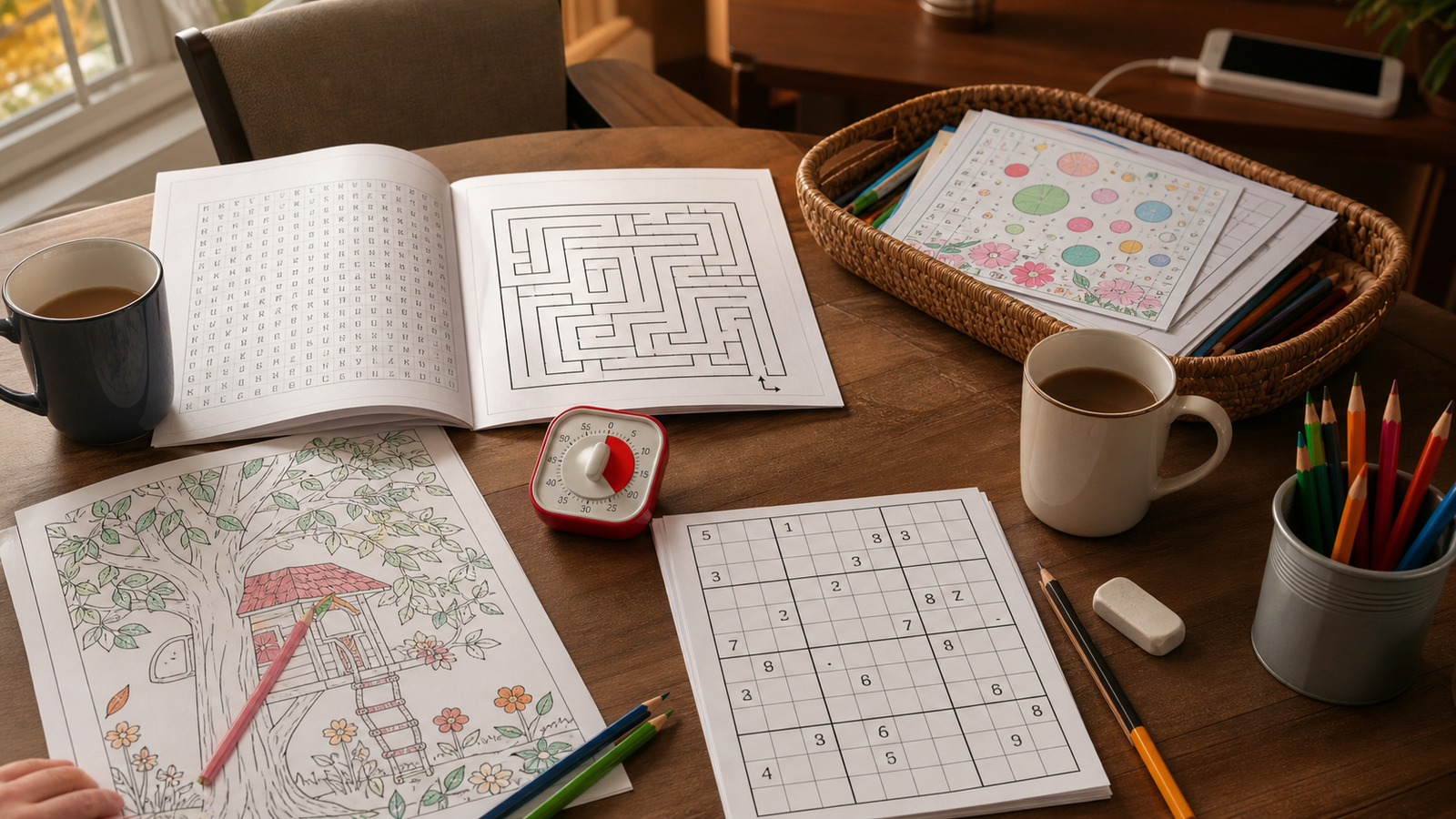


Parents are running out of patience with screens that win the room before anyone has made a choice.
That is the real story behind the latest backlash against school-issued devices, classroom screen saturation, and the push to bring pencils and paper back into the day.
The fight is not only about phones at school.
It is about the first move at home.
When summer starts, the school structure disappears. The laptop closes. The tablet is still there. The phone is still there. The bored minute arrives earlier, lasts longer, and asks for a screen before breakfast is cleared.
The answer does not need to be a giant family overhaul.
It needs to be easier than scrolling.
Before the first entertainment screen of the day, put one pencil in one hand and finish one visible paper move.
That move can be tiny.
Circle five words.
Color one shape.
Solve one Sudoku row.
Trace one maze path.
Write one silly answer in the margin.
The point is not to make kids love paper by force.
The point is to stop the screen from becoming the automatic opening scene of the day.
Why this is hitting now
Recent reporting from the Associated Press described a growing parent and school backlash against screen-heavy classrooms, with more families asking whether children are spending too much of the school day inside school-issued devices.
Pew Research Center also found that 42% of U.S. parents of kids 12 and under say they could do better at managing their child's screen time. That is not a niche anxiety. That is a large group of parents saying the current default is not working cleanly.
The American Academy of Pediatrics has moved the conversation beyond raw screen minutes and toward family media plans, routines, content quality, and what screens are replacing.
That last part matters most.
A screen is not only a screen.
It can replace the first conversation, the first independent task, the first quiet win, the first outdoor nudge, and the first chance to be bored long enough to invent something.
The Three-Page Setup
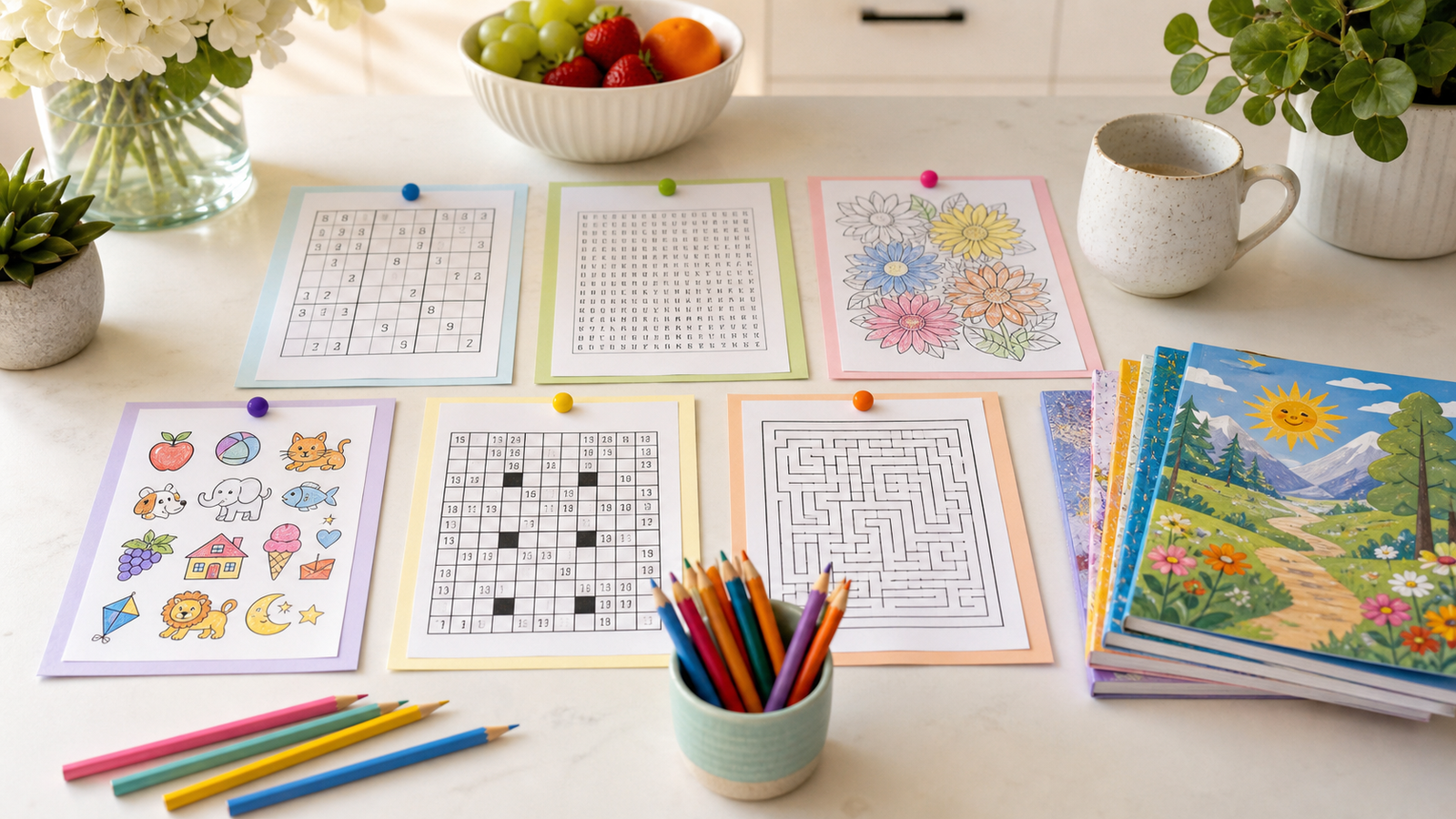
Put three pages where the screen habit usually begins.
Page one: something easy to start, like coloring, a maze, or a hidden picture.
Page two: something searchable, like a word search, spot-the-difference page, or letter hunt.
Page three: something slightly more focused, like beginner Sudoku, a number puzzle, or a logic grid.
Add one pencil, one eraser, and one timer.
Do not make the child choose from a shelf. Do not make the parent perform a lesson. Do not make the reset depend on perfect motivation.
The page should be sitting there like breakfast.
Why one pencil works better than another rule
Rules create resistance when the replacement is vague.
No screen yet is harder to accept than pencil first, then we decide.
A pencil gives the body a job. It makes the first move physical, visible, and finite. Once the hand starts, the argument loses oxygen.
That is why paper routines travel so well on social media. They are easy to photograph, easy to copy, and easy to explain in one sentence.
One pencil before one screen.
That sentence is short enough to survive a chaotic kitchen.
The summer version
Run the reset during the first hour after breakfast or the first hour after camp pickup.
Set a timer for 12 minutes.
Everybody does one visible paper move before the entertainment screen opens.
Kids can work side by side without doing the same page.
A preschooler can color one dinosaur. A grade-schooler can circle ten words. A teen can solve a logic puzzle. A grandparent can do a large-print word search.
The shared rule is the same. The page changes by age.
What to say when it gets pushback
Do not launch a speech about attention spans.
Use a line that sounds like a household rhythm, not a punishment.
Try: pencil first, then we choose.
Try: one page move before one screen move.
Try: twelve minutes at the table, then we talk.
The best line is the one you can repeat without sounding mad.
Common mistakes
Making the first page too hard kills the routine.
Saving paper pages in a cabinet kills the routine.
Turning it into moral theater kills the routine.
The reset works because it is small, visible, and repeatable. Treat it like brushing teeth, not like a family summit.
Where PuzzlePlayBooks fits
This is exactly where puzzle books, coloring books, and large-print activity books earn their place in the house.
They give the family a first move that does not need charging, updating, negotiating, or explaining.
Keep one kids coloring book, one easy word search, one beginner Sudoku, and one large-print book in the same basket.
That basket becomes the answer when the room starts drifting toward screens.
The takeaway
The idea is not anti-tech.
It is anti-default.
Screens can be useful, funny, social, creative, and necessary. But they should not win the first hour just because they are easiest to reach.
This summer, make the first move visible.
One pencil.
One page.
One small win before the next screen.