
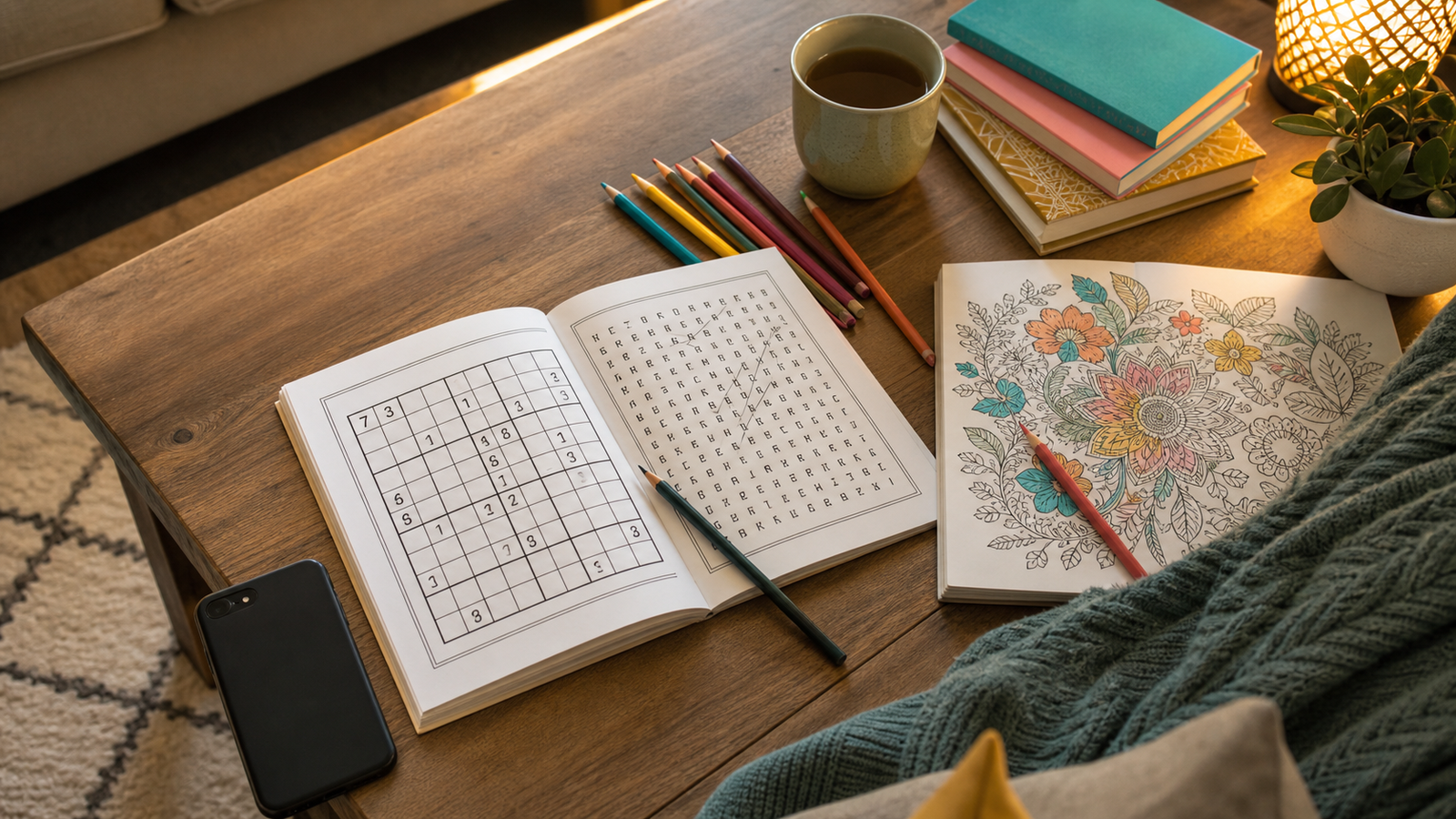


The most refreshing screen-time trend may be sitting on the coffee table already: a pencil, an open puzzle book, and twenty quiet minutes without another notification.
Why Paper Feels New Again
People are tired of relaxation that behaves like work. A phone asks for decisions all night: reply, skip, like, save, watch the next clip, clear the alert, check one more thing. A paper puzzle book asks for only one thing. Find the word. Shade the shape. Solve the grid. Finish the page.
That simplicity is why coloring books, Sudoku books, word searches, mazes, and kids activity pages are becoming attractive again. They do not need an account. They do not track a streak. They do not turn quiet time into another feed.
The Anti-App Activity
Paper puzzles work because the rules are visible. A word search shows the list and the grid. Sudoku shows the open squares. A coloring page shows the image waiting for color. There is nothing hidden behind a menu, nothing to upgrade, and no stream of unrelated content trying to pull attention away.
The experience also changes the room. A phone pulls attention inward. A puzzle book can pull people toward the same lamp, the same table, and the same small routine. One person can color while another solves Sudoku. A child can work on an ABC page while an adult searches for words.
One Page Before One More Scroll
The easiest rule is small on purpose: finish one page, one section, or one puzzle before opening another app. It is not a dramatic detox. It is just a better default.
For adults, that might mean one easy Sudoku after dinner. For seniors, it might mean a large-print word search under warm light. For kids, it might mean a dinosaur coloring page while the table is being cleared. The routine works because it is concrete and short.
Why Puzzle Books Are Easy to Repeat
A good paper habit needs low friction. Puzzle books are ready when the book is open and a pencil is nearby. There is no setup beyond choosing the next page. That makes them useful during travel, waiting rooms, rainy afternoons, quiet evenings, and family visits.
They also create a small finish line. Completing a word list, filling one coloring section, or solving one Sudoku grid gives the brain a clean stopping point. That matters because many digital activities are designed to avoid stopping points.
Try the 7-Day Paper Puzzle Challenge
Day 1: Put the phone face down and finish the easiest page in the book. Start with a win.
Day 2: Do a word search while coffee or tea is still warm. Circle the first ten words you see.
Day 3: Color one small section of a page. Stop before you get tired so the book still feels inviting tomorrow.
Day 4: Give a child a coloring or alphabet page and sit beside them with your own puzzle. Shared quiet counts.
Day 5: Try a large-print page, even if you do not need large print. Notice how comfortable easy-to-scan pages feel at night.
Day 6: Pick a harder Sudoku, maze, or hidden-word puzzle and let it take longer than expected. A little friction can be the fun part.
Day 7: Stack the books somewhere visible and choose next week's table book. The routine lasts longer when the setup is obvious.
Make the Table Do the Work
The environment matters more than willpower. Keep a small basket near the couch, kitchen table, or favorite chair. Add pencils, colored pencils, a sharpener, an eraser, sticky notes, and two or three books for different moods.
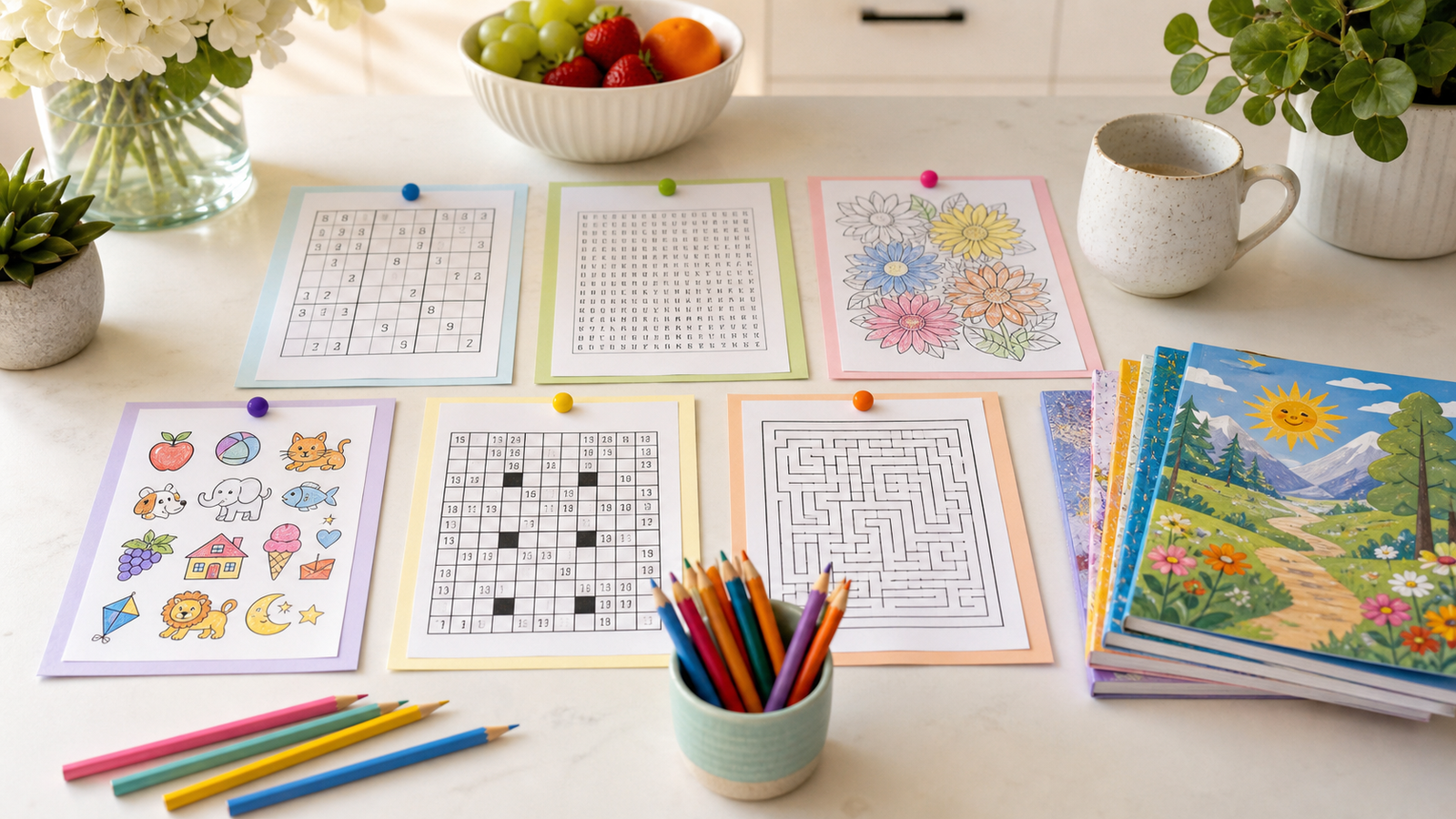
Choose coloring when the day felt loud. Choose Sudoku when you want a clean challenge. Choose word search when you want something approachable. Choose kids activity books when you want the table to become a shared family space.
Why These Books Make Good Gifts
Puzzle books are practical gifts because they are easy to understand immediately. There is no sizing issue, battery, subscription, or learning curve. A large-print word search, an adult coloring book, or a Sudoku collection can become useful the same day it is opened.
For gift bundles, pair the book with the tool that removes friction. Coloring books pair well with pencils or markers. Sudoku and word search books pair well with mechanical pencils, page flags, and a good eraser. Kids activity books pair well with washable supplies and a folder for finished pages.
Final Thought
The phone will still be there when the page is done. That is the point. A paper puzzle book does not have to replace the internet forever. It only needs to interrupt the automatic scroll long enough for the room to get quieter and the evening to feel like yours again.