
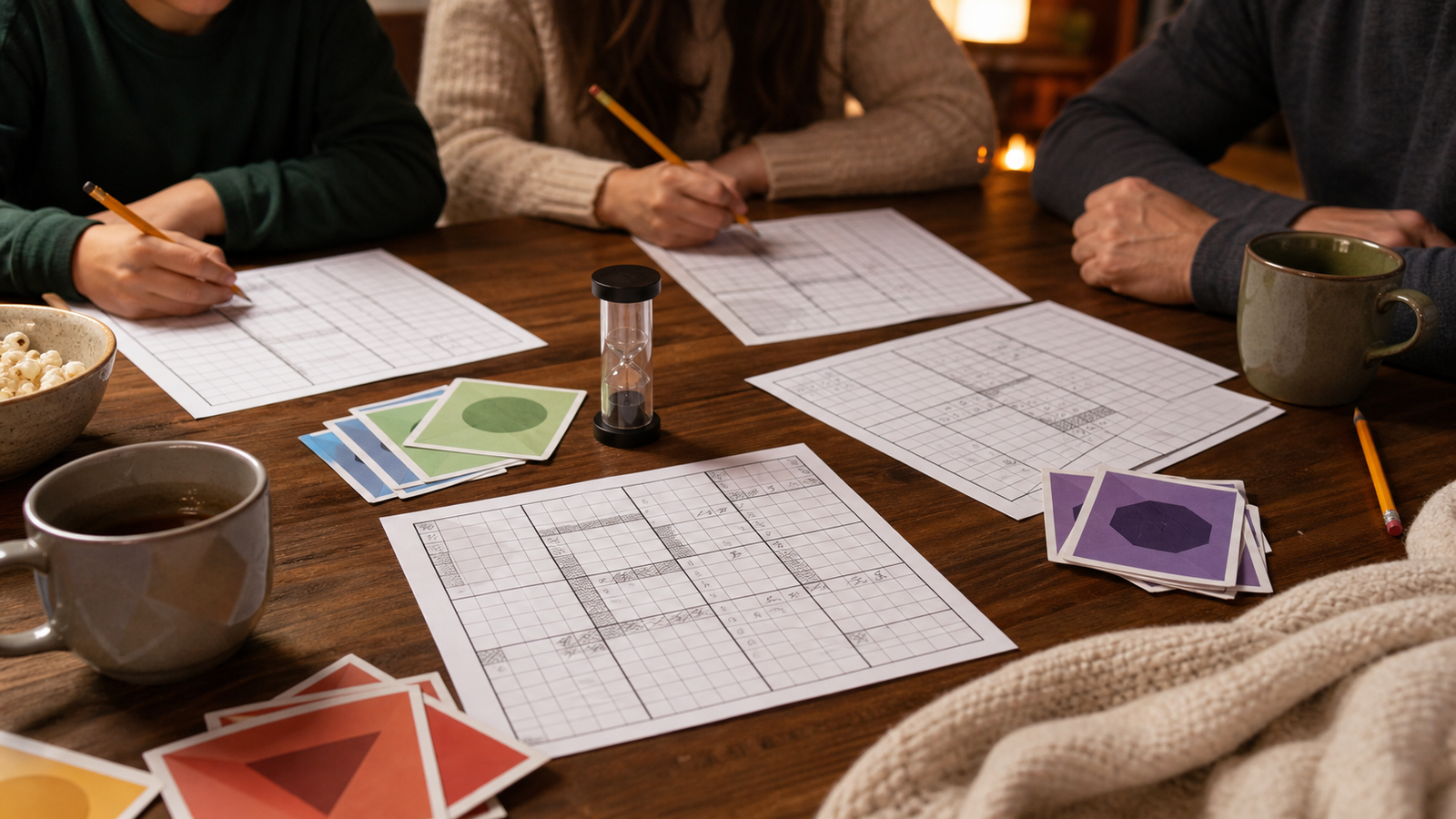


One-clue brain teasers are a simple answer to a modern puzzle problem: people want the satisfying hit of a daily puzzle, but parents, teachers, librarians, and hosts often need something that works on paper, in a group, and without an account or screen.
The format is exactly what it sounds like. Players get one carefully written clue, a small answer space, and a short time limit. The clue might point to a word, a category, a number pattern, a hidden phrase, or a mini logic answer. The solve is quick, but the discussion around it makes the activity feel bigger than a worksheet.
Why One-Clue Puzzles Fit the Current Puzzle Moment
Short daily puzzles continue to shape how people expect games to feel. The New York Times Games pages for Connections and Strands present compact word and logic challenges as daily habits, with a broader games menu that includes crosswords, Sudoku, Tiles, Letter Boxed, and other quick-play formats. That matters for printable puzzle creators because the winning pattern is not complicated equipment; it is a clear prompt, a tight constraint, and a fast reveal.
Educators are also still looking for game structures that make practice feel active. Edutopia’s game-based learning topic highlights the use of game design principles to engage learners and help teachers assess understanding. Escape-room publishers and hosts continue to organize ideas around clue chains, ciphers, riddles, and setup guides. A one-clue brain teaser sits in the middle of those trends: short enough for a warm-up, but flexible enough to become a relay, station game, or printable mini escape room.
The practical opportunity for Puzzle Playbooks readers is clear. A one-clue puzzle card can become a five-minute family challenge, a morning classroom bell ringer, a library table activity, a road-trip packet, or the first lock in a bigger paper escape kit.
The Basic One-Clue Brain Teaser Format
Use one card per puzzle. At the top, write a single clue. Under it, give players a small workspace and one answer line. At the bottom, add a difficulty mark, a category, or a tiny hint box that the host can cover until needed.
The best clues are specific enough to feel fair and ambiguous enough to trigger discussion. If the answer is a category, make the clue point to the rule that connects the set. If the answer is a word, make the clue point to spelling, sound, meaning, or transformation. If the answer is a number, make the pattern visible within three or four examples rather than hiding it behind trivia.
A reliable printable card has four parts: clue, workspace, answer, and reveal. The reveal can be a word, number, symbol, sticker, stamp, or instruction that sends players to the next card. That reveal is what turns a brain teaser from a loose prompt into a game.
Five Ready-to-Use One-Clue Examples
1. Category Snap
Clue: Apple, grape, banana, cherry. Which one does not belong if the rule is how the word is typed? Answer: grape, because the other three can be typed with only the left hand on a standard keyboard. If that feels too advanced for younger players, change the rule to color, syllables, or first letter.
2. Word Switch
Clue: Change one letter in COLD to make a word that means brave. Answer: BOLD. Follow-up: now change one letter in BOLD to make something shiny and yellow. Answer: GOLD. This card teaches players to test one-letter changes without needing a long rules page.
3. Hidden Pair
Clue: In the phrase paper puzzle in class, what solving tool is hidden by the marked letters? Answer: pencil, if the host has marked the exact letters on the printable card. Hidden-word cards must be checked carefully before printing so the answer is actually present and fair.
4. Logic Mini
Clue: Three friends choose maze, Sudoku, and word search. Ava did not choose Sudoku. Ben chose the puzzle with letters. What did Ava choose? Answer: maze. Keep the cast small and the statements direct; one-clue logic should feel like a warm-up, not a full grid.
5. Escape Code
Clue: Take the first letter of each solved answer in this round. What five-letter word opens the envelope? Answer: whatever your card chain spells. This clue works as the final moment of a printable mini escape room because every previous answer suddenly matters.
Classroom Version: Ten Minutes, Five Cards, Zero Logins
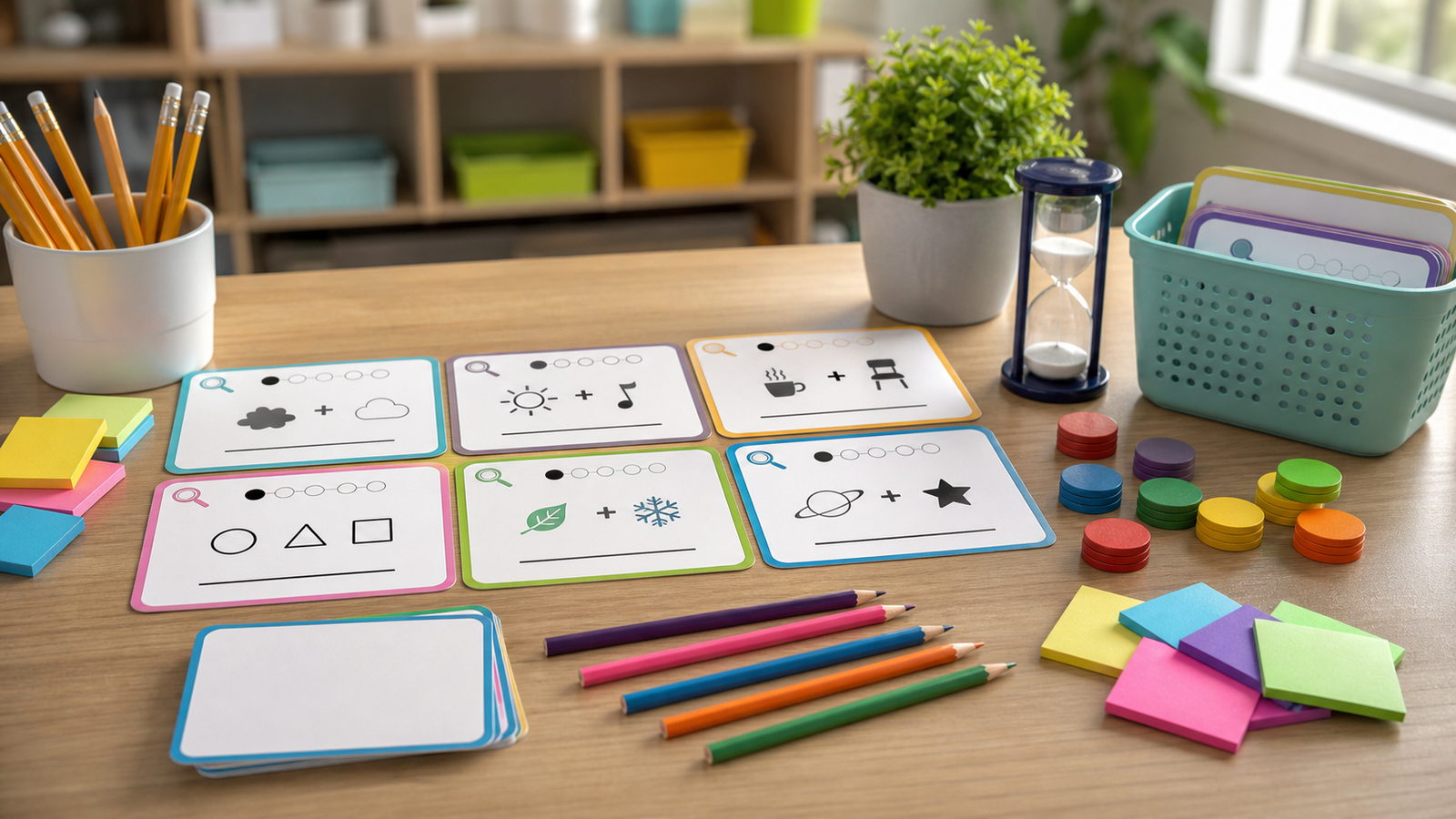
For a classroom warm-up, print five cards and place students in pairs. Give the room ten minutes total: six minutes to solve, two minutes to compare, and two minutes for a reveal. Pairs earn one point for a correct answer and one teamwork point for explaining the rule clearly.
This format is useful because it gives the teacher a fast snapshot of reasoning. Who asks clarifying questions? Who tests a pattern before guessing? Who can explain the answer in one sentence? Those observations are often more useful than whether every pair solved every card.
Keep classroom cards low-prep. Avoid tiny print, long paragraphs, obscure trivia, or answers that require outside knowledge. Use categories students already know: animals, weather, school supplies, sports, books, food, maps, simple math, or common word parts.
Family Game-Night Version: Make the Reveal the Reward
At home, the one-clue format works best when every correct answer unlocks a tiny next step. Put five cards in envelopes. Each answer gives a letter. The five letters spell the location of a snack, the next game, or a silly family challenge.
For mixed ages, let younger players be clue readers, timekeepers, stampers, or hint masters. Older players can take the harder logic and wordplay cards. Adults should resist taking over; the point is not to prove who is fastest, but to keep the table talking.
A good family-night rule is one hint per card. The hint should narrow the path, not give away the answer. Try “look at the first letters,” “sort the words into two groups,” or “test what changes from one example to the next.”
Escape-Room Version: Turn Each Answer Into the Next Lock
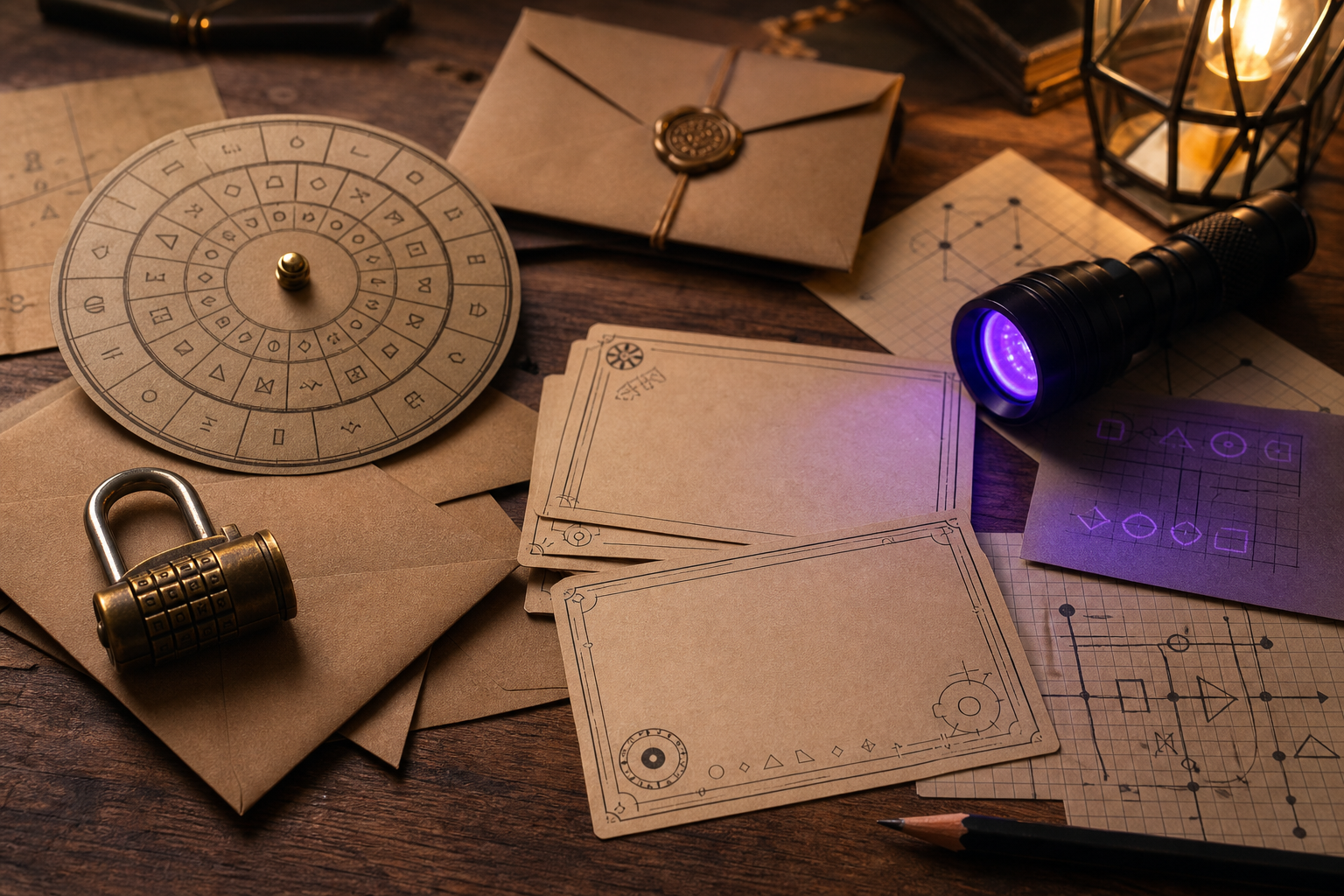
To turn one-clue cards into a printable escape room, connect the answers. Card one gives a number. Card two gives a color. Card three gives a direction. Card four gives a word. Together, those outputs tell players which envelope to open or which final phrase to enter on an answer sheet.
You do not need real padlocks. Paper locks work: draw four boxes for a number code, five blanks for a word code, or a route map with labeled doors. Players care most about the feeling that one solved clue changes what they can do next.
Before running the game, test the chain with one person who did not write it. If they can solve it with one hint or less per card, the difficulty is probably fair. If they need the host to explain the rule every time, rewrite the clues before printing.
Printable Design Checklist
Use large answer spaces. Keep each clue under two lines when possible. Put the difficulty mark in the same corner on every card. Add a host answer key that includes the answer, the rule, and one approved hint. Number the cards even if players can solve them out of order, because reset and cleanup become much easier.
For shareability, include one card that creates a visible aha moment. Category sorting, hidden words, and answer-chain reveals tend to photograph well because players can point to the exact moment the rule clicked. That makes the activity easier to explain to another parent, teacher, or game-night host.
Common Mistakes to Avoid
Do not make every card the same puzzle type. Five word clues in a row can feel like homework. Mix one category clue, one word-change clue, one visual pattern, one mini logic clue, and one answer-chain clue.
Do not use trivia as the main difficulty. A good brain teaser rewards reasoning from what is on the page. If a player has to know a celebrity, brand, sports statistic, or current meme, the puzzle becomes a quiz instead of a fair solve.
Do not skip the answer key. Printable games travel from classrooms to kitchen tables to library rooms, and the person running the activity may not be the person who wrote it. A clean answer key protects the experience.
Internal Link Suggestions
Pair this format with the printable classroom escape room guide, the printable puzzle passport summer challenge, the ten-minute word ladder race, the free puzzles and games page, and the Puzzle Book Finder. Those pages give readers a next step whether they want a full event, a quick word game, or a book recommendation.
Call to Action
Want more screen-free puzzle formats that are easy to print, explain, and replay? Browse PuzzlePlay Books for puzzle books, free games, and printable-style activity ideas built for families, educators, and game-night hosts.