

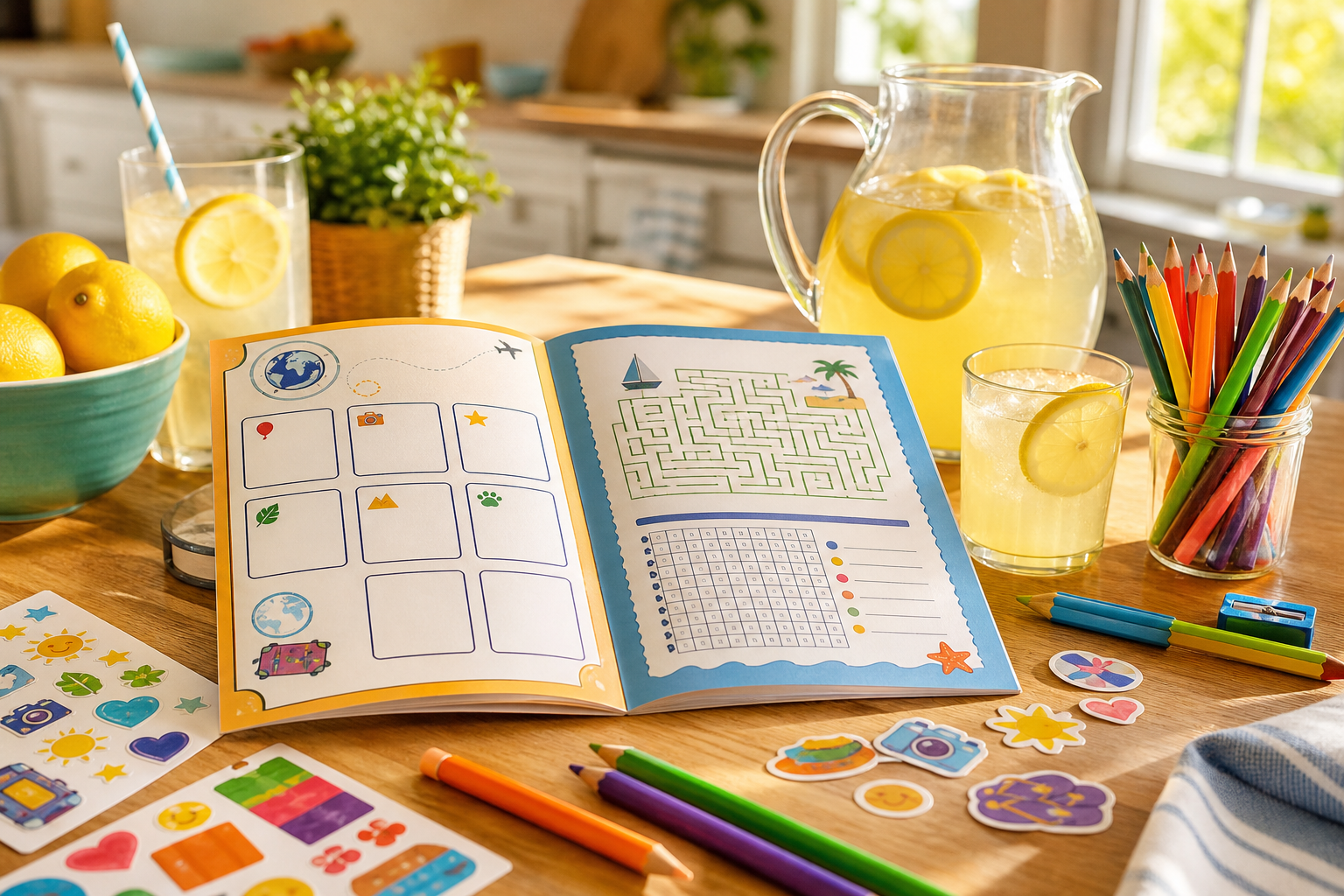


A lighthouse day trip has a rhythm families already know. There is the drive, the parking walk, the first scenic stop, the visitor-center table, the photo break, the weather check, the snack pause, and the moment one child wants to climb the next set of steps while someone else needs one calm seated activity first. That is exactly where a lighthouse-themed printable packet earns its spot.
The timing is practical right now. NOAA says August 7 is recognized as National Lighthouse Day, and its lighthouse explainer notes that lighthouses and beacons warn mariners about dangerous places and help guide vessels safely into and out of harbors. That makes a lighthouse puzzle pack a useful late-summer fit for coastal road trips, museum-style family outings, homeschool geography units, library tables, and classroom travel themes.
The weather side matters too. National Weather Service safety pages are a good reminder that late-summer outings often need shade breaks, indoor pivots, and table-friendly backup plans. Heat can affect everyone, and the same coastal afternoon can also bring thunder, lightning, or surf conditions that change the schedule fast. A printable packet gives families something specific to do when the trip needs a calmer seated window.
One important note first: these pages are best for benches, visitor-center tables, picnic shelters, cafe stops, parked ride-home passenger seats, and at-home follow-up time. They are not for cliff edges, stairs, parking lots, boardwalk crossings, or any moment when adults need full attention on movement, water, or weather.
Why a lighthouse trip puzzle pack works especially well
A good lighthouse printable is short, visual, and portable. Kids can begin quickly, pause without frustration, and come back to the next page after a photo stop, museum room, snack break, or weather delay without losing the point.
Printables help most in moments like these:
• while one adult checks hours, tickets, or trail details.
• while siblings need one quiet table page before the next overlook or exhibit.
• while a coastal stop becomes a shade break instead of a long walk.
• while a road-trip day needs something calmer than another screen.
• while families want one travel-themed follow-up page later that evening.
The packet should stay simple. Good lighthouse pages should work with a printer, pencil, folder, clipboard, or cafe table. They should not depend on scissors, glue, internet access, or one exact site map before anyone can begin.
What makes a good printable lighthouse packet
The best packet is not the thickest packet. It is the one someone can print quickly and actually use on a real outing.
Aim for:
• one clear task per page.
• black-and-white friendly layouts that do not waste ink.
• large answer spaces that still work on laps, clipboards, benches, and car seats.
• a mix of fast visual wins and one or two slightly slower logic pages.
• prompts tied to real lighthouse-trip moments such as maps, beacons, stairs, coastlines, harbor words, keeper tools, and weather pauses.
• pages that still make sense even if the family skips a climb, leaves early, or finishes the packet back at home.
If the packet depends on one exact lighthouse museum, one exact tour script, or a long trivia lecture before kids can begin, it stops being a practical outing printable.
The 15 printable coastal games worth building first
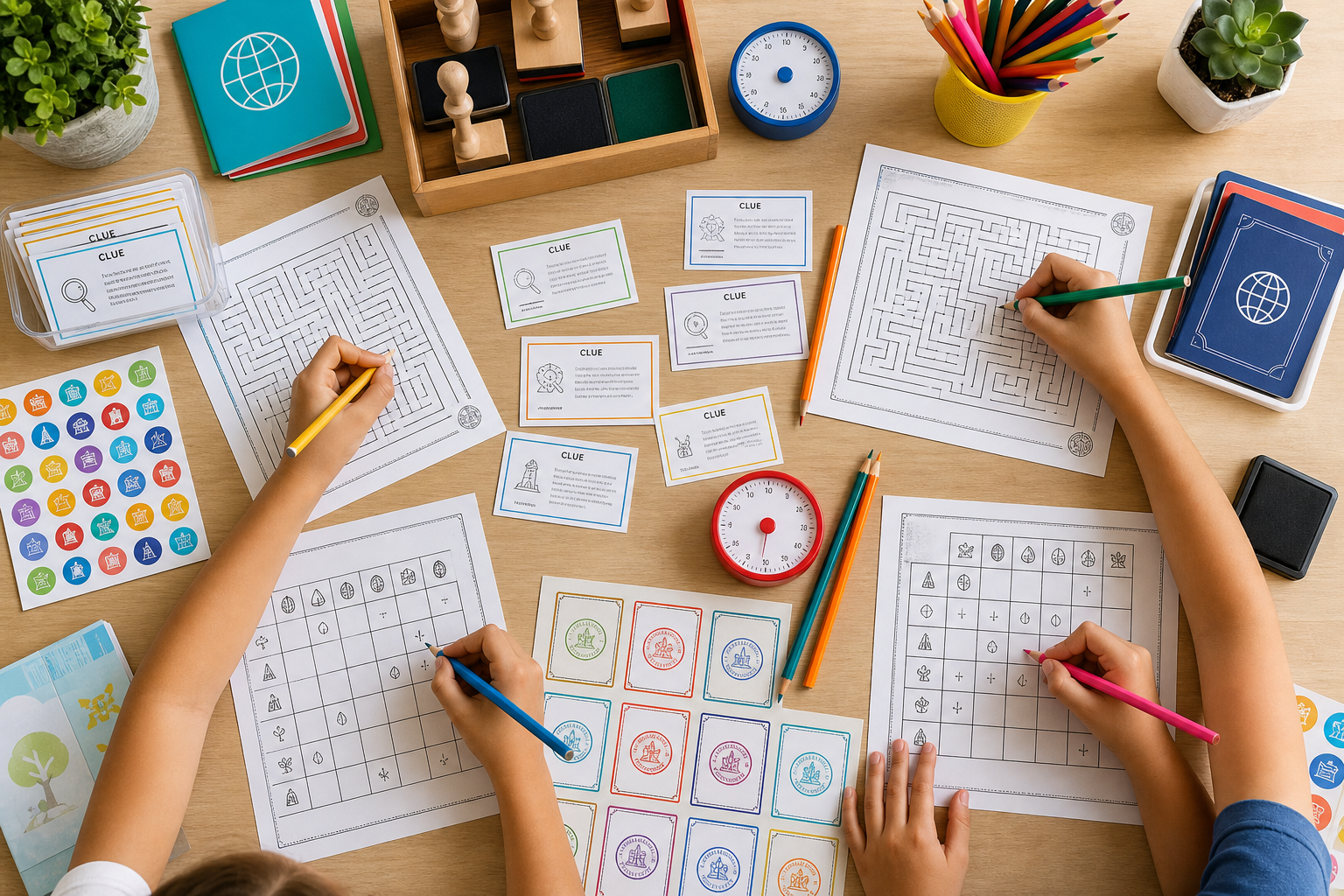
1. Lighthouse word-search sprint
Hide approachable words such as beacon, harbor, coast, keeper, foghorn, map, stairs, and lantern. This is a low-friction opener for mixed ages.
2. Tower-shape match page
Give broad picture or word clues and ask solvers to match lighthouses, windows, lantern rooms, or striped towers by shape or pattern. Keep the page forgiving and beginner friendly.
3. Cliff-to-harbor maze
Draw a simple path from a lookout point to a harbor without crossing rocks, dunes, or blocked paths. Short mazes work better than giant ones during a real outing.
4. Beacon-pattern strip
Alternate light, wave, gull, or shell icons in a simple pattern, then add one slightly harder row underneath. This gives younger solvers a quick visible win.
5. Keeper checklist scramble
Turn travel or site words into a short scramble page using terms such as lens, coast, chart, rope, tide, and watch. Keep the list short enough to finish during a real waiting window.
6. Coast map coordinate clue
Build a tiny pretend map with letters on one side and numbers on the other. Players decode coordinates to find the overlook, gift shop, boardwalk, picnic table, or harbor gate.
7. A=1 lighthouse codebreaker
Use a simple number key to reveal words such as LIGHT, SHORE, TOWER, GUIDE, or BEAM. This adds challenge without adding supplies.
8. Count-the-windows tower page
Show simple lighthouse, gull, wave, or anchor icons and ask players to count windows, stripes, flags, or steps. This works well for younger solvers and still feels on-theme.
9. Safe-viewing scavenger card
Use broad prompts such as find a warning sign, find a map, find a stair rail, find one weather word, find a harbor view, or find one detail on the lantern room. Broad prompts keep the page reusable across different sites.
10. Lighthouse-parts label match
Give players a short list of broad labels such as lantern room, tower, rail, keeper house, or path and ask them to match each term to a simple diagram. Keep it welcoming instead of quiz-heavy.
11. Harbor category sort
Ask players to sort a short list of words into groups such as things you see on shore, things that help boats navigate, and things families might pack for the stop. This adds a satisfying reasoning task without needing a long explanation.
12. One-letter coast ladder
Build a small ladder such as COAST to TOAST or SHORE to SHARE with one-letter changes. This gives older solvers a stronger word challenge without extra materials.
13. Mini lighthouse logic puzzle
Use three kids, three stops, and three snack picks with a few short clues. Keep it short enough to solve in under three minutes so it feels satisfying instead of heavy.
14. Postcard from the point prompt
Give players three short lines to name one detail they noticed, one weather clue they checked, and one place they would revisit next time. This keeps the packet from becoming only mazes and grids.
15. Final beacon password
Let answers from earlier pages supply letters for one last word such as SHORE, LIGHT, TOWER, HARBOR, or GUIDE. This is the page that makes the whole packet feel complete.
Three ready-to-use mini examples
These are simple enough to build before the next outing.
Example 1: quick riddle
Clue: I shine near the shore and help boats find safe water, but I am not the sun. What am I? Answer: a lighthouse.
Example 2: tiny codebreaker
Use A=1, B=2, C=3.
19 - 8 - 15 - 18 - 5
Answer: SHORE.
Example 3: mini logic clue
Maya, Theo, and June each picked one page: maze, word search, and codebreaker.
• Maya did not pick the maze.
• Theo did not pick the codebreaker.
• June did not pick the word search.
Answer: Maya picked the word search, Theo picked the maze, and June picked the codebreaker.
How to pack a reusable lighthouse folder
A strong lighthouse packet usually needs only six to ten pages.
Start with:
• 2 quick word, count, or pattern pages.
• 2 observe-or-browse pages such as a map clue or scavenger card.
• 2 logic or code pages.
• 1 short writing or drawing page.
• 1 final password page.
• 1 answer key.
That mix is enough for a family outing folder, a coastal road-trip clipboard, a library travel-theme table, or a classroom geography bin without making the stack feel bulky.
Family road-trip and rainy-rental version
For families, start with the word search, pattern strip, and scavenger card during the drive or the first bench stop. Save the logic page, the writing prompt, and the final password for a visitor-center table, a snack stop, or later that evening at the rental. That pacing keeps the packet useful instead of letting every page disappear before the main viewpoint or tour even begins.
If weather changes the plan, the packet still works. That is a big part of the value. NOAA's lighthouse page is a reminder that these sites are part of a real navigation story, while National Weather Service safety pages are a reminder to keep the family plan flexible when heat, lightning, or coastal conditions shift the day.
Classroom, library, and homeschool version
For teachers, librarians, and homeschool planners, this theme works well for U.S. history tables, map units, coastal geography weeks, summer travel displays, and mixed-age quiet blocks. Use the lighthouse-parts match, map coordinate clue, one codebreaker, and the final password puzzle as short stations, then keep the answer key nearby so the activity stays self-directed.
Because the theme is broad, the packet can keep working after the trip. Kids can use the same pages to talk about navigation, coastlines, weather, travel planning, observation, and favorite stops without depending on one exact lighthouse being on the page.
Fast answers to common buyer questions
What ages work best for lighthouse printables?
Most lighthouse-themed printable packs work best for ages 5 and up, with easier count, match, and pattern pages for younger kids and logic or code pages for older kids, tweens, and mixed-age family groups.
What supplies should the packet assume?
Assume only a printer, pencil, and optional folder or clipboard. If a page needs markers, scissors, or internet access to function, make that obvious before anyone prints it.
Do these pages only work at a lighthouse?
No. The same packet can work before the trip, during a visitor-center break, on the ride home, or later in a classroom, library, homeschool, or family activity station.
How long should a lighthouse puzzle session last?
Ten to twenty-five minutes is usually enough for a scenic stop, visitor-center table, snack break, weather pause, or calm rental-house reset. Shorter sessions are often easier to repeat than one long packet marathon.
Common mistakes to avoid
Do not make every page depend on one exact lighthouse map, one exact spiral staircase, or one age band.
Do not use tiny type or cramped answer spaces that fail on a lap, bench, or car seat.
Do not turn the whole packet into a trivia test or a long safety lecture.
Do not forget the practical side of the outing. Check the current site details before leaving, and keep printed pages for seated stops away from cliffs, surf, stairs, and active road crossings.
Internal link suggestions
Pair this topic with the Road Trip Puzzle Pack, the Beach Day Puzzle Pack, the Aquarium Trip Puzzle Pack, the National Park Puzzle Pack, the free puzzles and games page, and the Kids Coloring Playroom. Readers who like this theme often want another printable-friendly activity for the drive, the visitor-center table, or the next summer outing.
Call to action
Want more printable-style activity ideas that work on real tables, in real cars, and on real family outings? Browse PuzzlePlay Books for family-friendly puzzle guides, road-trip games, and practical screen-light activities that are easy to print and easy to reuse.