


A good escape room does not need a rented venue, a wall of props, or a locked cabinet.
For classrooms, birthday parties, family night, clubs, camps, senior centers, and rainy afternoons, the most useful version is smaller: four paper clues, a timer, a final code, and a table full of people arguing kindly about what the next answer means.
That is the mini paper escape room.
It gives people the best part of an escape room, shared problem solving, without the setup burden that usually kills the idea before it starts.
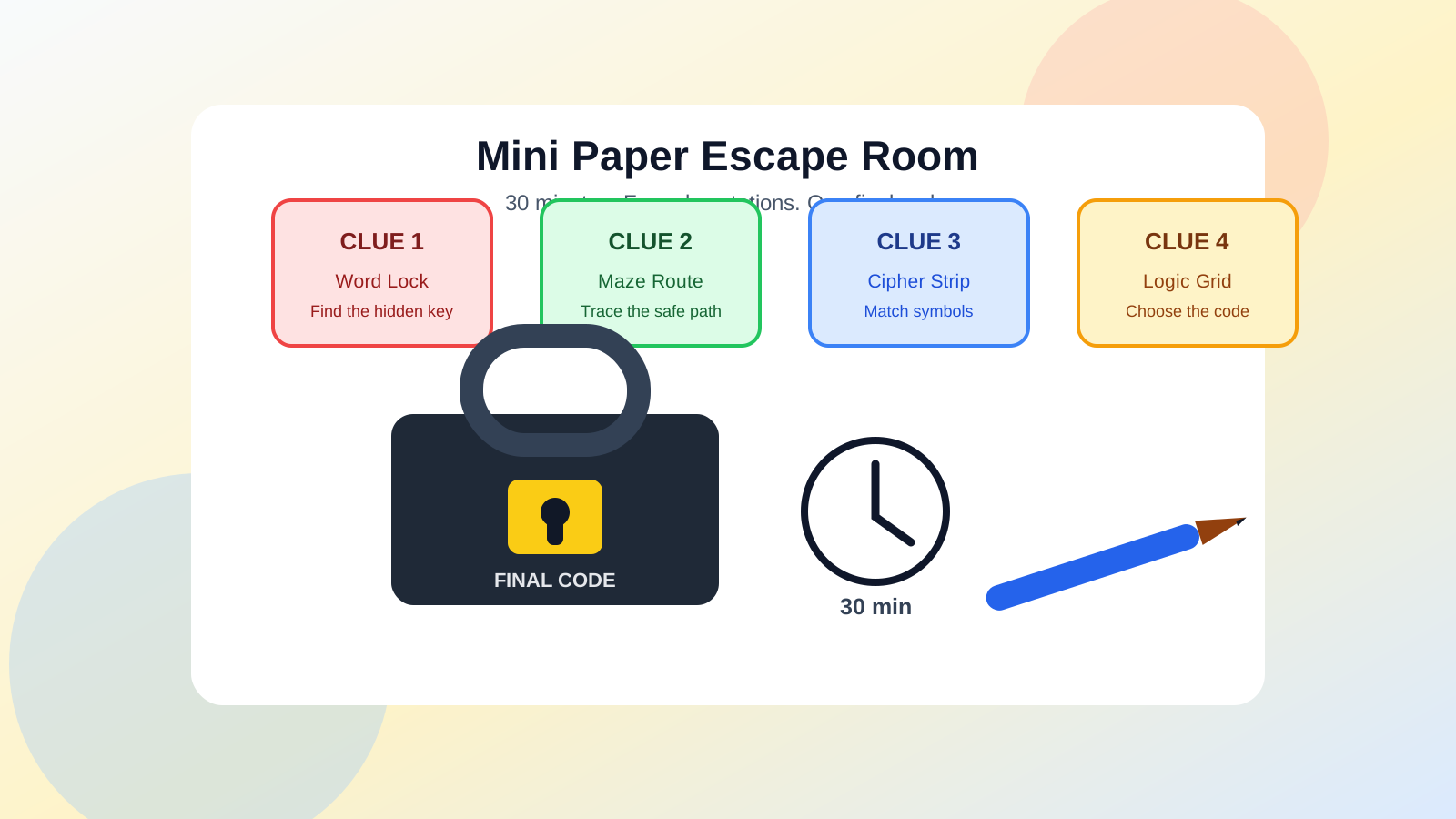
The format is simple enough to run in 30 minutes. Print the clue cards, tuck each one into an envelope, give each team a pencil and answer sheet, then let the final code unlock the last reveal.
Why Mini Paper Escape Rooms Work
Full escape rooms are memorable because they combine urgency, teamwork, clues, and a physical goal. A paper version keeps those ingredients but removes the parts that make hosting hard.
You do not need special locks. You do not need a decorated room. You do not need one adult hovering over every step. You need a clean sequence of clues that produces a final answer.
The paper version also scales. One family can solve around a kitchen table. A teacher can run teams of four. A party host can print three versions and rotate groups. A club leader can keep the same structure and swap only the theme.
The best version feels like a game, not a worksheet. The difference is presentation: envelopes, a timer, team names, hint tokens, and a final reveal all make the same paper puzzles feel more alive.
The 30-Minute Room Plan
Use a tight structure so people spend their time solving instead of waiting for instructions.
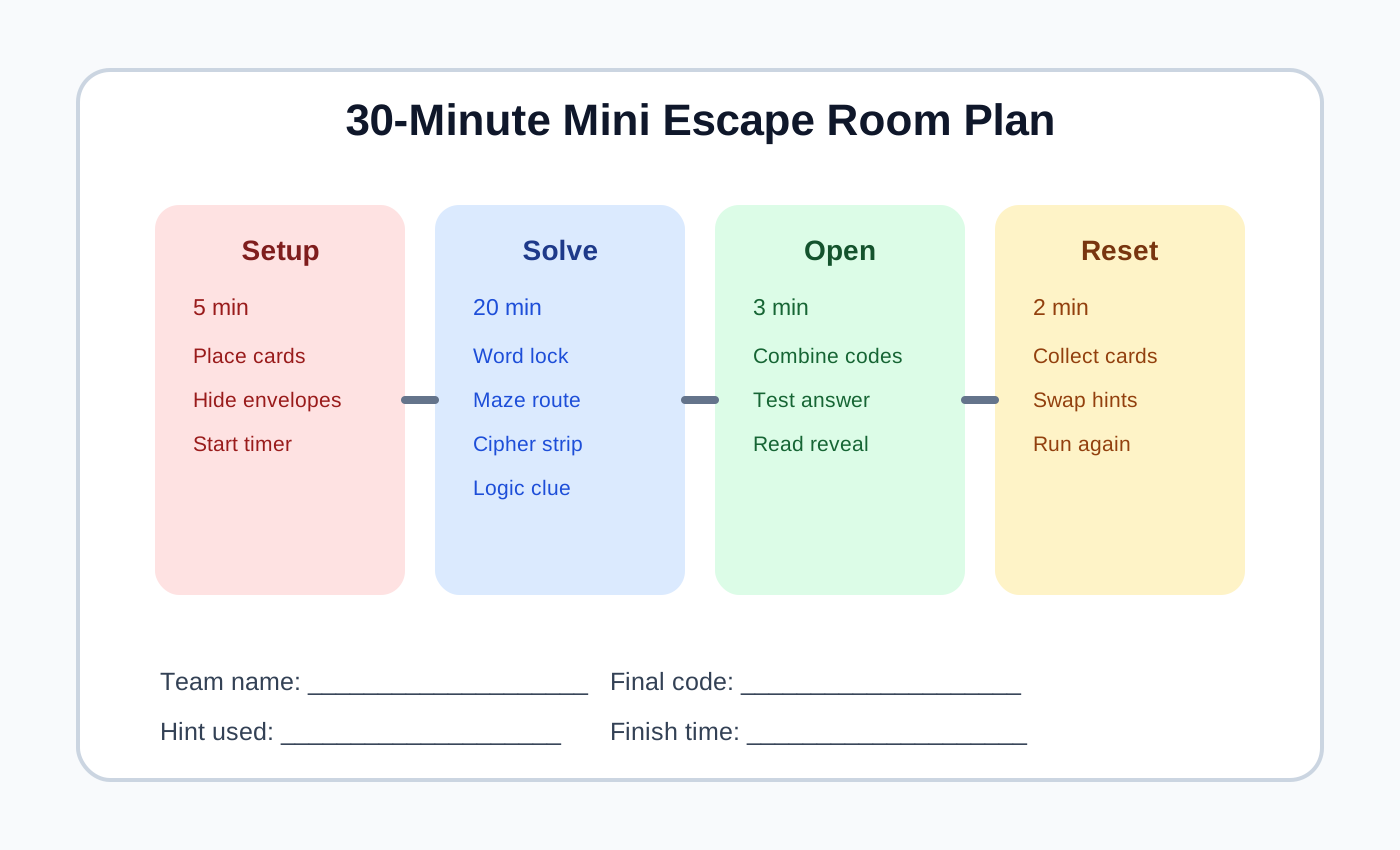
Five minutes for setup: place the envelopes, hand out answer sheets, explain the goal, and start the timer.
Twenty minutes for solving: teams work through four clue stations. Each solved clue gives one letter, number, word, or symbol for the final code.
Three minutes for the final code: teams combine their clue answers, test the answer, and open the final reveal.
Two minutes for reset: collect the cards, return the envelopes, and swap in a new answer key if another group is playing.
The host script can be one sentence: Solve the four envelopes, use each answer to build the final code, and spend a hint token if your team gets stuck for more than three minutes.
That is enough. Long instructions flatten the room before it begins.
What Goes in the Printable Pack
A clean mini paper escape room has six printable pieces.
First, a one-page host sheet with the theme, answer key, setup order, hint wording, and final reveal.
Second, four clue cards. Each card should solve in three to five minutes. If a clue needs ten minutes by itself, it belongs in a longer escape-room kit.
Third, an answer sheet where teams write the clue answer, final code, team name, hint count, and finish time.
Fourth, hint tokens. Three tokens per team is enough for a 30-minute game.
Fifth, a final reveal card. This can be a congratulation message, a bonus riddle, a silly certificate, or a prompt to choose the next game.
Sixth, a reset note for the host so the game can run again without sorting through every envelope.
The clue cards should be visually different. Use color bands, station numbers, or large headings so teams can talk about clue one, clue two, clue three, and clue four without confusion.
Four Clue Types That Always Work
The safest clue mix is one word clue, one path clue, one symbol clue, and one logic clue.
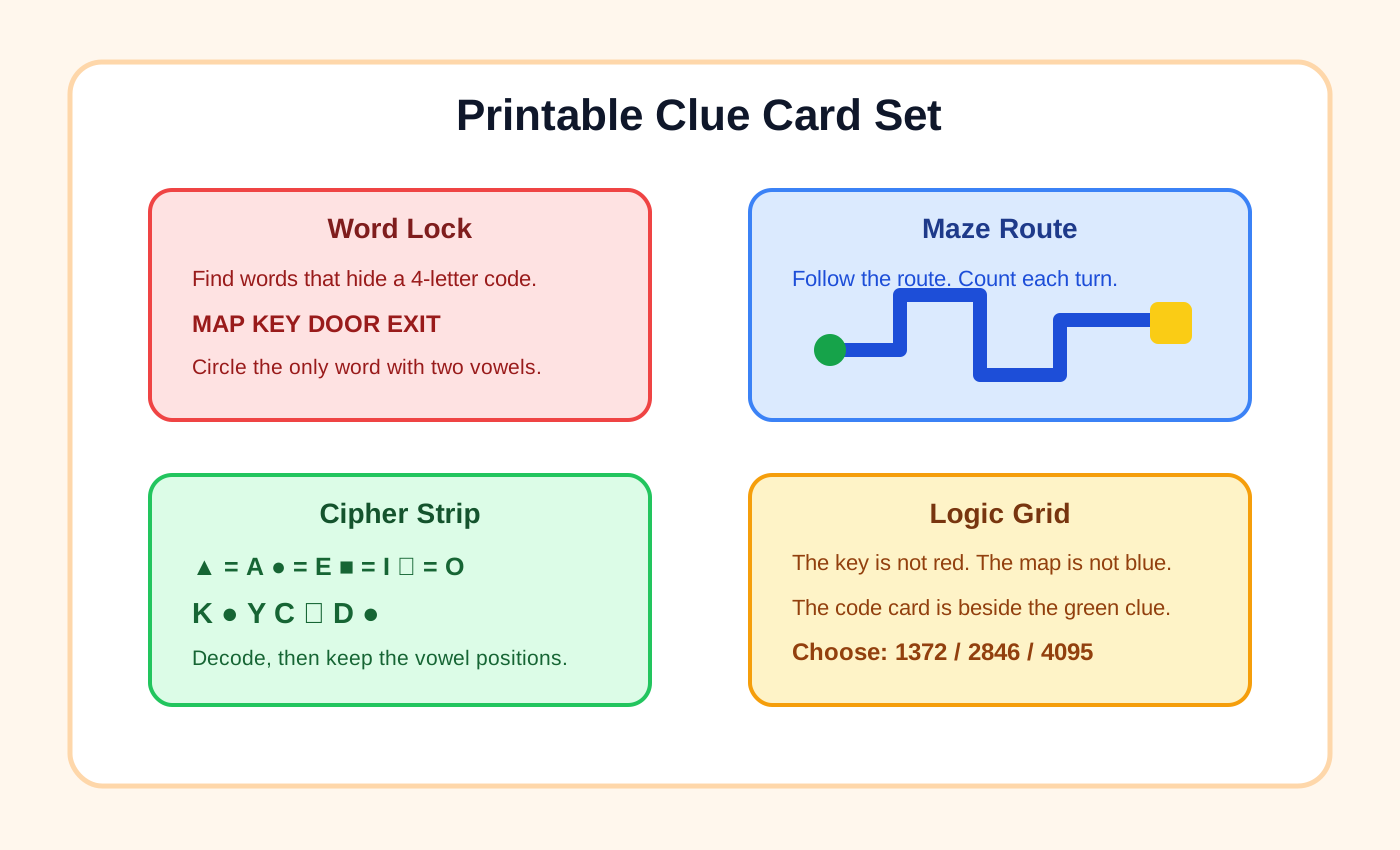
A word clue can be a mini word search, hidden acrostic, missing-letter list, or vocabulary match. It gives readers an easy entry point.
A path clue can be a maze, map route, arrow sequence, or left-right instruction. It gives visual solvers something to do.
A symbol clue can be a small cipher, substitution strip, icon key, or pattern match. It makes the game feel like an escape room without needing anything digital.
A logic clue can be a three-line deduction puzzle, ordering puzzle, matching grid, or eliminate-the-wrong-code challenge. It gives the final answer more weight.
For younger kids, make the word clue easiest and the logic clue mostly visual. For adults, make the symbol clue cleaner and the logic clue sharper. For mixed-age family night, let kids own the maze and adults handle the code combination.
Three Printable Escape-Room Puzzle Sets
Here are three original starter sets you can use as models.
Set 1: Classroom Secret Library. Clue one is a word search with book words: shelf, cover, page, index, author, title. The circled unused letters spell READ. Clue two is a maze through library shelves that passes four numbered books. Clue three is a simple symbol key that turns icons into the word STACK. Clue four says the final code is the only word that connects page, shelf, title, and stack. Final answer: BOOK.
Set 2: Birthday Cake Lock. Clue one hides flavor words in a mini grid. Clue two traces a path through candles and counts only blue flames. Clue three matches party icons to letters. Clue four eliminates three fake codes using clues from the first three cards. Final code: 2846.
Set 3: Family Night Time Machine. Clue one sorts household objects into past, present, and future. Clue two follows a timeline maze. Clue three decodes clock symbols. Clue four asks teams to place four events in order. Final code: 1957.
Keep these examples original if you turn them into a printable. Do not copy a commercial escape-room kit, daily puzzle, branded clue layout, or venue puzzle. The value is the structure, not someone else's answer key.
How to Make the Final Code Fair
The final code should feel inevitable after the clue answers are known.
The cleanest method is one answer per clue. Four clues produce four code parts. The team writes those parts into a visible final-code box.
If clue one gives B, clue two gives O, clue three gives O, and clue four gives K, the final answer is BOOK. That is simple, but it works because nobody has to guess how the answers combine.
A number code works the same way. Four clue cards can each produce one digit. If the answer needs a lock-style four-digit code, make sure each card clearly says where its digit goes.
Avoid final codes that depend on an extra leap the players were never told to make. If the clue answers are moon, river, key, and apple, do not expect a team to infer some private theme unless one card directly points them there.
Difficulty Settings by Audience
For classrooms, build around speed, clarity, and collaboration. Teams should get quick wins. Make hint text direct, not coy.
For birthday parties, lean into theme and movement. Put clue envelopes in different corners, but keep the answer sheet at one table so nobody loses the thread.
For family night, mix reading levels. Give one clue that a child can lead, one clue that rewards careful reading, one visual clue, and one final code everyone can check.
For adults, make the clues cleaner instead of simply harder. A satisfying adult puzzle usually has fewer words, better misdirection, and a fair reveal.
For seniors or low-vision groups, use large type, high contrast, wide spacing, and fewer tiny symbols. The goal is problem solving, not squinting.
Run It Without Turning It Into Chaos
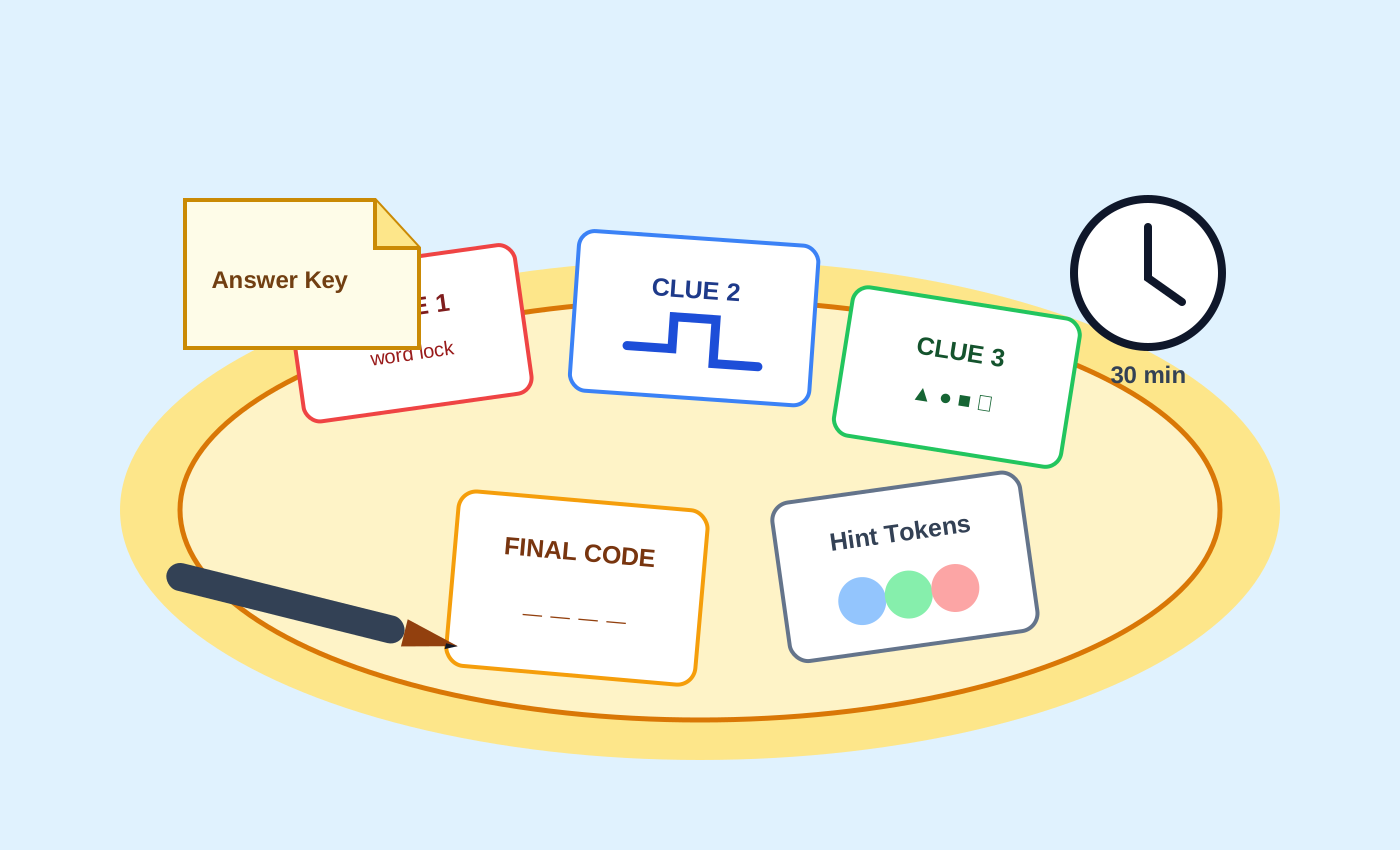
The biggest risk is not that the clues are too easy. The biggest risk is that the room becomes administratively messy.
Use one envelope per clue. Number the envelopes. Put the answer key somewhere only the host can reach. Give each team the same number of hint tokens. Decide before the timer starts whether teams can solve clues in any order.
For most groups, any order is easier. Teams can jump away from a stuck clue and keep momentum.
For classrooms, assign one recorder, one envelope manager, one timekeeper, and one final-code checker per team. Roles keep loud groups from turning every clue into a crowd scene.
For parties, avoid hiding anything fragile, private, sharp, expensive, or easy to knock over. A paper escape room should make the host calmer, not more nervous.
Hint Tokens That Help Instead of Spoil
A hint token should reduce frustration without giving away the win.
Use three levels.
Hint one points attention: Look at the first letter of each answer.
Hint two narrows the method: Read the circled letters from left to right.
Hint three gives the final step: The four answers make a four-letter word.
Write the hints on the host sheet before the game starts. Improvised hints usually say too much or too little.
Printable Design Rules
A mini escape room has to survive real tables.
Use big clue numbers. Keep cards one-sided when possible. Leave answer spaces large enough for kids and older adults. Avoid low-contrast gray text. Do not place critical clue information only in color, because not every printer or solver will handle color the same way.
If you are making a pack for repeated use, include a cut-card version and a full-page version. The cut-card version feels more like a game. The full-page version is easier for classrooms and remote printing.
Add a plain answer key at the end. The host should not need to solve the room again while a group waits.
Common Mistakes to Avoid
Do not make every clue the same type. Four ciphers in a row gets tired fast.
Do not hide the final answer behind a joke only the creator understands.
Do not make kids read a paragraph before every clue.
Do not require a phone scan, QR code, app, or login unless the whole point of the event is hybrid play.
Do not put tiny symbols on a page meant for a whole classroom.
Do not punish hints. Hint tokens exist so the game keeps moving.
Try the Four-Envelope Version
Try the first version tonight with four envelopes: word lock, maze route, cipher strip, and logic grid. Put a 30-minute timer on the table and make the final code open a note that says which snack, book, or next game the group chooses.
If the table likes the format, build a screen-free puzzle stack around it: word searches for quick wins, Sudoku for logic practice, coloring pages for calm breaks, and mini paper escape rooms for shared game-night energy.
For more paper-first game ideas, use the Puzzle Book Finder, browse the article library, or start with the Amazon Quick Shop on PuzzlePlayBooks.com.