

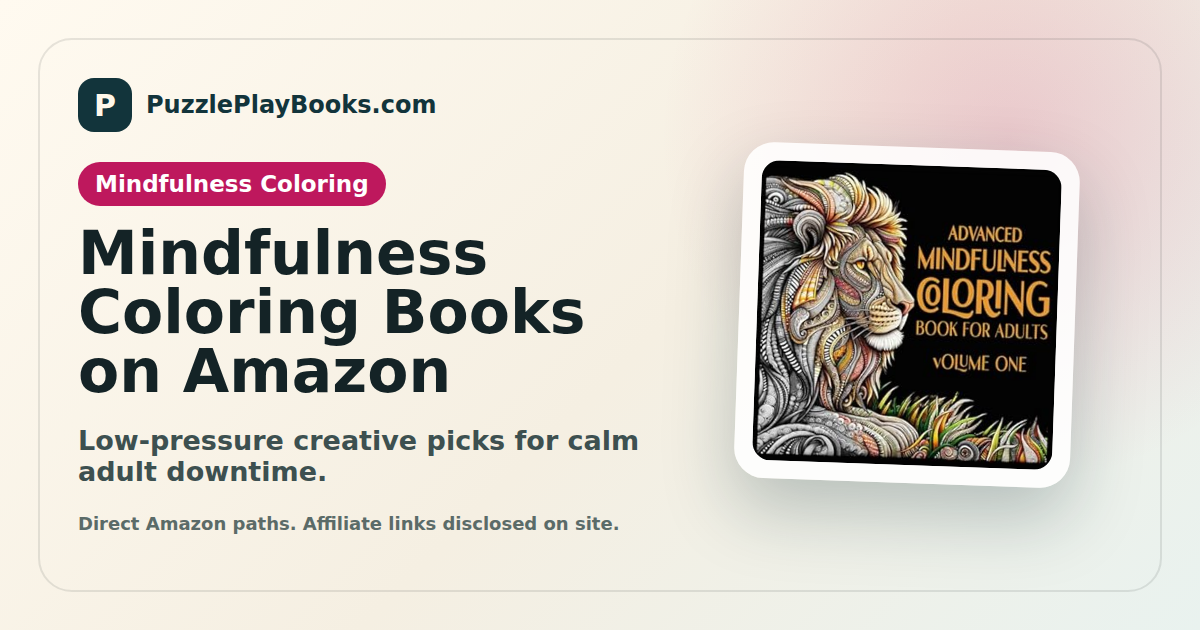


Mandala coloring gives adults a structured way to be creative without staring at a blank page. The design is already there, but the color decisions are yours.
Why Mandalas Work
A mandala is built around repetition, balance, and pattern. That makes it easy to begin. Instead of deciding what to draw, you decide how to move color through a set of shapes. The page gives you a path, and your palette gives it personality.
This is why mandalas work well for creative focus. The repeated sections invite rhythm. You can color from the center outward, from the outside inward, or in rings. Every approach gives the page a different feeling.
Start With a Small Palette
The easiest beginner trick is to choose three colors before touching the page. Pick one light color, one middle color, and one darker accent. Repeat those colors around the mandala before adding anything else.
A limited palette removes decision fatigue. It also makes the finished page look more intentional. Once the main rhythm is established, you can add a fourth or fifth color for contrast.
Easy Palette Ideas
Try ocean colors with teal, blue, and navy. Try sunset colors with yellow, coral, and deep red. Try garden colors with green, lavender, and rose. Try high contrast with black, white space, and one bright accent.
You do not need to fill every space. White space can make a mandala feel cleaner and more polished.
Choose the Right Tools
Colored pencils are the most forgiving choice for detailed mandalas. They layer well, sharpen for tiny spaces, and make it easier to build soft transitions. Markers create bold color, but they can bleed through some paper, so test first. Gel pens are useful for highlights, dots, and small decorative areas.
If you are coloring in a paperback book, place a spare sheet of paper behind the page when using markers. That protects the next design and gives you more freedom to experiment.
Color From the Center Out
One satisfying method is to start in the center and repeat a pattern as you move outward. Use the same color on matching shapes, then choose a related color for the next ring. This creates a calm, balanced look.
Another method is to color by shape type. Fill every petal first, then every circle, then every border. This turns the page into a scavenger hunt and makes complex mandalas easier to manage.
Use Contrast on Purpose
Contrast is what makes a mandala pop. Put dark colors next to light colors. Use warm colors beside cool colors. Leave a few spaces blank near a bold section. If the page starts to look flat, add a darker outline or a tiny bright highlight.
Contrast does not have to be dramatic. Even a soft gray next to pale yellow can help a pattern become easier to see.
Beginner Exercises
Try a three-color mandala. Try one page using only cool colors. Try one page where every ring gets darker as it moves outward. Try a page where one accent color appears exactly twelve times. Small rules make creativity easier because they turn the page into a friendly challenge.
Making Printable Mandalas
If you want to experiment before using a book, create a printable coloring page and test palettes in the Kids Coloring Playroom. Digital coloring is useful for quick color planning, while printed books are better for a quiet pencil-and-paper routine.
Where to Start
Browse adult coloring books when you want finished paperback collections. Choose mandalas when you want symmetry and pattern. Choose fantasy homes, animals, birds, fish, or nature scenes when you want a more illustrative page.
Mandala coloring is not about proving you are an artist. It is about making one color choice, then another, until the page begins to feel alive.