
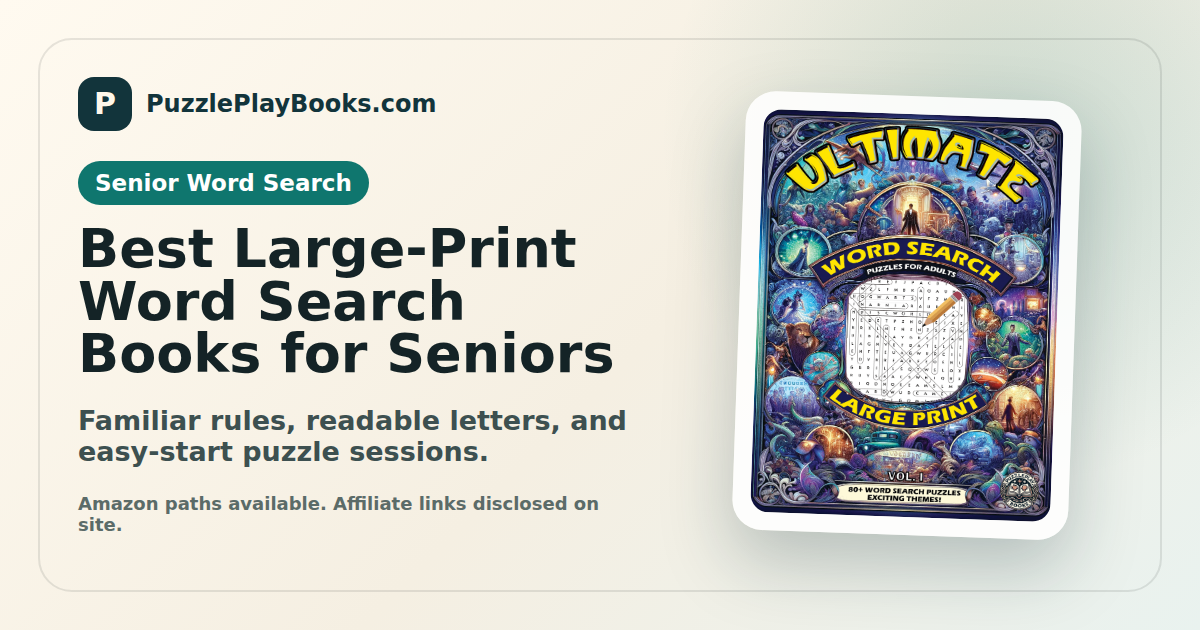


Large-print word search books are popular with seniors for a simple reason: they remove friction. Bigger letters, clearer clue lists, and comfortable spacing let the reader focus on the puzzle instead of fighting the page.
Large Print Is About Comfort
A good large-print puzzle book is not just a normal book made bigger. The grid should be easy to scan, the word list should have enough breathing room, and the page should avoid cramped decoration that competes with the letters.
Comfort matters because word searches are often used during quiet afternoons, travel, waiting rooms, family visits, and evening routines. A page that is easy to read is more likely to be used again.
What to Look For
Start with letter size and contrast. The letters should be dark enough to read under normal household lighting. The grid should have clear spacing between rows and columns. The word list should be organized so the reader can cross off words without losing their place.
Then look at the puzzle count and difficulty. Some seniors enjoy quick wins. Others want longer, denser grids. A strong book usually offers enough variety that the reader can choose an easier page on tired days and a harder page when they want more challenge.
Themes Make the Book More Personal
Themes can turn a simple word hunt into a memory-friendly activity. Nature, classic movies, music, hobbies, holidays, travel, national parks, gardening, baking, and nostalgic decades are all approachable themes for senior readers.
The best theme is one the reader already likes. A grandparent who loves travel may enjoy place-name puzzles. A retired teacher may like literature or history themes. A gardener may come back to flower, bird, and outdoor puzzles more often than a generic collection.
How Caregivers Can Use Word Searches
Large-print word searches can be useful as low-pressure shared activities. Sit beside the reader, choose one page, and work through the list together. Avoid turning the session into a test. The point is comfort, conversation, and a small satisfying finish.
For group settings, choose a theme that invites talk. Holidays, music, local places, food, and seasons give people something to comment on while they solve. Keep pencils, erasers, and extra copies ready so the activity starts smoothly.
Common Buying Mistakes
Do not choose a book only because it says large print on the cover. Look for readable sample pages when available. Some books use larger letters but still crowd the grid, shrink the word list, or use decorative backgrounds that make scanning harder.
Also avoid assuming easier is always better. Many seniors are experienced solvers and want real challenge. A good fit balances comfortable print with satisfying puzzle design.
Word Search Versus Sudoku
Word search is usually easier to start because the rules are familiar and the page gives immediate visual clues. Sudoku can be a better fit for readers who enjoy logic and number placement. Many households benefit from having both options available.
If the reader is new to puzzle books, begin with word search. If they already solve regularly, add large-print Sudoku for variety.
Gift Bundle Ideas
A large-print word search book makes a practical gift when paired with a smooth pencil, a good eraser, page flags, and a clip-on reading light. For a care package, add tea, a bookmark, and a second book with a different theme.
Keep the bundle simple. The goal is to make the first session effortless.
Where to Start
On PuzzlePlayBooks.com, browse large-print puzzle books and word search collections first. Choose by print comfort, theme, and reader preference. The best book is the one that feels easy to open and satisfying to return to.