

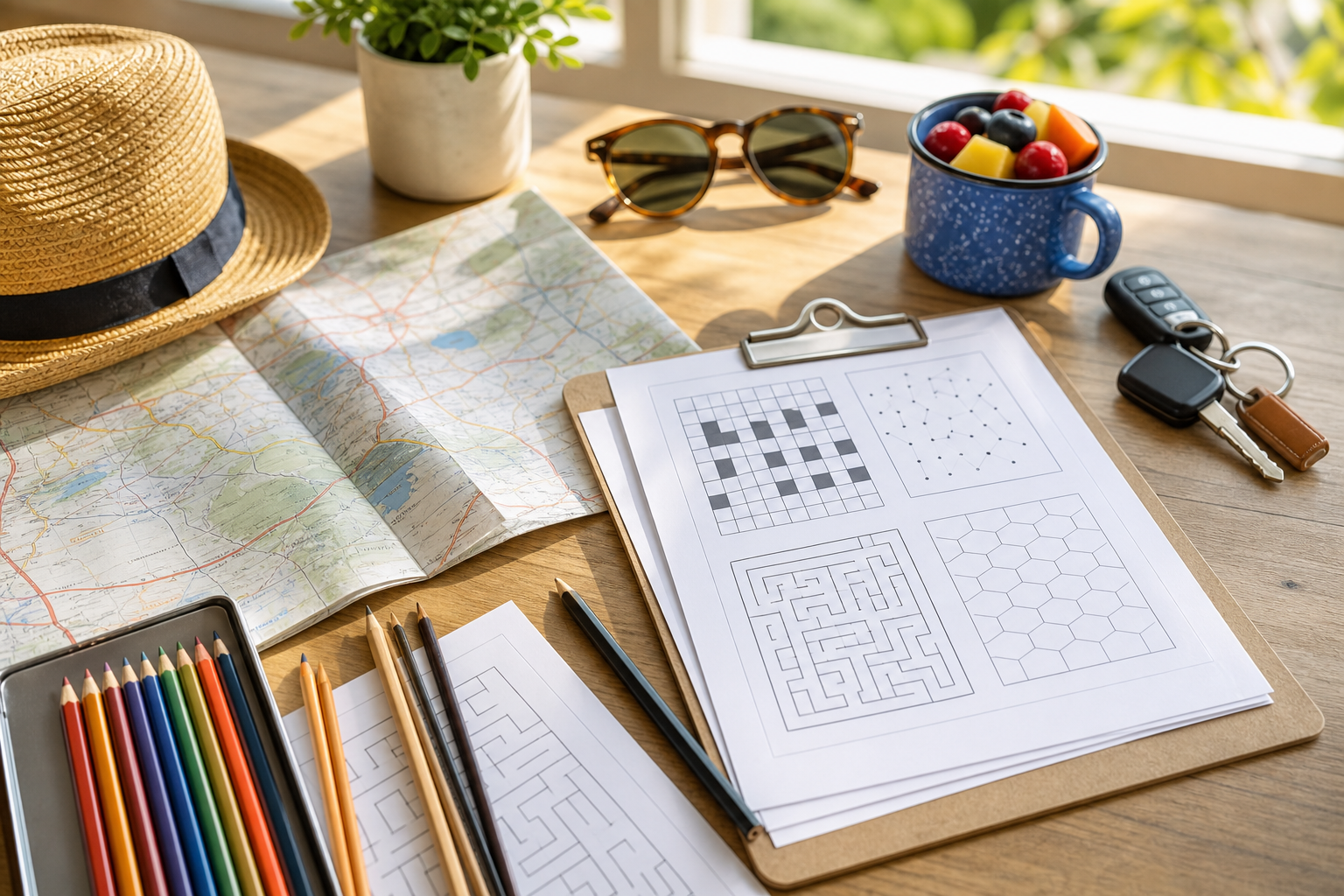


Labor Day weekend sounds relaxing until it turns into real life: packed bags, snack stops, weather changes, cousins on the porch, one child asking for a phone, another asking when lunch is ready, and adults trying to squeeze one more calm family activity out of the last stretch of summer. That is exactly where a Labor Day puzzle pack helps.
The timing fits right now. The U.S. Department of Labor still frames Labor Day as the September holiday honoring workers, while the National Weather Service and Ready.gov keep heat guidance live because late-summer events, travel, and outdoor gatherings can still run hot. In practical terms, this is a strong moment for printable pages that work indoors, in the shade, on a road trip break, or during one more screen-light family table block before fall schedules take over.
A good Labor Day printable is not a giant packet that demands a perfect afternoon. It is a small set of pages that starts fast, pauses cleanly, and still feels useful in a hotel room, picnic shelter, library program, classroom soft start, or kitchen-table reset after the holiday.
One important note first: these pages work best during seated, supervised activity windows such as passenger-seat travel breaks, picnic-table downtime, porch quiet time, library tables, hotel lobbies, classroom soft starts, and family table routines. They are not for drivers, bike rides, parking-lot walks, pool edges, or any moment when adults need full attention on movement, weather, or water safety.
Why a Labor Day puzzle pack works especially well
Holiday weekends create short waiting windows. Families wait for food, travel legs, check-in, grandparents, parade starts, weather delays, and the moment everyone is finally ready to leave. Long worksheets usually fail in those conditions because kids lose the thread when the plan changes. Short puzzle pages hold up better because each page has one visible task, one small finish line, and one easy restart point.
Labor Day also sits in a useful overlap zone. Some families are still traveling. Some classrooms, libraries, and aftercare groups want one seasonal printable before early-fall routines lock in. Some parents simply want a calm backup that feels a little more thoughtful than handing over another screen. That is why this theme works for parents, teachers, librarians, homeschool planners, and family activity buyers at the same time.
What makes a good long-weekend packet
The best packet is not the thickest packet. It is the one someone can print quickly and actually use on a real holiday schedule.
Aim for:
• one clear task per page.
• black-and-white friendly layouts that do not waste ink.
• answer spaces large enough for laps, clipboards, seatback trays, and picnic tables.
• a mix of visual pages, wordplay, and one or two light logic pages.
• prompts tied to broad late-summer moments such as roads, coolers, blankets, parades, porch swings, snacks, maps, and rest stops.
• pages that still make sense whether the family is traveling, staying home, or regrouping after the weekend.
If every page depends on one exact destination, one exact parade route, or one exact cookout plan, the packet stops being practical for most buyers.
The 15 printable long-weekend games worth building first
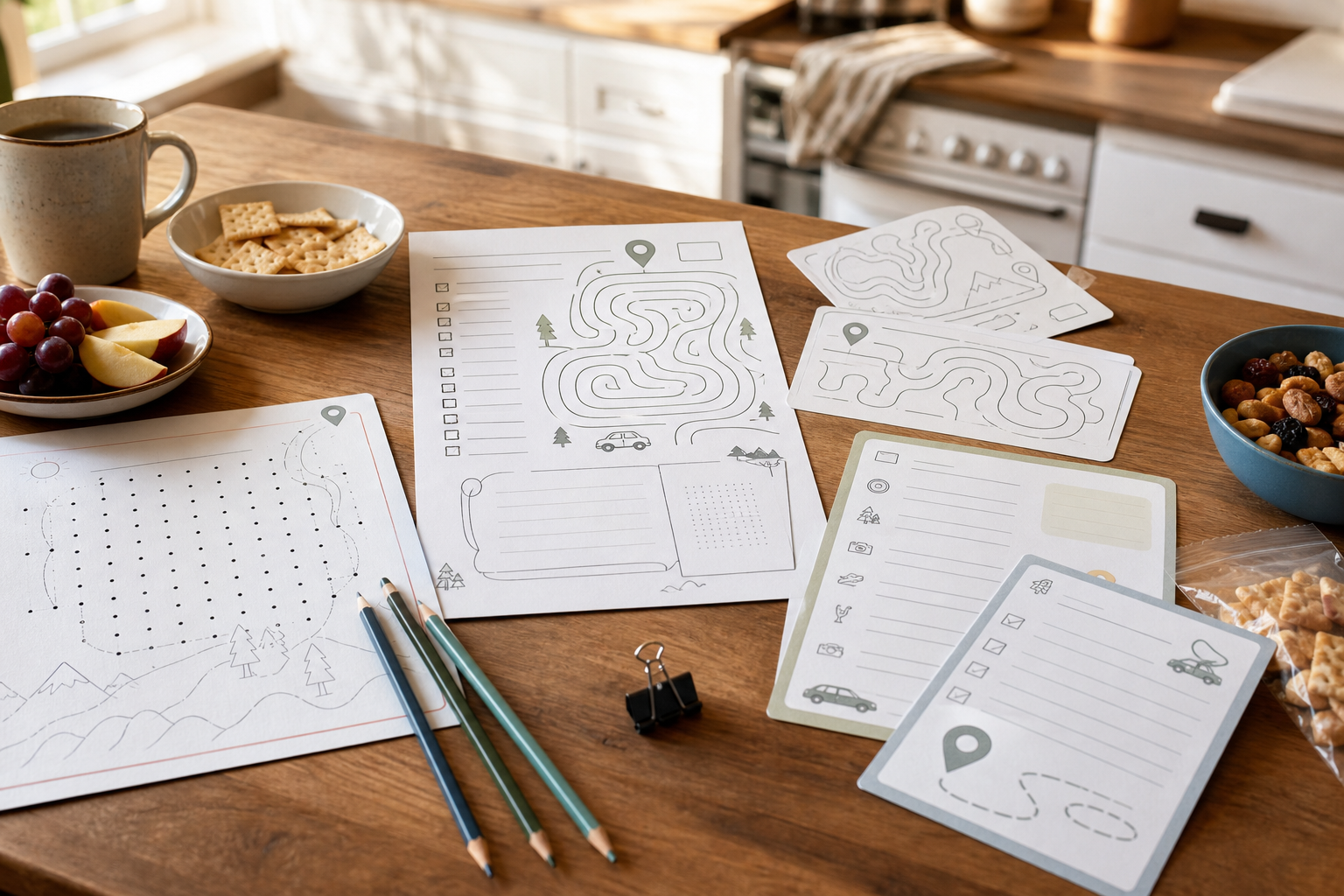
1. Labor Day word search
Hide approachable words such as PICNIC, PARADE, HOLIDAY, BLANKET, COOLER, ROAD, RELAX, and MONDAY. This is the easiest opener for mixed ages and tired travelers.
2. Snack-stop category sort
Give a short list of road-trip and picnic words and ask solvers to sort them into groups such as travel gear, foods, outdoor items, or rest-stop signs. This adds structure without needing a long explanation.
3. Cooler-to-blanket maze
Draw a simple route from the packed cooler to the picnic blanket, campsite table, or porch snack tray without crossing blocked spaces. A short maze works well when attention spans are low.
4. Suitcase symbol Sudoku
Use a mini 4x4 Sudoku with suitcase, sandwich, sun, and water-bottle icons instead of numbers. This keeps the page approachable for younger solvers and still gives older kids a clean logic move.
5. Parade pattern strip
Use repeating flags, kites, stars, hats, or folding chairs in an easy-to-see sequence, then add one second row that is slightly trickier. Pattern pages are strong when someone wants a fast win before lunch is ready.
6. Picnic spot-the-difference
Show two simple picnic-table scenes with a few changes such as one missing apple, one swapped cup, or one extra napkin. This works across ages and still feels themed without needing much reading.
7. BREAK codebreaker
Use a simple A=1 code to reveal words such as BREAK, SHADE, TRIP, REST, or SNACK. This adds challenge without adding extra supplies.
8. This-or-that outing clue card
Show two options such as beach or backyard, cabin or hotel, park or porch, then give a few clues that help solvers choose the better fit. This keeps the page interactive without needing everyone to stand up and vote.
9. Flag-and-cooler count page
Scatter broad holiday icons across the page and ask players to tally each one, compare totals, and circle which appeared most. Younger kids can finish the page even if older siblings move on to harder ones.
10. Road-sign rebus strip
Use simple pictures and letters to hint at words such as STOP, TURN, MAP, ROAD, or REST. Rebus-style pages travel well because the instructions are obvious at a glance.
11. Packing-list odd-one-out
Show four small groups of travel or picnic items and ask solvers to cross out the one that does not belong. This turns familiar objects into a quick reasoning task.
12. Long-weekend logic mini
Use three kids, three activities, and three snack choices with a few short clues. Keep it short enough to solve in under three minutes so the page still works during a real holiday interruption.
13. First-next-last trip sequence
Give three or four simple steps such as pack bag, drive, eat lunch, clean up and ask solvers to number them in a sensible order. This is especially useful for younger kids who like visible structure.
14. Porch riddle row
Add five short riddles with simple answer lines. Example themes can include sandals, coolers, lemonade, folding chairs, maps, and backpacks. This is strong for mixed-age tables because one person can read and others can guess.
15. Final REST password page
Let answers from earlier pages reveal one letter each so the packet ends with REST, BREAK, TRIP, or LABOR. A final password page makes the set feel complete instead of random.
Three quick mini examples
These are simple enough to build before the next family drive, picnic table block, classroom soft start, library table, or late-summer quiet hour.
Example 1: short riddle
I keep drinks cold at the cookout, but I am not a fridge. What am I? Answer: a cooler.
Example 2: simple code
Use A=1, B=2, C=3. 2 - 18 - 5 - 1 - 11. Answer: BREAK.
Example 3: easy logic clue
Maya, Theo, and June each chose one snack: grapes, pretzels, and apples. Maya did not choose apples. Theo did not choose pretzels. June did not choose grapes. Answer: Maya chose pretzels, Theo chose grapes, and June chose apples.
How to package a Labor Day folder
A strong holiday-weekend packet usually needs only six to eight pages.
Start with:
• 2 fast pages such as the word search and pattern strip.
• 2 visual pages such as the maze and spot-the-difference scene.
• 2 slightly stronger pages such as the codebreaker and mini logic puzzle.
• 1 riddle page.
• 1 final password page.
• 1 answer key.
That mix is enough for a glove box folder, hotel clipboard, porch basket, library handout, or kitchen-table backup without making the packet feel bulky.
The packet also fits the same practical thinking behind the AAP Family Media Plan. When one paper-first activity is already visible, adults do not have to improvise every time weather shifts, a line slows down, or a child asks what to do next.
Car ride, picnic-table, and library version
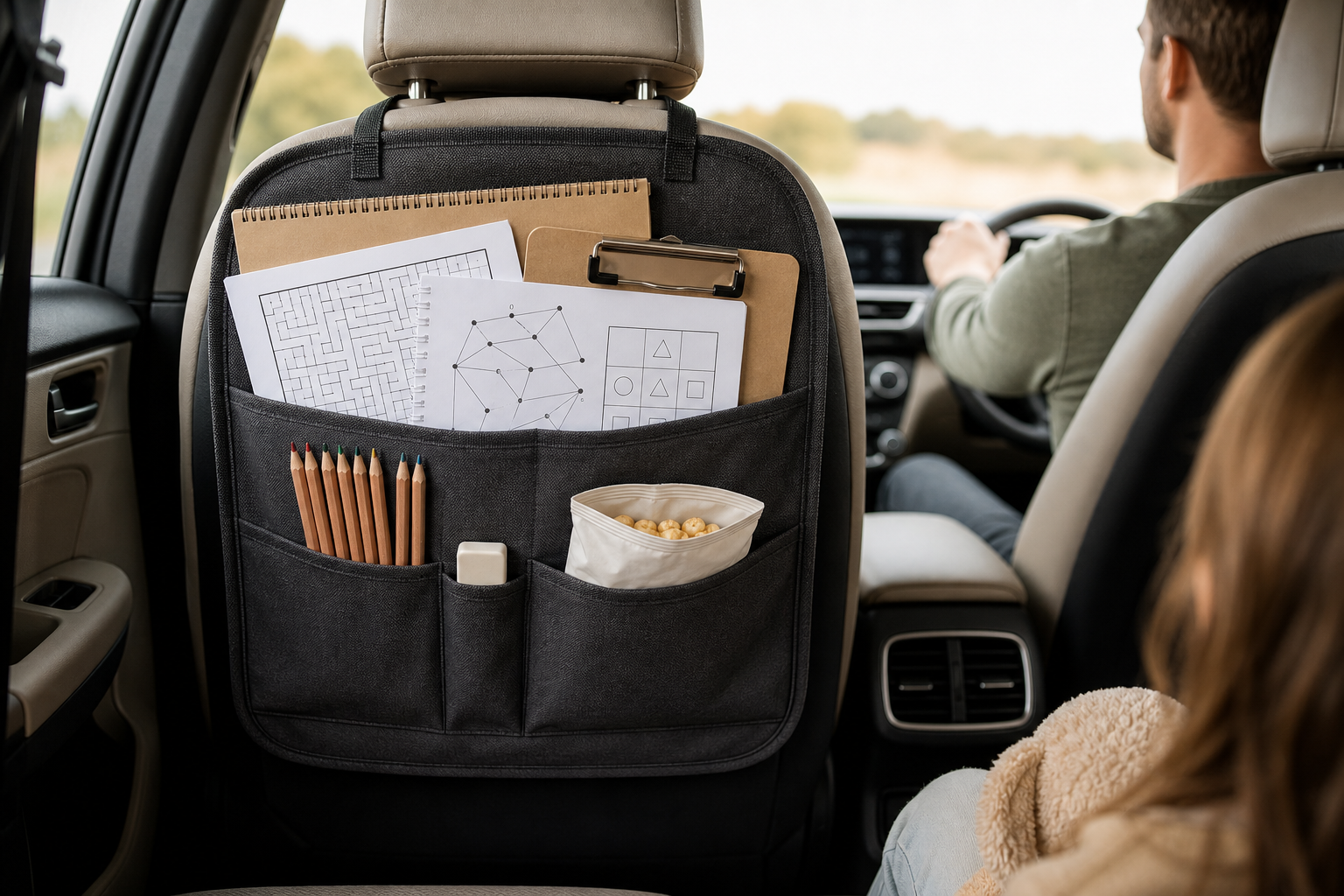
For families, start with the word search, count page, and rebus strip in the car or while waiting for food. Save the codebreaker, logic page, and final password for the hotel room, cabin table, porch, or the ride home when everyone is ready for one last challenge.
For teachers, aftercare leaders, librarians, homeschool planners, and family activity buyers, this theme works well for late-summer library tables, mixed-age family events, classroom soft starts before a long weekend, weather-hold bins, and early-September quiet blocks. Use the category sort, one visual page, one codebreaker, and the final password as short stations, then keep the answer key nearby so the packet stays self-directed.
Because the theme is broad, it still works after the holiday. The same pages can come back out for fall travel, rainy-day backups, porch baskets, substitute tubs, family reunion tables, or long-weekend routines later in the season.
Fast answers to common buyer questions
What ages work best for Labor Day printables?
Most packs work best for ages 6 and up, with easier count, maze, spot-the-difference, and pattern pages for younger solvers and code, logic, and rebus pages for older kids.
What supplies should the packet assume?
Assume only a printer, pencil, and optional clipboard or folder. If a page needs crayons, markers, or scissors to function, make that obvious before anyone prints it.
How long should a long-weekend puzzle session last?
Five to fifteen minutes is usually enough for a rest stop, picnic table, lobby wait, classroom soft start, or family quiet block. Shorter sessions are often easier to repeat than one long packet marathon.
Do these pages only work for Labor Day?
No. The same packet can still work for August travel, early-fall weekends, rainy-day backups, family reunion tables, classroom calm-down bins, and mixed-age quiet time after summer ends.
Common mistakes to avoid
Do not make every page depend on one exact destination, one exact parade, or one exact picnic menu.
Do not overload the packet with long trivia paragraphs before anyone gets to solve anything.
Do not assume every family wants an outdoor-only packet when weather, heat, or travel plans can change fast.
Do not forget the practical goal. The printable should help adults start one calm activity quickly, not create a new layer of setup.
Internal link suggestions
Pair this topic with the Road Trip Puzzle Pack, the Hotel Quiet-Time Puzzle Pack, the Camping Trip Puzzle Pack, the National Park Puzzle Pack, the Rainy Day Puzzle Pack, and the free puzzles and games page. Readers who like this theme often want one more travel, long-weekend, or mixed-age printable for the next quiet block.
Call to action
Want more printable-style puzzle ideas that fit real family weekends, real travel delays, and real mixed-age tables? Browse PuzzlePlay Books for family-friendly puzzle guides, low-prep printables, free games, and practical screen-light activities that are easy to print and easy to reuse.