

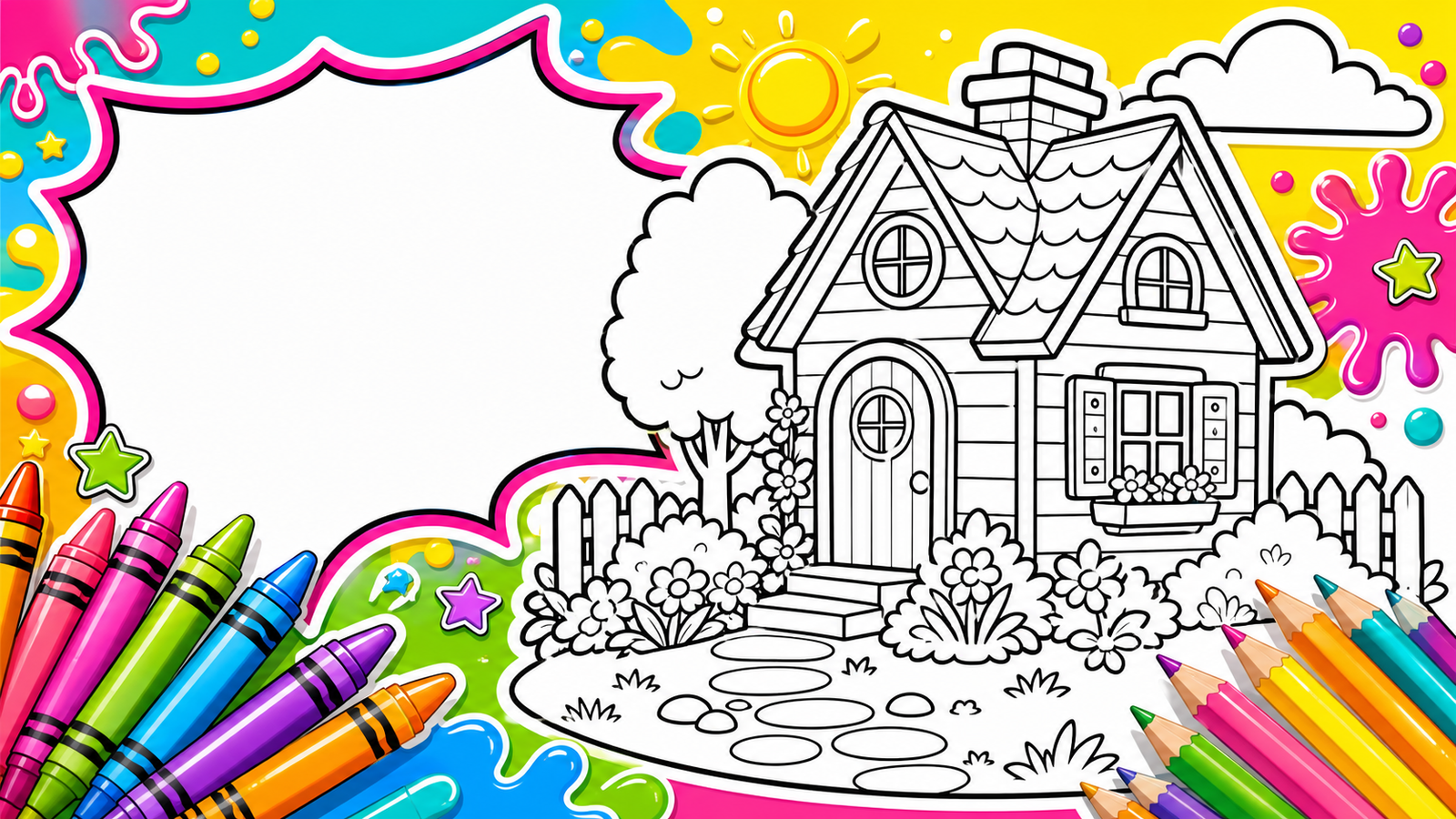


The Kids Coloring Playroom is a free online coloring space from PuzzlePlay Books. Young artists can choose a printable card, try a coloring book sample page, upload a coloring page, or start with a blank canvas and make something completely new.
What the Playroom Is For
The Playroom is built for easy screen-free-adjacent creativity. It gives kids a digital place to practice color choices before printing, decorate printable activity cards, test a page made with the ChatGPT coloring page creator, or save a finished drawing for later.
It is not meant to be complicated. A child should be able to open a page, pick a color, choose a brush size, and begin. Parents and teachers can use it as a short creative break, a rainy-day table activity, or a simple station for printable coloring prompts.
Before You Start
Ask a grown-up before opening outside websites, uploading images, or downloading artwork. The Playroom Wall stores pinned art on the device being used. It does not publish a public gallery for other visitors, which keeps the experience simple and private.
Step 1: Open the Playroom
Use the Kids Coloring Playroom link in the site menu or choose a Color Online button from a printable challenge page. The page opens with coloring tools, a drawing canvas, and starter pages that are ready to use.
Step 2: Choose a Page
Pick a printable card when you want something quick. Choose a KDP sample page when you want a full coloring-book style design. Use the blank canvas when you want free drawing. If you already made a coloring page with the ChatGPT page creator, download it first and then upload it into the Playroom.
Step 3: Pick a Tool
The brush is the easiest tool for normal coloring. The airbrush gives a softer spray effect. The eraser cleans up small spots. The fill tool is useful when you want to tap a white area and fill it quickly. Line, box, and circle tools help kids add borders, patterns, frames, and new details.
Step 4: Choose Color and Brush Size
Start with one color square, then try a second and third color before using the full palette. Move the size control smaller for tiny spaces and larger for backgrounds. A big brush is fast, but a small brush is easier for faces, flowers, letters, and little shapes.
Step 5: Color in Layers
A good first pass is light and simple. Color the biggest spaces first, then switch to smaller details. Add shadows, stripes, dots, or extra decorations after the main page is finished. If something goes wrong, use undo instead of starting over.
Step 6: Try the Fill Tool Carefully
Fill is fast, but it works best when the line art has closed shapes. If color spills farther than expected, undo and use the brush near that edge. This is a useful moment for kids to learn that every tool has a job.
Step 7: Add Your Own Details
The Playroom is not only for staying inside the original lines. Add a sun, stars, a name, a pattern border, extra flowers, a path, a silly hat, or a pretend book title. The best pages often happen when a child treats the coloring page as a starting point.
Step 8: Download or Pin to the Wall
Use Download to save the finished artwork as an image. Use Pin to Wall to keep a favorite piece in the local Playroom Wall on that device. The wall is handy for comparing color ideas, building a small portfolio, or choosing which page to print later.
Printable Ideas to Try
Make a rainbow dinosaur, a cozy house at sunset, an ocean animal with patterned scales, a three-color mandala, a pretend book cover, or an alphabet card with every letter in a different color family.
Tips for Parents and Teachers
Keep sessions short for younger kids. Ten to twenty minutes is usually enough for a satisfying creative break. If a group is using the Playroom, give each child a narrow prompt, such as use only warm colors or add three new shapes to the page.
For classroom or public sharing, review artwork before posting it anywhere outside the device. Keep names, faces, school details, and personal information out of shared images.
Ready to Color
Open the Kids Coloring Playroom, pick a page, choose a tool, and make the first mark. The goal is not perfect coloring. The goal is a bright, low-pressure creative moment that is easy to start again tomorrow.