
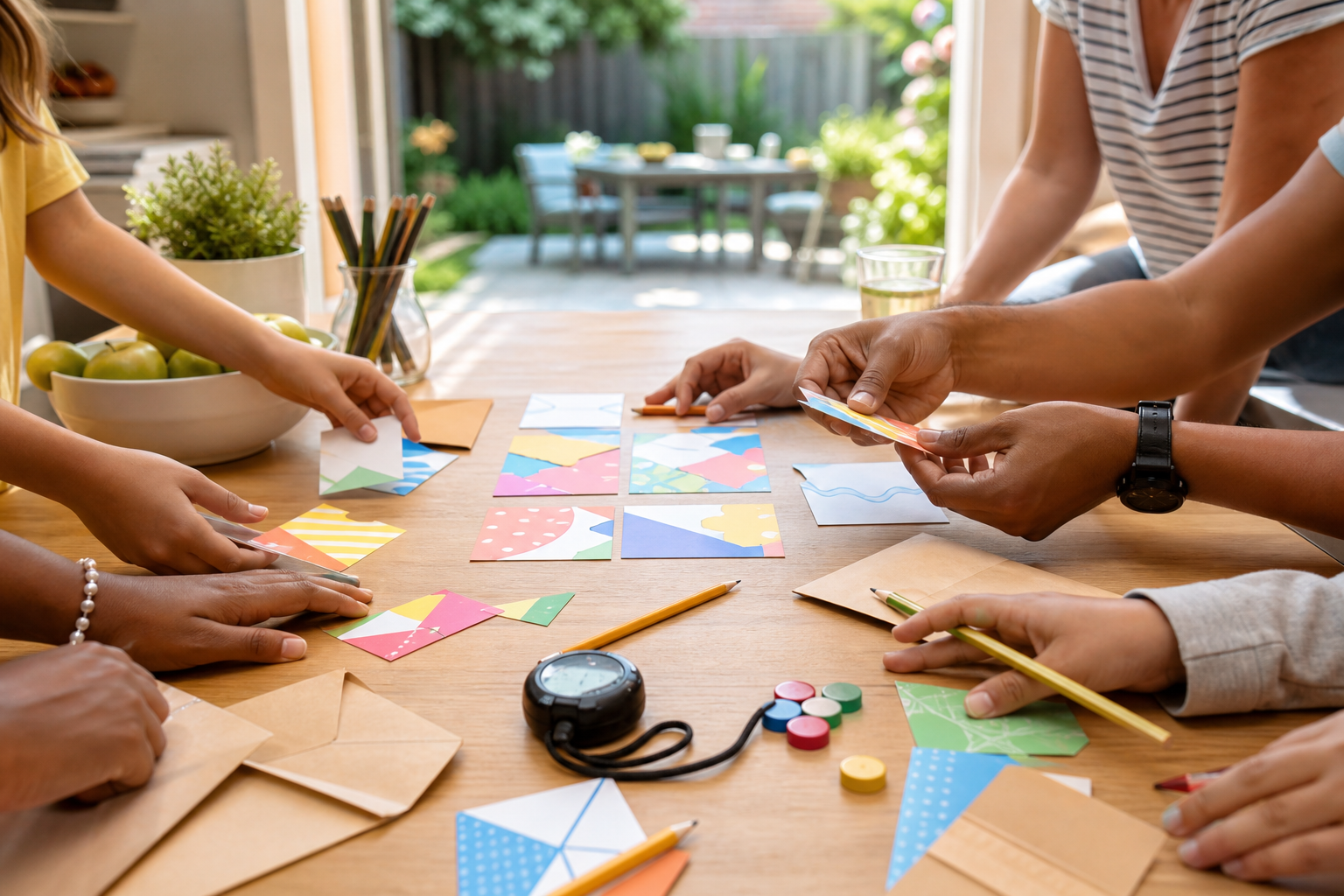


The United Nations observance page lists International Youth Day as a recurring August 12 event, which makes late July and early August a practical time to build one collaborative printable pack that can work at family tables, classrooms, libraries, youth groups, and mixed-age welcome-week programs. A themed puzzle folder gives adults one more screen-light option that feels social without needing a device, a giant setup, or a long explanation before anyone begins.
That timing matters because August often brings uneven group windows. Some families are trying to keep one more shared routine before school schedules fully return. Some teachers, librarians, and youth leaders need a calm activity that works when kids arrive in waves or have only ten minutes together. The American Academy of Pediatrics keeps its Family Media Plan available for families, the U.S. Department of Education continues to surface family-partnership resources, and National PTA keeps family resources easy to find during back-to-school planning. In practical terms, this is a strong moment for printables that are easy to start and easy to reuse.
The goal is not to turn International Youth Day into a lecture. The goal is to give young people one shared puzzle task that feels inviting, lets pairs or small groups talk with a purpose, and still works if adults only have a short supervised block to fill.
One important note first: these pages work best during seated, supervised activity windows such as classroom soft starts, library tables, youth-group rotations, family game night, and ride-home folders. They are not for use while adults need kids moving through crowded hallways, check-in lines, parking lots, or unfamiliar public spaces without distraction.
Why an International Youth Day puzzle pack works
A good team printable gives a group one visible problem to solve together without forcing a full competition. That makes it easier to use across mixed ages, mixed confidence levels, and mixed reading strengths. One child can notice patterns, another can read the clue, another can track the answer, and the page still feels complete when the group is done.
These printables help most in moments like these:
• while a family wants one shared table activity that does not depend on everyone liking the same board game.
• while a teacher needs a collaboration page for a soft start, advisory block, or welcome-week station.
• while a librarian, youth-group host, or co-op leader needs a short activity that can begin with almost no setup.
• while siblings or mixed-age groups need the same table mood without the exact same difficulty level.
• while a family activity buyer wants one practical August packet that still works after the observance is over.
That is also why the packet should stay simple. Good team-game pages should work with a printer, pencil, optional crayons or colored pencils, and a flat surface. They should not depend on app logins, timers that live on one adult's phone, elaborate props, or a long speech before anyone can begin.
What makes a good youth-day printable
The strongest page gives solvers a clear role without making the activity feel rigid. A pair should be able to look at the page and understand how to begin in under thirty seconds.
Aim for:
• one clear task per page, such as search, sort, decode, compare, match, maze, tally, or finish the pattern.
• prompts that can work for pairs, trios, or solo solvers when group sizes shift.
• broad themes such as teamwork, planning, sharing, routes, choices, and community spaces instead of one narrow lesson script.
• answer spaces large enough for classroom tables, library counters, clipboards, and family trays.
• pages that survive interruption, so a group can pause and still come back without feeling lost.
• directions short enough that another adult can hand over the page without reteaching the whole packet.
• a mix of quick visual wins and one or two stronger logic or word pages for older solvers.
If a printable depends on a long debrief, one exact room layout, or a full lesson before the puzzle makes sense, it is not a strong family-friendly team pack.
The 15 printable team games worth building first
1. Team-name word hunt
Hide approachable words such as share, solve, clue, plan, start, guide, team, and goal in a compact grid. This is one of the easiest ways to give mixed-age groups a quick first win.
2. Meeting-spot mini maze
Create a short path from start to table, library corner, camp cabin, or welcome station without crossing blocked squares. It feels collaborative because players can trace and check each move together.
3. Shared-goal tally card
Scatter icons such as stars, pencils, folders, speech bubbles, and check marks around the page. Ask players to count and compare totals, then agree on the most common symbol before moving on.
4. Pair-match clue swap
Split a short set of clues and answers across two halves of the page so partners have to compare what they noticed. This creates teamwork without turning the page into a full race.
5. This-or-that choice board
Offer simple pairs such as maze or riddle, color or code, solo start or partner start, books or games. A low-pressure choice board helps groups ease in before the stronger puzzles begin.
6. A=1 goal-word codebreaker
Use a simple number key to reveal words such as TEAM, SHARE, VOICE, READY, or PLAN. This adds challenge without adding supplies.
7. Community-space sort page
Give players icons or short words to sort into broad categories such as classroom, library, park, family table, and club room. Keep it general enough that the page still works in different settings.
8. Calendar-countdown pattern strip
Alternate symbols such as star, pencil, speech bubble, and badge in a simple pattern, then add one harder row underneath for older solvers who want more.
9. Direction-grid handoff puzzle
Use left, right, up, and down arrows to guide a pencil through a small grid from START to SHARE. One solver can call directions while another tracks the line.
10. Two-person spot-the-difference page
Show two similar scenes with a few changed details, then ask partners to agree on each difference before circling it. This works well when reading levels are uneven.
11. One-letter word ladder
Build a short ladder such as CARE to DARE with one-letter changes. Older solvers often like this because it feels more like a real puzzle than a worksheet.
12. Mini team logic puzzle
Use three kids, three favorite puzzle types, and three table colors with a few short clues. Keep it brief enough to solve in under three minutes so it feels satisfying instead of heavy.
13. Short riddle relay
Write two or three tiny riddles and have each player solve one before the group shares answers. This is a strong option when attention is short and the table needs quick momentum.
14. Notice-and-write card
Give solvers three short lines to name one clue they noticed, one page they liked, and one puzzle they would add next time. This keeps the packet from becoming only grids and codes.
15. Final TEAM password page
Let answers from earlier pages reveal one letter each so the packet ends with TEAM, VOICE, SHARE, or GOAL. A final password gives the folder a sense of finish without making it feel heavy.
Three quick mini examples
These are simple enough to build before the next youth-group rotation, family table, or library activity block.
Example 1: short riddle
I help a group begin, but I am not a person. I can be written on paper and followed step by step. What am I? Answer: plan.
Example 2: simple code
Use A=1, B=2, C=3. 20 - 5 - 1 - 13. Answer: TEAM.
Example 3: easy logic clue
Maya, Theo, and June each picked one page: maze, word search, and codebreaker. Maya did not pick the maze. Theo did not pick the codebreaker. June did not pick the word search. Answer: Maya picked the word search, Theo picked the maze, and June picked the codebreaker.
How to package a youth-day folder
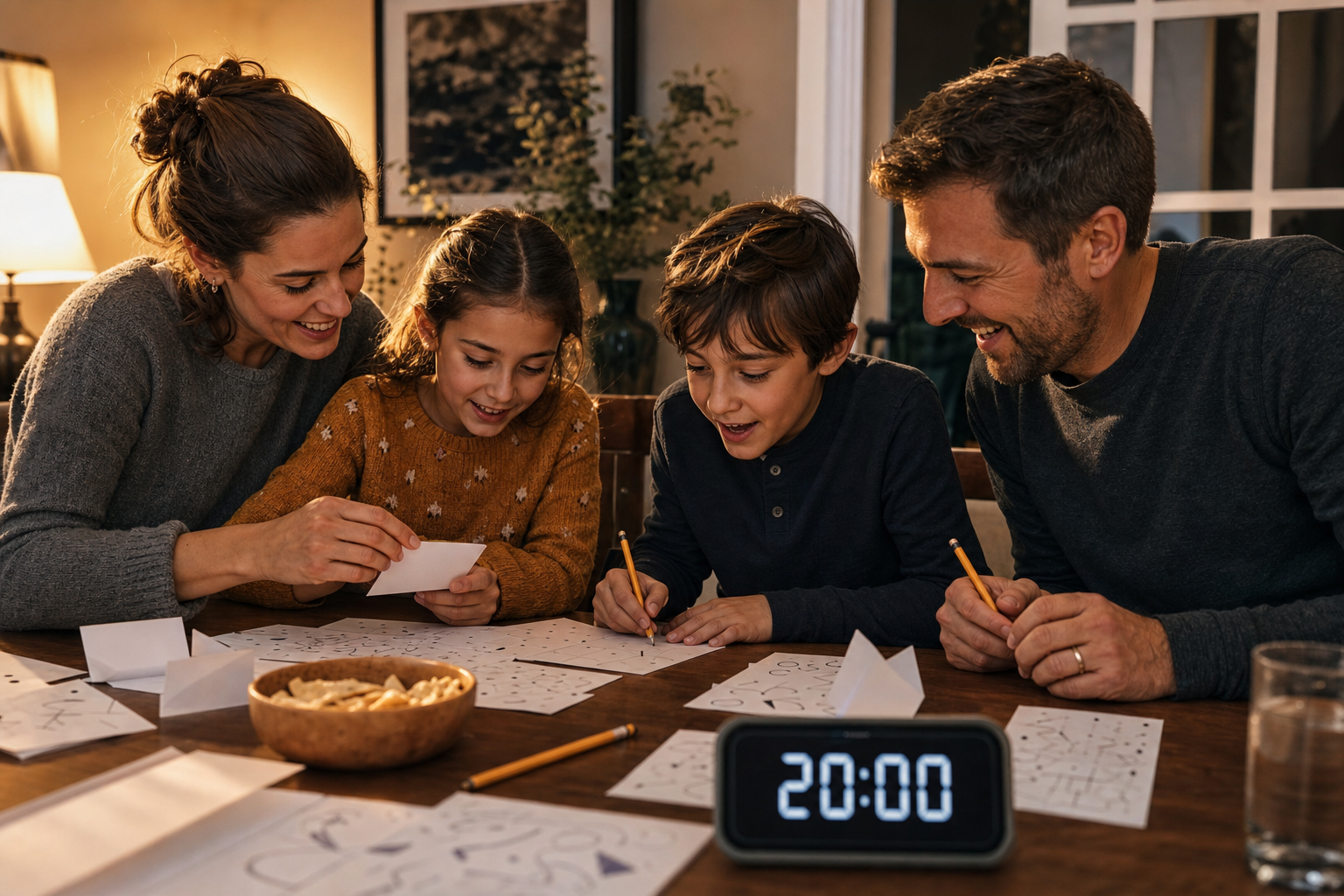
A strong team-game packet usually needs only six to nine pages.
Start with:
• 2 fast pages such as a word search or tally sheet.
• 2 visual pages such as a maze, spot-the-difference page, or pattern strip.
• 2 slightly stronger pages such as a codebreaker or logic mini.
• 1 short writing or choice-board page.
• 1 final password page.
• 1 answer key.
That mix is enough for a classroom bin, library table, youth-group station, family game-night folder, or mixed-age waiting window without making the packet bulky.
A short reusable folder also makes it easier to stay intentional about screens. The AAP Family Media Plan is useful here because the same idea applies: decide ahead of time what the default will be when the group gets restless or the schedule opens up unexpectedly. If one or two pages are already printed and clipped together, adults do not have to improvise with a device every time the room gets noisy.
Family-table, library, classroom, and youth-group version
For families, start with the word hunt, tally card, and choice board near the front so everyone can get an easy win. Save the codebreaker, word ladder, and final password for later in the block when the table wants something a little deeper.
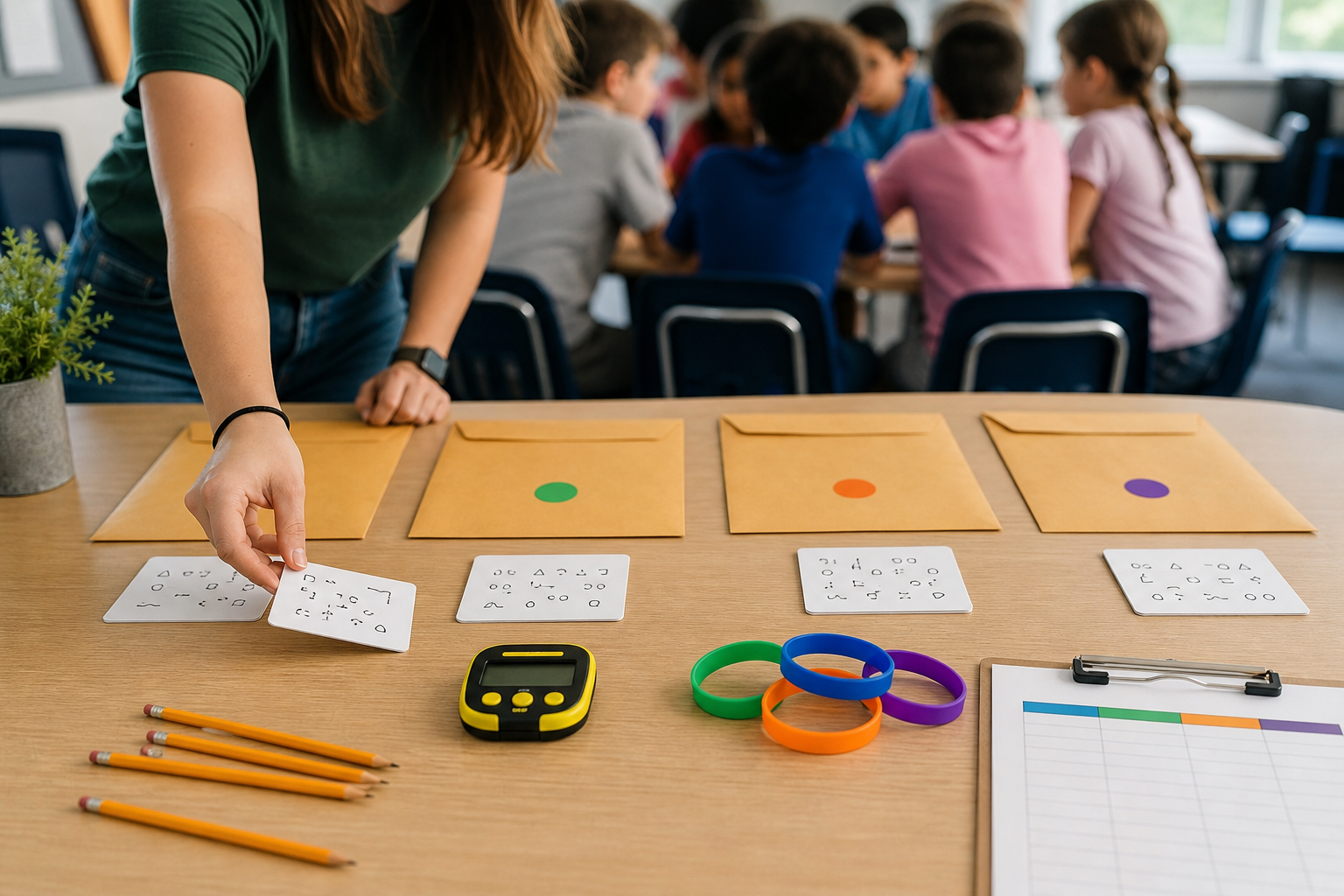
For teachers, librarians, and youth-group hosts, use one visual page, one clue-swap page, one stronger logic page, and the final password as short stations. That keeps the activity flexible when attendance, ages, or time windows shift.
For mixed-age groups, keep one page that a younger solver can finish quickly, one page that rewards a stronger reader, and one page that can be colored or discussed if attention drops. The best packet gives everyone the same shared task mood without forcing the same difficulty.
Fast answers to common buyer questions
What ages work best for youth-day printables?
Most packs work best for ages 6 and up, with easier search, sort, tally, and spot-the-difference pages for younger solvers and code, logic, and word-ladder pages for older kids and teens.
What supplies should the packet assume?
Assume only a printer, pencil, and optional crayons or colored pencils. If a page needs scissors, glue, or internet access to function, make that obvious before anyone prints it.
How long should a team puzzle session last?
Five to fifteen minutes is usually enough for a library table, short classroom block, youth-group station, ride-home folder, or family activity reset. Shorter sessions are easier to repeat than one long packet marathon.
Do these pages only work for International Youth Day?
No. The same pages can still work for welcome-week groups, homeschool co-ops, indoor recess, advisory periods, library clubs, family game night, and rainy-day activity bins after August 12 is over.
Common mistakes to avoid
Do not make every page so hard that the youngest solver gets pushed out of the group immediately.
Do not overload the packet with long speeches about teamwork before anyone gets to solve anything.
Do not build the whole activity around one exact room setup that other families or teachers cannot copy.
Do not forget the real-world context. Kids may be arriving late, sharing supplies, or switching tables, so the printable has to survive interruption.
Internal link suggestions
Pair this topic with the International Day of Friendship Puzzle Pack, the Back-to-School Icebreaker Puzzle Pack, the Homeschool Co-op Puzzle Pack, the Brain Break Puzzle Pack, the Early Finisher Puzzle Pack, and the free puzzles and games page. Readers who like this theme often want one more collaborative printable for the next mixed-age activity block.
Call to action
Want more printable-style puzzle ideas that work in real family schedules, real classroom transitions, and real mixed-age tables? Browse PuzzlePlay Books for family-friendly puzzle guides, low-prep printables, free games, and practical screen-light activities that are easy to print and easy to reuse.