
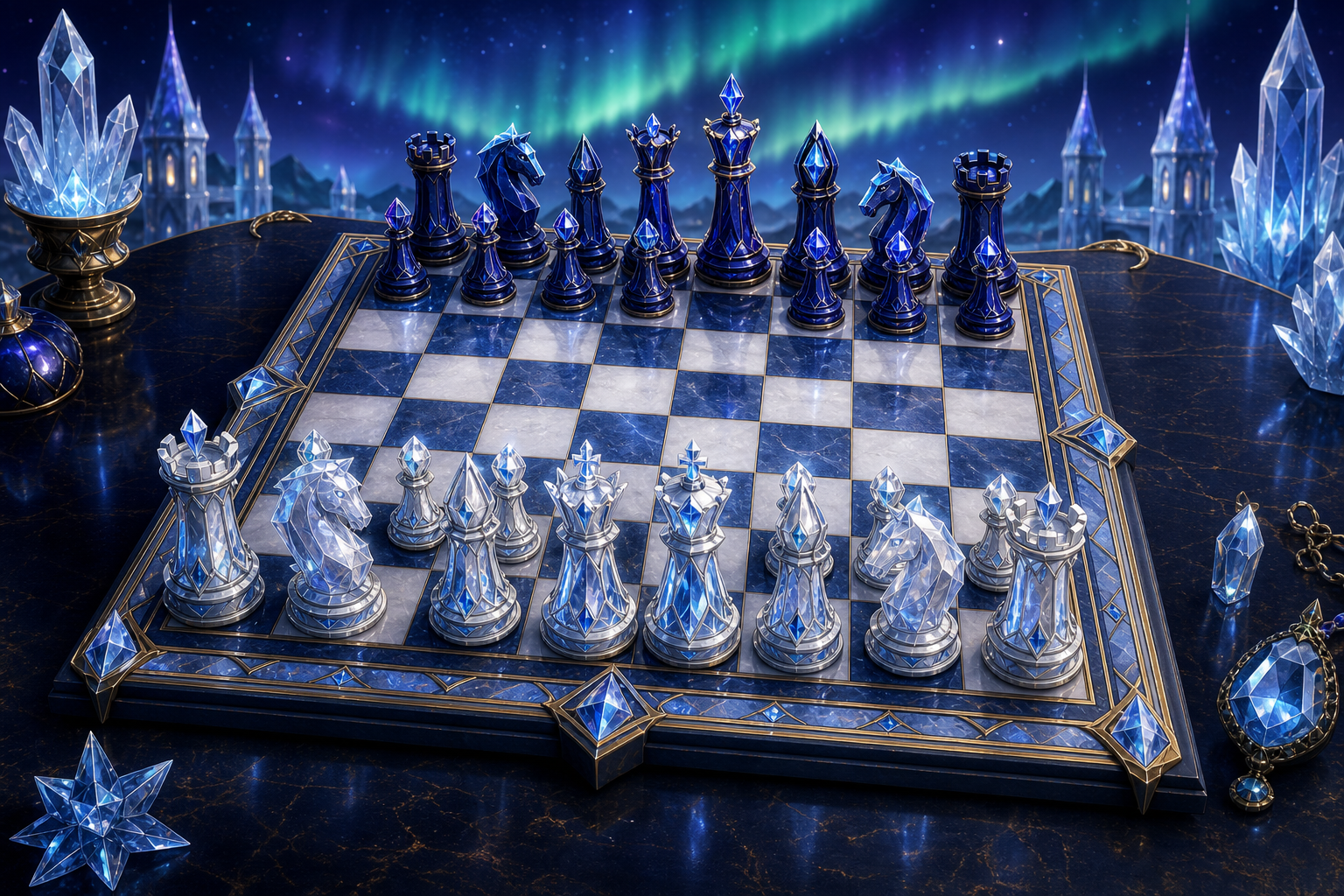


A chess-themed printable pack works because it can feel special without becoming complicated. Families do not need a full tournament setup to use it. Teachers do not need a semester-long chess unit. Club leaders and camp staff just need a few pages that turn board vocabulary, coordinates, patterns, and simple strategy language into something pencil-friendly and easy to reuse.
The timing is strong right now. The United Nations observance page for World Chess Day says that, under the initiative of FIDE, July 20 has been observed as International Chess Day by chess players around the world since 1966. FIDE also frames July 20 as a natural celebration point for clubs, federations, and chess communities, which makes this a timely angle for parents, teachers, librarians, and family activity buyers planning late-July activities.
A printable pack also helps bridge the gap between people who already play and people who only know the basics. Some pages can work with no board at all. Others can use one board in the middle of the table. That flexibility is what makes the theme practical for family game night, classroom enrichment, library tables, summer camps, homeschool co-ops, and chess-club warmups.
Why a chess printable pack works especially well for July 20
July 20 gives families and educators a real calendar hook, but the topic has a long shelf life beyond one day. A good chess packet can come out during a summer library program, an indoor heat break, a rainy camp afternoon, a club meeting, a school enrichment block, or a family game night that needs one structured activity before the board comes out.
Official chess rules also make the printable format easier to design well. The FIDE Laws of Chess say the chessboard is composed of an 8 by 8 grid of 64 equal squares and explain the file, rank, and diagonal language players use to describe squares. That means even very simple paper pages can feel authentic if they use coordinates clearly, keep the board orientation accurate, and avoid made-up move rules.
What makes a good printable chess packet
The best packet is not the one with the most pages. It is the one someone can print quickly and actually use on a real table.
Aim for:
• one clear task per page.
• large board coordinates that are easy to read in black and white.
• puzzles that scale from beginner chess vocabulary to slightly harder pattern and logic pages.
• activities that still work even if only one board is available.
• short answer spaces that work on clipboards, library tables, and classroom desks.
• a mix of quick wins and one final challenge that makes the packet feel complete.
If every page assumes tournament-level knowledge, the pack becomes too narrow. If every page avoids real chess language, the theme feels decorative instead of useful. The strongest middle ground gives beginners an entry point while still feeling connected to the real game.
The 15 printable chess challenges worth building first
1. Chess vocabulary word search
Hide approachable words such as board, king, queen, rook, bishop, knight, pawn, file, rank, check, castle, and mate. This is an easy opener for mixed ages and mixed skill levels.
2. Coordinate hunt page
Print a simple 8 by 8 board with labeled files and ranks, then ask players to mark squares such as a1, c5, e4, and h8. This is one of the fastest ways to make the packet feel like real chess without needing a full game.
3. Piece-to-move matching page
Show each piece next to a few simplified move paths and ask solvers to match the piece to the legal movement pattern. Keep the examples clean and large so beginners can solve without squinting.
4. White-square black-square pattern strip
Give players a row of labeled squares and ask them to identify the color pattern or circle only the white squares. This sounds basic, but it is useful for beginners learning to navigate the board with confidence.
5. Knight path mini maze
Build a small board where players can move only in knight jumps to reach a target square. A short knight maze feels playful and distinct from standard worksheets.
6. Starting-square match page
Ask players to connect pieces to their starting squares on a blank setup board. This works well before a real game because it turns setup into a puzzle instead of a lecture.
7. File-and-rank bingo
Fill a bingo card with coordinates instead of pictures. Call out squares or short clues such as file c, rank 6, and let players mark the matching coordinate. It is quick to run in groups.
8. Chess notation decoder
Use short coordinate strings such as e4, Nf3, or Bb5 and ask players to match them to the right square or piece type. Keep it simple and treat the page as recognition practice, not an advanced notation exam.
9. Piece-value comparison page
For beginners who already know the common teaching values, use simple comparison prompts such as which side has more total points or which swap looks roughly even. Label the page clearly as a beginner-friendly estimate page rather than an official rules lesson.
10. Chess-club supply scramble
Turn practical meeting words into a scramble or checklist challenge: board, clock, score sheet, pencil, pairings, pieces, and table card. This helps the packet feel tied to real club and tournament settings.
11. Opening-position spot check
Show two tiny setup diagrams and ask which one has the kings and queens on the correct starting squares. This is a useful accuracy page because setup mistakes are common with new players.
12. Attack-map coloring page
Place one rook, bishop, or knight on a simplified board and ask solvers to shade every square that piece attacks. This turns movement rules into something visible and easy to discuss.
13. Mini chess logic puzzle
Use three players, three puzzle pages, and three clues. Keep the logic short enough to solve in under three minutes so it still feels like a warmup rather than a full contest problem.
14. Tournament-table observation bingo
Use broad prompts such as score sheet, extra queen, handshake, name card, clock button, or analysis board. This makes the packet useful for club events and family chess gatherings without depending on one exact venue.
15. Final chess-day password
Let answers from earlier pages supply letters for one final word such as CHECK, CASTLE, KNIGHT, or JULYTWENTY. This is the page that makes the whole packet feel like an event instead of a stack of filler pages.
Three ready-to-use mini examples
These are simple enough to build before the next family night or club meeting.
Example 1: coordinate clue
Question: Which square sits on file d and rank 5? Answer: d5.
Example 2: color clue
Question: On a correctly oriented board, is a1 a light square or a dark square? Answer: a1 is dark, because the near right corner square for each player is white.
Example 3: mini logic clue
Maya, Theo, and June each picked one page: coordinate hunt, knight maze, and word search.
• Maya did not pick the knight maze.
• Theo did not pick the word search.
• June did not pick the coordinate hunt.
Answer: Maya picked the word search, Theo picked the coordinate hunt, and June picked the knight maze.
How to package it for families, teachers, and activity buyers
A strong chess packet usually needs only six to ten pages.
Start with:
• 2 quick vocabulary or coordinate pages.
• 2 movement or attack-pattern pages.
• 1 logic or notation page.
• 1 observation or bingo page.
• 1 final password page.
• 1 answer key.
That mix is enough for a family folder, club table, library activity bin, camp quiet-time stack, or classroom enrichment station without making the packet feel bulky.
Family game-night version
For families, start with the coordinate hunt and word search while everyone is settling in. Use the knight maze and attack-map page before opening a real board. Save the final password for the end of the session so the printable feels like part of the event instead of a separate worksheet pile.
If one child already plays and another does not, let the stronger player help read clues while the newer player handles marking, circling, and square-finding. That keeps the activity cooperative instead of turning it into a skill gap.
Classroom and library version
For teachers and librarians, this theme works well for enrichment blocks, indoor recess tables, game-club previews, math-and-logic centers, and summer reading activity stations. Use the coordinate page, starting-square page, one movement page, and the final password puzzle as short stations, then keep the answer key nearby so the activity stays self-directed.
If students are brand new to chess, begin with board vocabulary and movement recognition instead of notation-heavy pages. If the group already plays, make the notation decoder and attack-map page the challenge station.
Camp and chess-club version
For camps and clubs, run the packet as a warmup before casual games or mini rounds. The printable can also fill the awkward early-arrival window when some players are ready and others are still walking in.
Keep the supplies simple: printed pages, pencils, one demo board, and optional highlighters for square shading. If a page depends on pieces being moved around physically, note that clearly before anyone prints it.
Fast answers to common buyer questions
What ages work best for chess printables?
Most chess-themed printable packs work best for ages 7 and up, with easier square, pattern, and matching pages for beginners and notation or logic pages for older kids, teens, and mixed-age family groups.
Do you need a full chess set?
Not always. Vocabulary pages, coordinate hunts, color patterns, word searches, and many logic pages can work with only a pencil. A single board is useful for setup and demonstration pages, but it does not need to be one board per player.
How long should a chess printable session last?
Fifteen to thirty minutes is usually enough for a club warmup, library table, camp quiet-time block, or family pre-game activity. Shorter sessions are often easier to repeat than one long packet marathon.
What supplies should the packet assume?
Assume only a printer, pencil, and optional chessboard. If a page needs markers, scissors, or individual piece cutouts to function, make that obvious before anyone prints it.
Common mistakes to avoid
Do not make every page depend on notation if the pack is meant for beginners.
Do not use tiny boards or cramped coordinates that become unreadable after printing.
Do not mix up file and rank labels or board orientation. Accuracy matters more than decoration here.
Do not promise strategy mastery from a few printable pages. The real value is a practical, low-pressure way to make chess language and patterns easier to approach.
A well-made International Chess Day packet should feel welcoming, accurate, and easy to run. That is enough to make July 20 feel timely and to give the printable a long life after the calendar moment passes.