

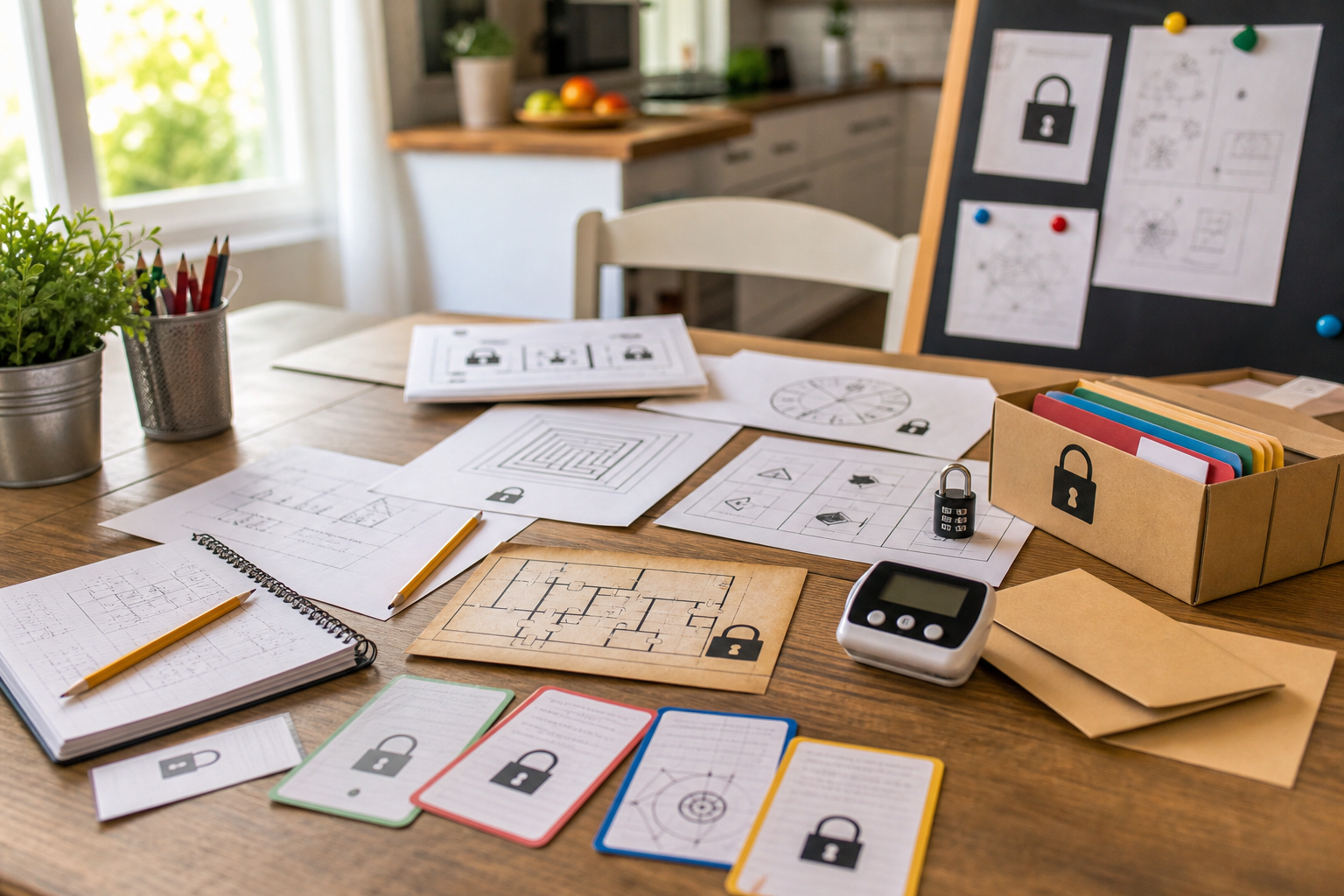


An indoor recess plan usually gets tested on the exact day nobody wants to invent one from scratch. The class is finally settled, the sky turns dark, the thunder starts, the blacktop is unusable, and twenty students still need something calm and clear to do before the room gets too loud. That is where a printable puzzle packet earns its place.
The timing makes sense right now. Late July and early August are when teachers, homeschool planners, aftercare leaders, and parents start building the folders and routines that will carry the first school weeks. Ready.gov's thunderstorms and lightning guidance uses the memorable line When thunder roars, go indoors. National Weather Service heat guidance also warns that heat can be very taxing on the body. In other words, weather can push play plans inside fast, and a pencil-first backup is practical, not fussy.
One important note first: indoor recess pages are a backup for short weather holds, room resets, early-finisher windows, and after-school quiet blocks. They are not a replacement for outdoor play, movement breaks, or school policies about safe active time when conditions allow. The goal is a clean fallback that works when the room needs a calm default.
Why an indoor recess puzzle pack works
Indoor recess is usually less about filling a whole hour and more about handling the in-between minutes well. A good packet gives kids one clear page, one visible task, and one small finish line while adults manage weather updates, room transitions, attendance, snack timing, or dismissal changes.
Printables help most in moments like these:
• while rain, lightning, or heat shifts recess plans with very little warning.
• while a teacher needs a low-prep quiet option that does not depend on chargers, headphones, or logging into anything.
• while an aftercare or homeschool group wants something that works for mixed ages at one table.
• while siblings at home need a short screen-light reset before homework, dinner, or the next errand.
• while a family activity buyer wants pages that can move from a kitchen table to a classroom bin without a second explanation.
That is why the packet should stay simple. Good indoor recess pages should work with a printer, pencil, clipboard, folder, or plain desk surface. They should not depend on scissors, glue, internet access, timers on personal devices, or a long adult explanation before anyone can begin.
What makes a good printable indoor recess packet
The best packet is not the thickest one. It is the one a real adult can hand out in under a minute on a real weather day.
Aim for:
• one clear task per page.
• black-and-white friendly layouts that do not waste ink.
• answer spaces large enough for desks, laps, and clipboards.
• a mix of quick visual wins and one or two slightly stronger logic pages.
• broad school-safe themes that still feel playful instead of lecture-heavy.
• pages that still make sense if kids only get five to fifteen minutes at a time.
If the packet needs constant reteaching, exact color printing, or a perfect classroom setup, it stops being a practical backup activity.
The 15 printable rainy-day classroom games worth building first
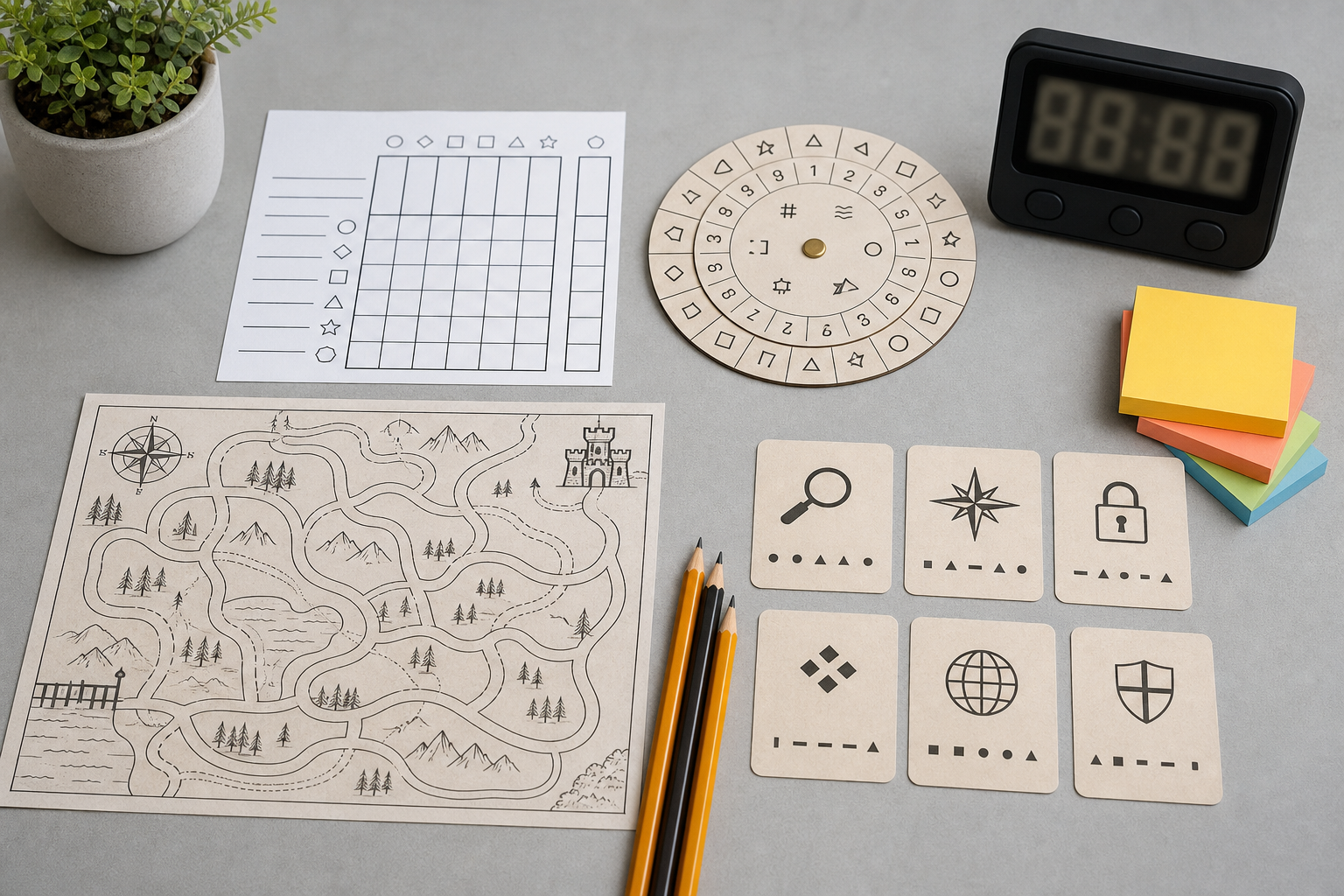
1. Weather-word-search sprint
Hide approachable words such as rain, cloud, pencil, desk, book, calm, and game. This is an easy opener because most kids already know how to begin.
2. Raindrop tally page
Show simple groups of umbrellas, boots, pencils, and raindrops and ask players to count totals or matching sets. This gives younger solvers a fast visible win.
3. Desk-row maze
Create a short maze that travels from one desk to the reading rug, cubby wall, or puzzle corner without crossing blocked squares. Keep it imaginary rather than tied to one exact classroom layout.
4. Backpack pattern strip
Alternate easy icons such as backpack, pencil, star, and raindrop, then ask solvers to finish the pattern. Add one slightly harder row underneath for older kids.
5. Recess-rule scramble
Turn short words such as SHARE, CALM, WAIT, LINE, and PLAY into a short unscramble page. Keep the list brief enough to finish in one sitting.
6. A=1 weather codebreaker
Use a simple number key to reveal words such as DESK, BOOK, RAIN, MAP, or QUIET. This adds challenge without adding supplies.
7. Spot-the-difference classroom shelf
Show two simple shelf or cubby scenes with a few switched details. It feels like a game immediately and needs almost no explanation.
8. Indoor or outdoor category sort
Give players a short word list and ask them to sort items into groups such as indoor, outdoor, quiet, or active. This adds reasoning without turning the page into a test.
9. Pencil-path direction grid
Use arrows such as left, right, up, and down to guide a pencil path through a simple grid. This makes a strong solo page for older solvers.
10. Mini classroom logic puzzle
Use three kids, three favorite pages, and three pencil colors with a few short clues. Keep it short enough to solve in under three minutes so it feels satisfying instead of heavy.
11. One-letter word ladder
Build a small ladder such as RAIN to MAIN or BOOK to LOOK with one-letter changes. Older solvers often like this because it feels more like a puzzle than a worksheet.
12. Picture rebus warm-up
Use easy picture clues for words such as SUNSHINE, RAINCOAT, CLASSROOM, or NOTEBOOK. A one-page rebus gives mixed-age groups a fun shared entry point.
13. Number-path sequence repair
Give a partly missing number pattern or shape sequence and ask players to repair the blanks. This keeps the page pencil-first and low-noise.
14. Three-line rainy-day writing prompt
Ask players to name one thing they can see, one thing they can hear, and one thing they want to do when outdoor play returns. This keeps the packet from becoming only grids and codes.
15. Final indoor password
Let answers from earlier pages supply one letter each for a final word such as CALM, READ, DESK, or PLAY. This is the page that makes the packet feel complete instead of random.
Three ready-to-use mini examples
These are simple enough to build before the first weather hold of the school year.
Example 1: quick riddle
Clue: I open over your head when rain falls, but I am not a roof. What am I? Answer: an umbrella.
Example 2: tiny codebreaker
Use A=1, B=2, C=3. 18 - 1 - 9 - 14. Answer: RAIN.
Example 3: short pattern repair
Pencil, star, pencil, star, __. Answer: pencil.
How to store a grab-fast indoor recess folder
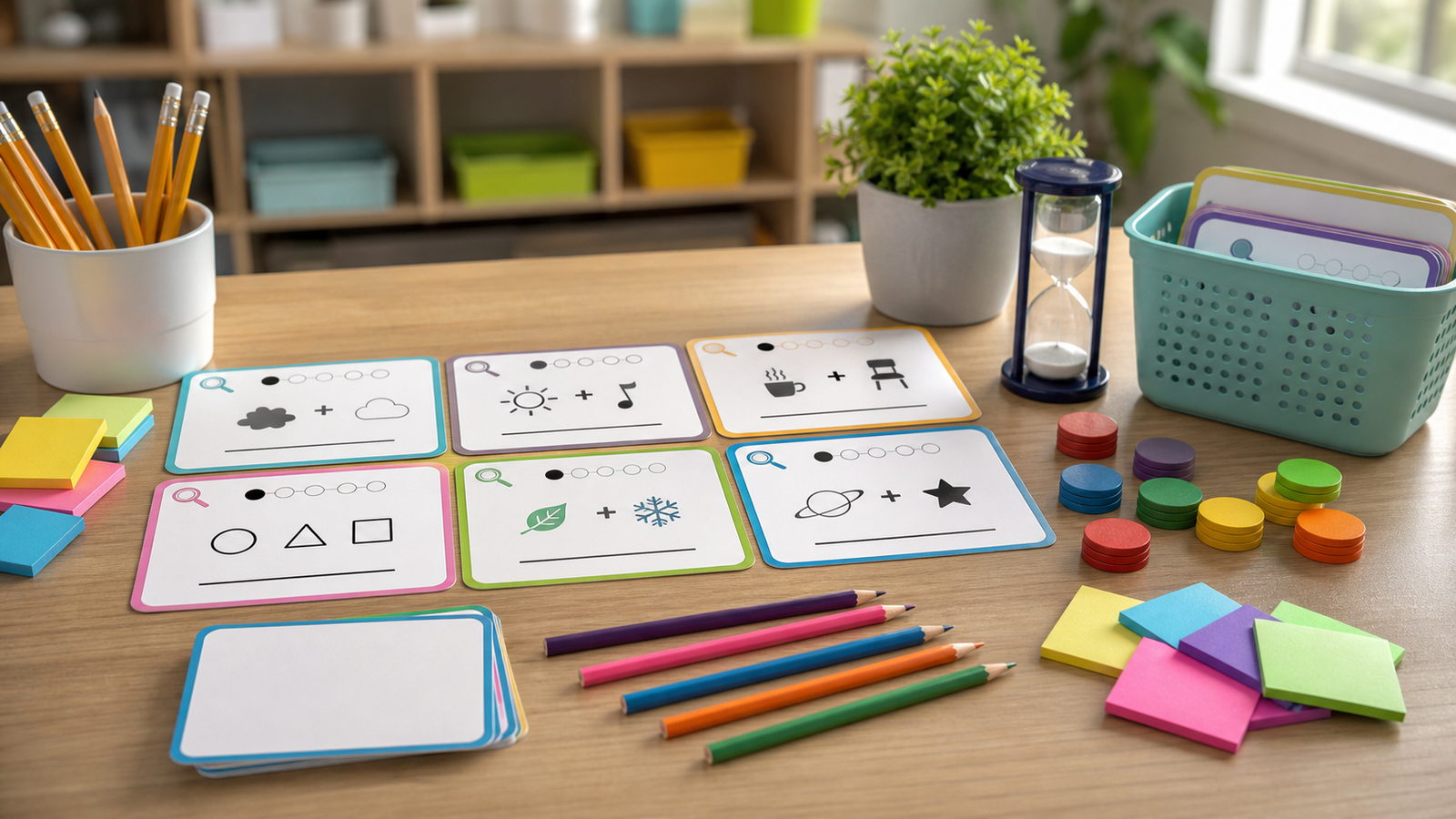
A strong indoor recess packet usually needs only six to ten pages.
Start with:
• 2 quick search, tally, or spot-the-difference pages.
• 2 visual or pattern pages.
• 2 stronger puzzle pages such as a codebreaker, ladder, or direction grid.
• 1 short writing or observation page.
• 1 final password page.
• 1 answer key.
That mix is enough for a classroom weather folder, aftercare bin, homeschool shelf, substitute-teacher backup pile, or kitchen-table rainy-day stack without making the packet bulky.
A reusable folder also makes it easier to stay intentional about screens. The American Academy of Pediatrics Family Media Plan is a useful reminder that families can decide ahead of time what media use will look like in everyday routines. The same idea helps here. If the room already has a pencil-first backup, adults do not have to improvise with phones or videos every time weather changes the plan.
Classroom, library, and aftercare version
For teachers, librarians, and aftercare leaders, this theme works well as a weather-hold folder, low-noise station, early-finisher drawer, substitute bin, or mixed-age quiet table. Hand out one quick page first, then follow with a codebreaker or logic page only if the indoor window lasts longer than expected.
Because the theme is broad, the same packet can work across seasons. Rain, lightning, heavy heat, and schedule pivots all create the same basic need: a short paper activity that starts fast and ends cleanly.
Family after-school and homeschool version
For families, use the word search, tally page, and pattern strip during a stormy afternoon, homework reset, or sibling wait window, then save the harder ladder or final password for later in the evening. For homeschool planners, the packet works well as a quiet-start bin, weather-day folder, or table task while one child gets help with another subject.
Fast answers to common buyer questions
What ages work best for indoor recess printables?
Most indoor recess packs work best for ages 5 and up, with easier count, match, and pattern pages for younger kids and code, ladder, or logic pages for older kids, siblings, and mixed-age groups.
What supplies should the packet assume?
Assume only a printer, pencil, and optional clipboard or folder. If a page needs markers, scissors, glue, or internet access to function, make that obvious before anyone prints it.
Should indoor recess pages replace outdoor play or movement breaks?
No. They are a backup for short indoor weather holds and quiet windows, not a substitute for safe outdoor play, PE, or classroom movement when those options are available.
How long should an indoor recess puzzle session last?
Five to fifteen minutes is usually enough for a weather hold, transition block, aftercare reset, or at-home rainy-day pause. Shorter sessions are easier to repeat than one long packet marathon.
Common mistakes to avoid
Do not make every page so hard that younger solvers need constant rescue.
Do not use tiny type or cramped answer spaces that fail on real desks or laps.
Do not turn the whole packet into a behavior lecture or a stack of worksheets with puzzle labels pasted on top.
Do not forget the real weather context. Check school rules, keep kids away from doors and windows during active storms, and treat the packet as a seated option for calm indoor moments only.
Internal link suggestions
Pair this topic with the Rainy Day Puzzle Pack, the Brain Break Puzzle Pack, the Early Finisher Puzzle Pack, the free puzzles and games page, and the Kids Coloring Playroom. Readers who like this theme often want another practical printable for classroom pivots, weather days, and screen-light family downtime.
Call to action
Want more printable-style puzzle ideas that work in real classrooms, real family schedules, and real weather pivots? Browse PuzzlePlay Books for family-friendly puzzle guides, seasonal activity ideas, and practical screen-light printables that are easy to print and easy to reuse.