

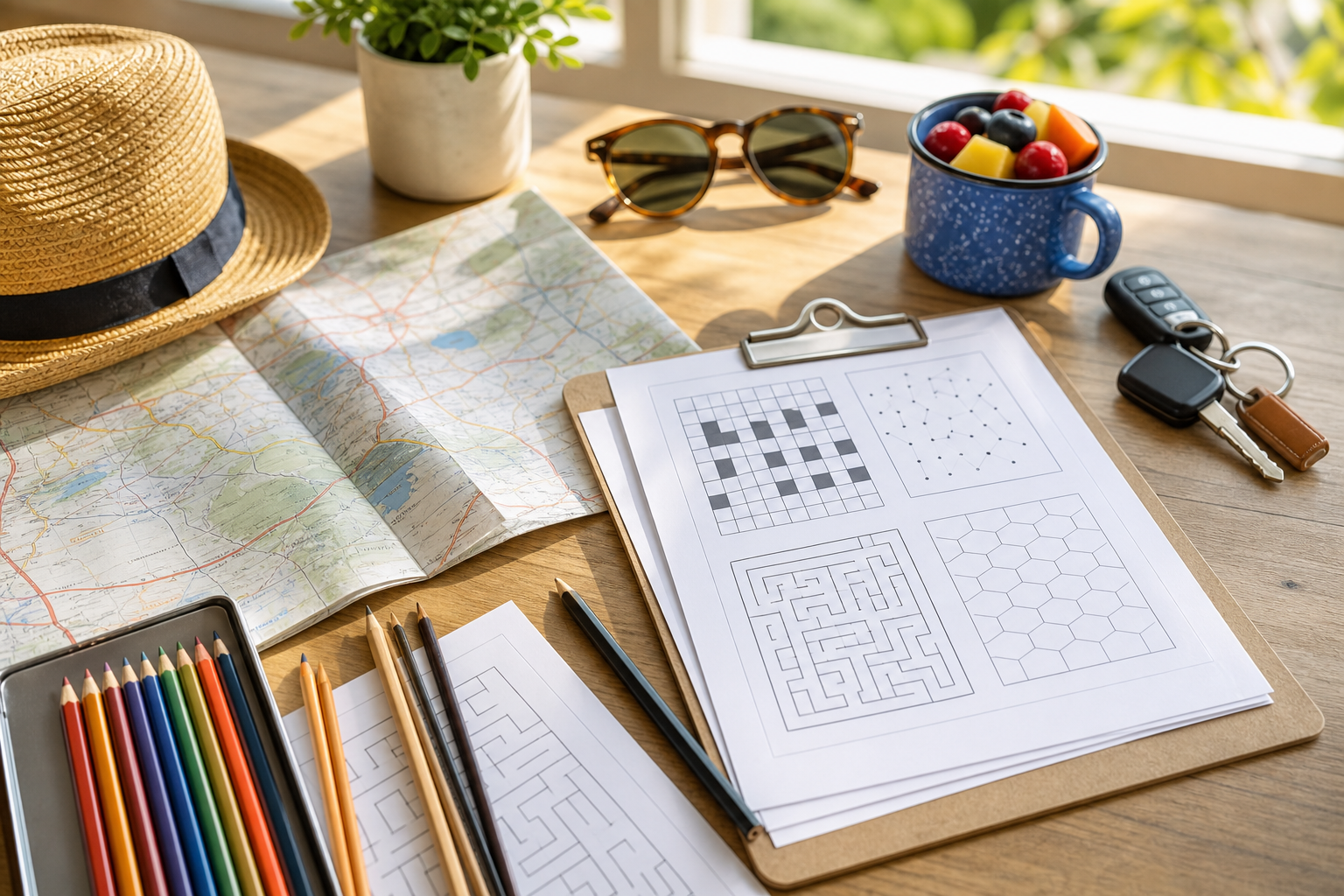


A hurricane prep kit usually starts with the serious essentials: water, flashlights, batteries, medicine, printed contacts, important documents, snacks, and a plan. That part comes first. But once the basics are handled, families still run into the same practical question during storm season: what should kids actually do during a long indoor waiting window that does not depend on strong Wi-Fi, a full battery, or perfect cell service? That is where a printable puzzle pack earns its place.
The timing makes sense right now. Ready.gov says Atlantic hurricane season runs from June 1 through November 30, and the National Hurricane Center keeps live tropical outlooks available throughout the season. Ready.gov also says a disaster supplies kit should include paper and pencil plus books, games, puzzles, or other activities for children. In other words, a small stack of pencil-first printable pages is not fluff. It fits the real backup-kit logic families already use.
One important note first: these pages are for calm, seated moments after adults have handled alerts, evacuation decisions, safe shelter steps, charging plans, medicines, food, and water. They are not for active evacuation, stairwells, flooded areas, dark hallways, or any moment when children need full attention on movement, instructions, or weather warnings.
Why a hurricane prep puzzle pack works
Storm season creates a lot of in-between time. Families may wait for updates, shelter in a safer interior room, sit through hotel check-in delays, ride out a power outage with limited charging, or need one quieter activity while adults organize supplies and communicate with relatives.
Printables help most in moments like these:
• while adults are monitoring weather updates and children need one clear table task.
• while a family is sheltering indoors and wants an option that does not rely on streaming or game downloads.
• while hotel, relative, or shelter logistics create a short seated waiting window.
• while teachers, librarians, or community leaders want a low-prep weather-season quiet bin that does not assume reliable internet.
• while a family activity buyer wants something practical enough to keep in a kit and reuse more than once.
This is also why the packet should stay simple. Good storm-day pages should work with a printer, pencil, clipboard, folder, or zip pouch. They should not depend on scissors, glue, exact weather maps, live apps, or a long adult explanation before anyone can begin.
What makes a good printable storm-day packet
The best packet is not the one with the most pages. It is the one somebody can grab fast and use under less-than-perfect conditions.
Aim for:
• one clear task per page.
• black-and-white friendly layouts that do not waste ink.
• broad weather and preparedness themes instead of scary imagery or crisis-heavy language.
• answer spaces large enough for laps, clipboards, beds, or a small table.
• a mix of quick visual wins and one or two slightly stronger logic pages.
• pages that still make sense if the family uses only ten quiet minutes at a time.
If the packet needs constant adult reteaching, a full battery, or a perfect living-room setup to work, it stops being a practical backup activity.
The 15 printable storm-day kit games worth building first
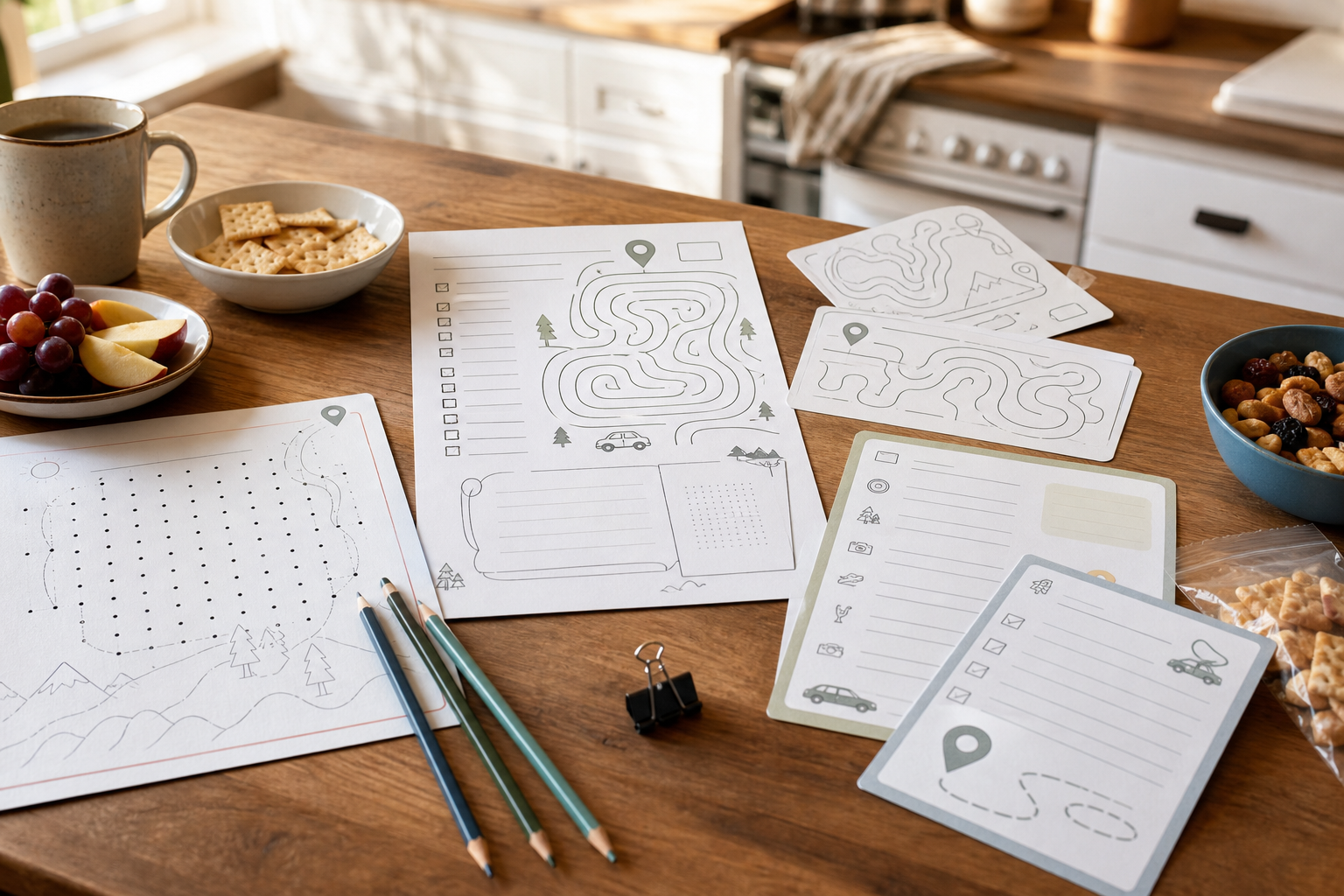
1. Weather-word-search sprint
Hide approachable words such as rain, wind, map, alert, radio, cloud, water, and flashlight. This is an easy opener because most kids already know how to begin.
2. Hurricane-supplies match page
Match broad supplies such as flashlight, bottled water, batteries, whistle, pencil, and first-aid kit to simple picture icons or labels. Keep it visual and calm.
3. Safe-room maze
Create a short maze that moves from one room to a marked safer indoor spot without crossing blocked squares. Keep it simple and clearly imaginary instead of turning it into a real-floor-plan activity.
4. Rain-band pattern strip
Alternate easy icons such as cloud, raindrop, flashlight, and star, then ask solvers to finish the pattern. This gives younger players a quick visible win.
5. Shelter-sign scramble
Turn short words such as WIND, RAIN, CALM, KIT, and PLAN into a small unscramble page. Keep the list short enough to finish in one sitting.
6. A=1 forecast codebreaker
Use a simple number key to reveal words such as READY, WATER, RADIO, SAFE, or PLAN. This adds challenge without adding supplies.
7. Count-the-kit tally page
Show small groups of flashlights, snack packs, water bottles, socks, pencils, or batteries and ask players to count totals or matching sets. This works well for mixed reading levels.
8. Go-bag category sort
Give players a short list of words and ask them to sort each one into groups such as supplies, clothing, paper items, or comfort items. This adds reasoning without feeling like a lecture.
9. Storm-direction path puzzle
Use arrows such as left, right, up, and down to guide a pencil path through a simple grid. This creates a logic step without relying on real forecast maps.
10. Spot-the-difference kit page
Show two simple emergency-bag scenes with a few changed details, such as one missing flashlight or a switched bottle count. It feels like a game immediately and needs very little explanation.
11. One-letter weather ladder
Build a small ladder such as RAIN to MAIN or WIND to MIND with one-letter changes. Older solvers often like this because it feels more like a puzzle than a worksheet.
12. Family-plan clue card
Use three people, three bag colors, and three jobs with a few short clues. Keep it short enough to solve in under three minutes so the page feels satisfying instead of heavy.
13. Check-the-list picture sequence
Give four small pictures and ask solvers to number them in the most likely order, such as flashlight, radio, pencil pouch, and snack bag being packed into one kit. This adds sequencing without needing a long reading load.
14. Three-line weather journal prompt
Ask for one thing the child notices, one thing they packed, and one thing they want to do when the storm passes. This keeps the packet from becoming only grids and mazes.
15. Final calm password
Let answers from earlier pages supply one letter, number, or symbol each for a final word such as READY, SAFE, CALM, or PLAN. This is the page that makes the packet feel complete instead of random.
Three ready-to-use mini examples
These are simple enough to build before the next forecast watch, power-outage season, or family kit refresh.
Example 1: quick riddle
Clue: I shine when the lights go out, but I am not the sun. What am I? Answer: a flashlight.
Example 2: tiny codebreaker
Use A=1, B=2, C=3. 19 - 1 - 6 - 5. Answer: SAFE.
Example 3: short pattern repair
Cloud, raindrop, cloud, raindrop, __. Answer: cloud.
How to pack a weather-ready puzzle pouch
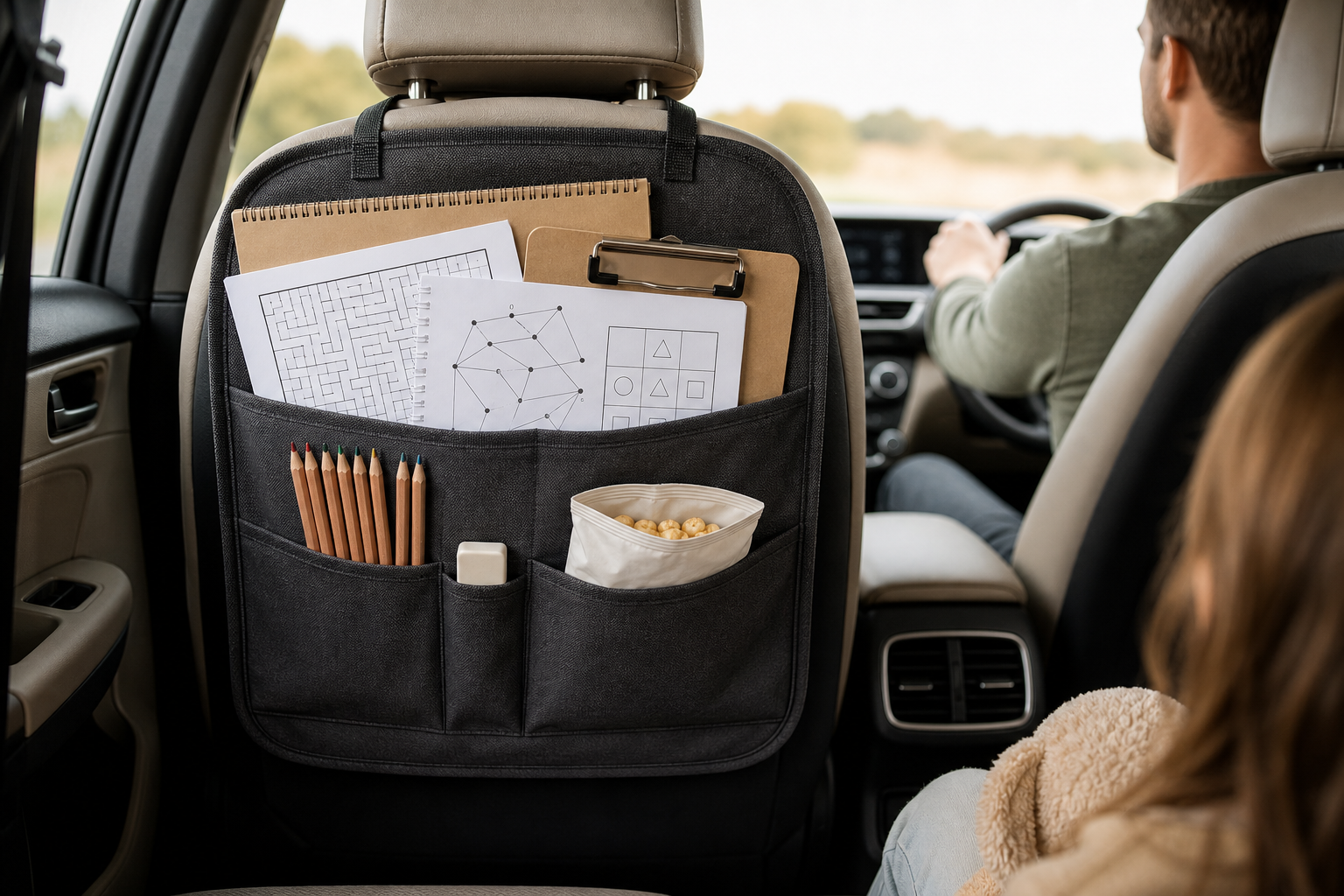
A strong storm-day packet usually needs only six to ten pages.
Start with:
• 2 quick search, match, or spot-the-difference pages.
• 2 visual or pattern pages.
• 2 stronger puzzle pages such as a codebreaker, ladder, or direction grid.
• 1 short writing or clue page.
• 1 final password page.
• 1 answer key.
That mix is enough for a family emergency kit, a weather-season classroom bin, a hotel backup folder, or a community waiting-room pouch without making the packet bulky.
Ready.gov's Build a Kit page is unusually practical here because it explicitly includes paper and pencil plus books, games, puzzles, or other activities for children. That means a printable folder is easy to justify as part of a real kit, not just an extra craft project. Keep the pages in a waterproof sleeve or zip bag, add two pencils and a small sharpener, and store the packet where adults can grab it without digging.
Hotel, shelter, and power-outage version
For families, start with the word search, tally page, and pattern strip during the first seated waiting window, then save the codebreaker, ladder, and final password for later. That pacing keeps the packet useful instead of letting every page disappear in the first ten minutes.
The same packet also stays useful when power is limited. Ready.gov's power-outage page says households should have flashlights for every member and a way to charge a cell phone or power bank. The Red Cross hurricane guidance also reminds families to be ready to live without power, water, gas, phone, and internet for a long time. That is exactly why pencil-first pages matter. They still work when battery-saving mode becomes the priority.
Classroom, library, and community version
For teachers, librarians, and community activity leaders, this theme works well as a seasonal quiet bin, take-home family packet, indoor weather-hold table, or community-center folder that stays useful even if internet access gets inconsistent. Use the supplies match page, one visual page, one codebreaker, and the final password as short stations, then keep the answer key nearby so the activity stays self-directed.
Because the theme is broad, the packet can keep working after the forecast changes. Kids can use the same pages to count, sort, notice patterns, and solve short clues without needing one exact storm track or one exact local alert situation.
Fast answers to common buyer questions
What ages work best for storm-day printables?
Most storm-day packs work best for ages 5 and up, with easier count, match, and pattern pages for younger kids and code, ladder, or logic pages for older kids, siblings, and mixed-age family groups.
What supplies should the packet assume?
Assume only a printer, pencil, and optional clipboard or folder. If a page needs markers, scissors, glue, or internet access to function, make that obvious before anyone prints it.
Should these pages replace emergency planning?
No. Planning, alerts, safe shelter decisions, evacuation readiness, and essential supplies come first. The printable packet is only for the quieter waiting windows that happen after those basics are handled.
How long should a storm-day puzzle session last?
Five to twenty minutes is usually enough for a waiting window, hotel arrival delay, interior-room quiet block, or battery-saving break. Shorter sessions are easier to repeat than one long packet marathon.
Common mistakes to avoid
Do not make every page scary, overly dark, or centered on disaster imagery. The activity should feel steady and usable, not more stressful.
Do not use tiny type or cramped answer spaces that fail on a lap, bed, or clipboard.
Do not build the packet around one exact local map, one forecast cone, or one live weather app. Broad pages last longer and travel better.
Do not forget the safety part. Check official local alerts first, keep the packet for seated use only, and put water, medicines, documents, lights, and shelter decisions ahead of any activity page.
Internal link suggestions
Pair this topic with the Rainy Day Puzzle Pack, the Road Trip Puzzle Pack, the Airport Layover Puzzle Pack, the free puzzles and games page, and the Kids Coloring Playroom. Readers who like this theme often want another practical printable for travel delays, weather pivots, and screen-light family downtime.
Call to action
Want more printable-style puzzle ideas that work in real family schedules, real travel bags, and real backup plans? Browse PuzzlePlay Books for family-friendly puzzle guides, seasonal activity ideas, and practical screen-light printables that are easy to print and easy to reuse.