


A Fourth of July backyard puzzle hunt is the holiday activity that sits between a placemat and a full escape room. It is bigger than one worksheet, easier than a scavenger hunt with hidden objects, and much simpler than building a prop-heavy party game from scratch.
The format is timely for the week of Independence Day because families, camps, classrooms, and hosts are looking for quick table activities that work while food is cooking, guests are arriving, or kids are waiting for fireworks. National Day Calendar lists Independence Day on July 4, 2026, and live marketplace checks this week showed dedicated searches for Fourth of July escape-room and summer escape-room resources. Daily puzzle destinations such as USA TODAY Puzzles and The New York Times Games also keep proving that fast, repeatable puzzle formats are mainstream entertainment, not niche homework.
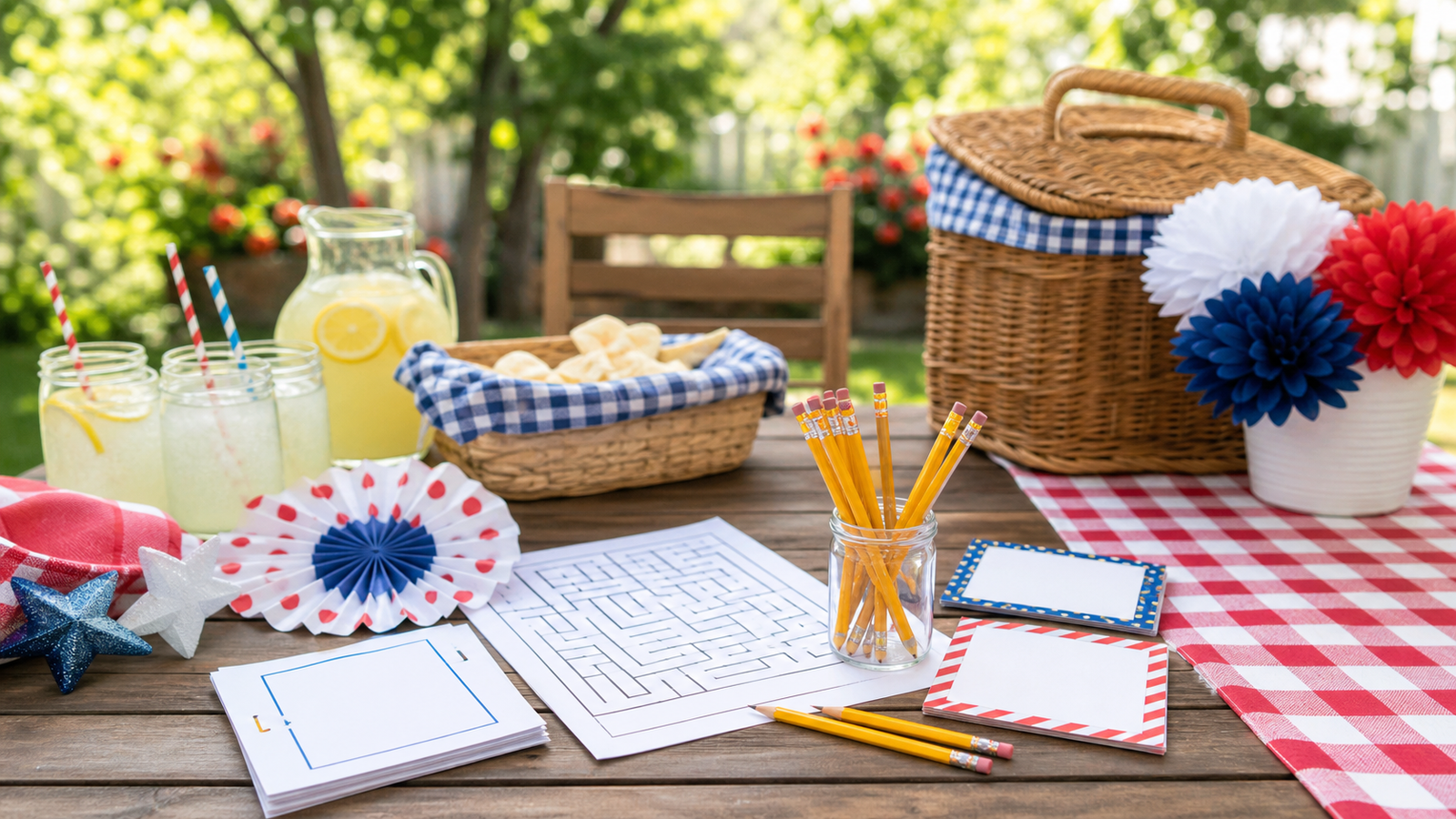
For Puzzle Playbooks readers, the opportunity is practical: make a printable game that feels like an event but still prints on ordinary paper. You need five clues, a final code, two hint tokens, a pencil per team, and one small reveal at the end.
Why a Backyard Puzzle Hunt Works
A good holiday game has to survive noise, snacks, mixed ages, and people drifting in and out. That is why a puzzle hunt beats a long rulebook. The host can explain it in one minute, kids can solve in short bursts, and adults can jump in without learning a new board game.
The strongest version is not a race to find hidden objects all over the yard. Hidden-object hunts can be fun, but they break when clues blow away, the dog grabs an envelope, or one child finds everything before the younger players understand the rules. A printable puzzle hunt keeps the clues on the table and lets the story do the moving.
Think of it as a backyard escape game. The players are not escaping a room. They are unlocking the cookout code, picnic password, parade route, firework finale, or lemonade stand secret. The final answer can reveal the dessert table, a basket of glow sticks, the next family game, or simply a silly certificate.
The 5-Clue Backyard Puzzle Hunt Format
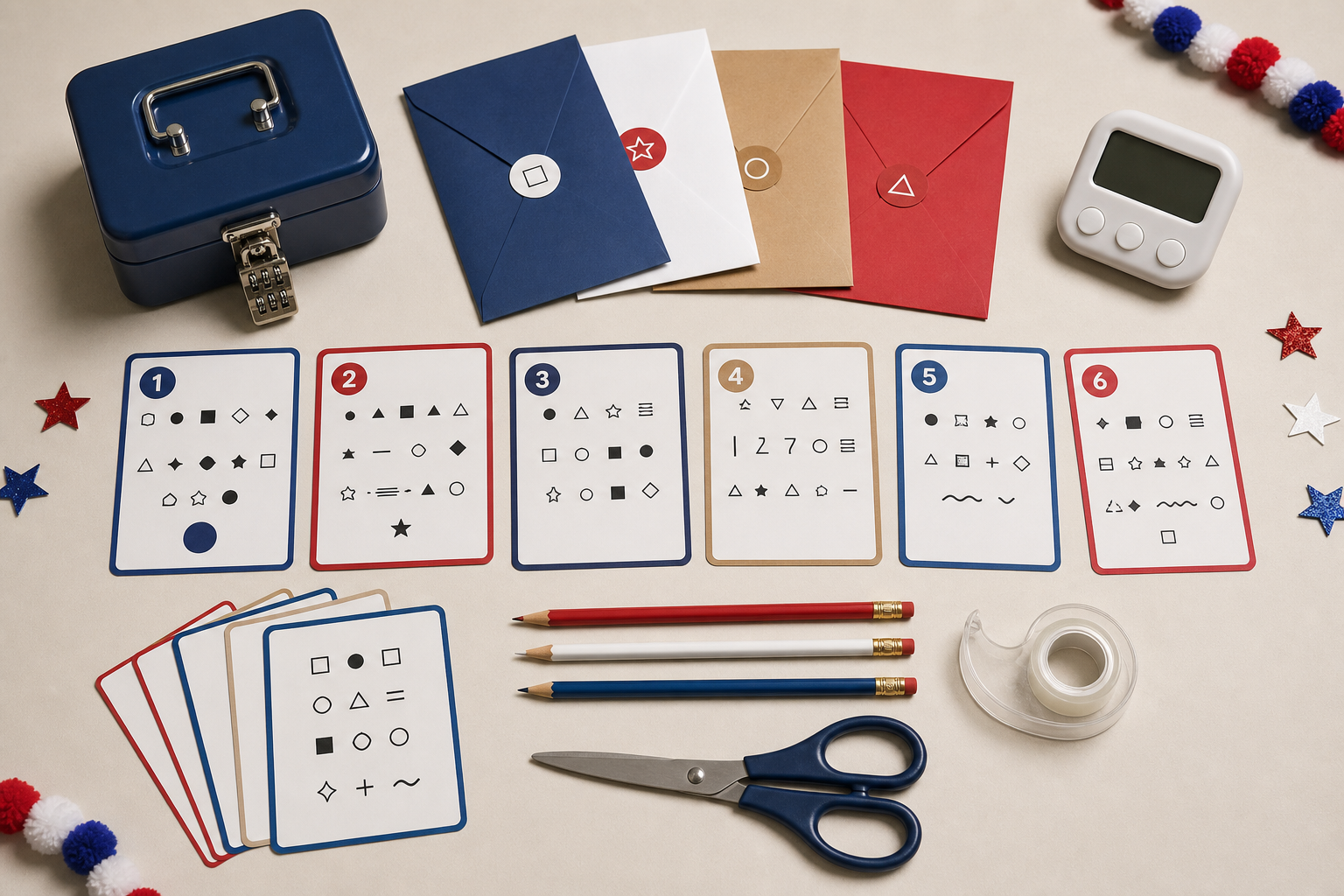
Use five clues because five feels like a real game without becoming a hosting project. Each clue should use a different kind of thinking so one strong reader, one visual solver, one pattern spotter, and one younger player can all contribute.
Clue 1: The Welcome Maze. Start with a small maze that leads from a picnic basket to a star. Put one letter at each correct turn. The letters spell the first answer word. Keep this clue easy so the group gets momentum immediately.
Clue 2: The Cookout Word Search. Hide eight summer words in a 10-by-10 grid: picnic, spark, lemon, grill, parade, family, banner, and night. Circle the unused letters in one row or column to reveal the next code piece. If younger kids are playing, give them the word list and let older kids handle the leftover-letter step.
Clue 3: The Pattern Flag. Draw five rows of simple stripes, stars, dots, and blanks. Ask players to choose the missing symbol in the last row. Do not use an actual flag design as the puzzle answer; keep the design abstract and respectful. The correct symbol points to a number on the answer sheet.
Clue 4: The Picnic Logic Mini. Give three people, three snacks, and three blanket colors. Two clues are enough: Maya did not bring lemonade. The blue blanket has watermelon. The answer is the name paired with the red blanket. This gives logic lovers a moment without slowing the whole table.
Clue 5: The Final Code Wheel. Combine the four earlier answers into a four-character code. The final clue tells players how to order them: maze letter first, word-search number second, pattern symbol third, picnic name fourth. The code opens the reveal envelope.
Example Printable Puzzle Hunt You Can Build Tonight
Use this starter theme: The Missing Lemonade Recipe. The story is simple. The cookout recipe card was split into five puzzle clues, and the team has 30 minutes to recover the final code before the lemonade stand opens.
Make the reveal wholesome and low-cost. The final envelope can say, “You found the recipe: lemon, ice, sparkle, share.” It can include a tiny certificate, a joke, a table-talk question, or directions to the next printable activity. The prize does not need to be candy or a toy. The win is solving together.
For a classroom or camp version, change the story to The Lost Parade Route. For a family reunion, use The Picnic Password. For a rainy indoor version, use The Porch Mystery and tape the clue envelopes under chairs or around a single room.
Recommended Page Layout
Print one host sheet and one team packet. The host sheet has the answer key, timing plan, hint wording, and reset checklist. The team packet has a cover page, five clue pages, one answer sheet, and two hint tokens.
Keep the design bold. Use large clue numbers, generous writing spaces, and icons that tell players what kind of puzzle they are solving. A maze icon means draw a route. A magnifying glass means search. A lightbulb means logic. A lock means final answer.
If the puzzle is for mixed ages, add a “helper line” under each clue. Example: “Need a nudge? Start by finding the word PICNIC.” The host can choose whether to cover helper lines with sticky notes or leave them visible for younger solvers.
How to Run It Without Chaos
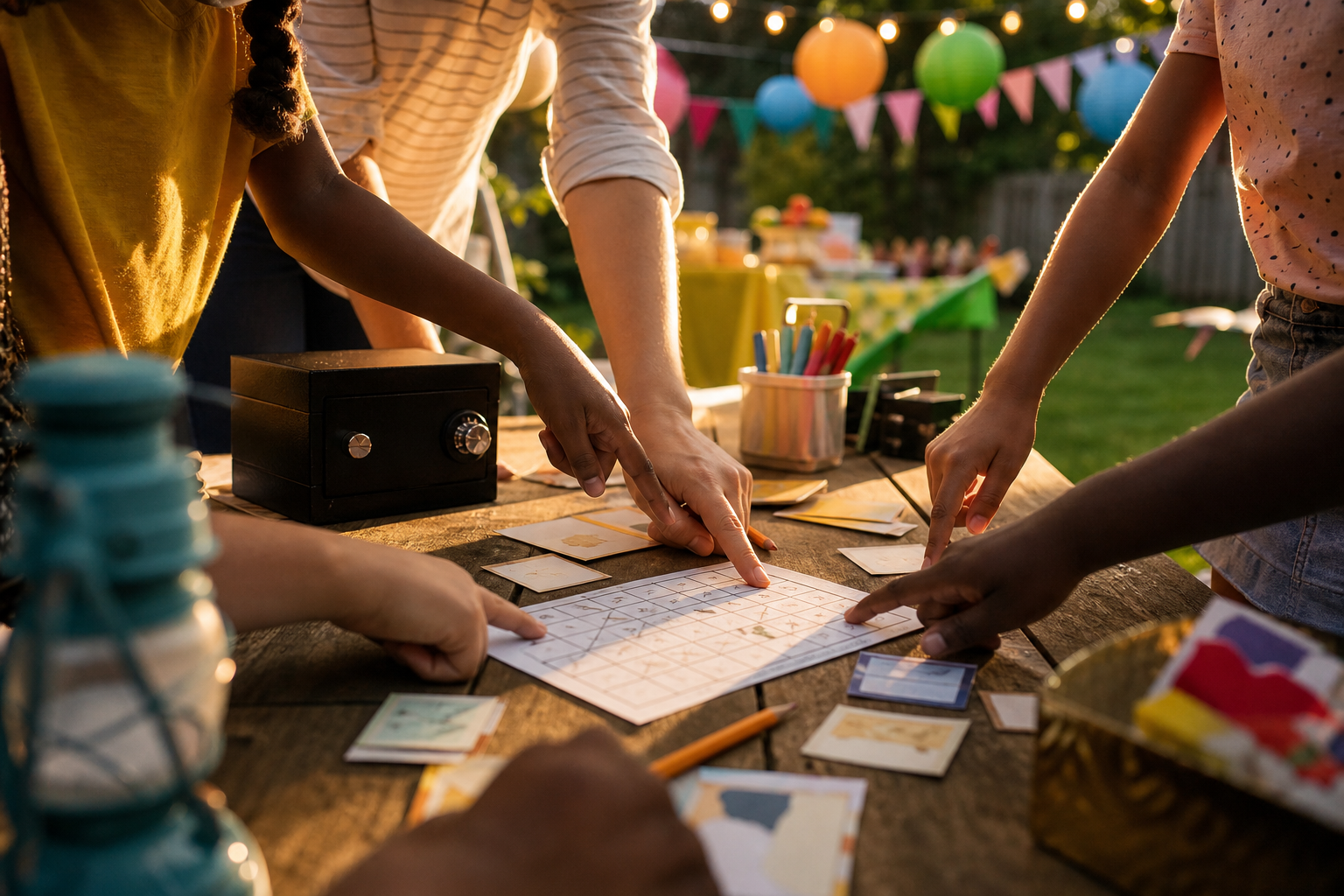
Before the game starts, give every player a role. The reader reads the clue. The writer records answers. The checker compares the code. The runner brings pages to the host. The encourager watches the timer and asks if the team wants a hint. Roles stop one confident solver from taking over everything.
Use a visible timer, but do not make the game feel stressful. Thirty minutes is a good ceiling for a cookout. Ten to fifteen minutes is better for younger kids. If the group is having fun, let them finish even after the timer ends. The clock is there to create energy, not disappointment.
Hint tokens make the game feel fair. Give each team two paper tokens. When they spend one, the host gives a prepared hint instead of improvising. Prepared hints protect the puzzle from accidental spoilers and keep teams moving.
For outdoor use, put clue pages in envelopes or clear sleeves and keep a clipboard nearby. If wind is likely, use clothespins, painter tape, or a small tray. The more boring the logistics are, the more the puzzle gets to shine.
Three Variations for Different Audiences
For younger kids, make every clue visual. Use picture matching, mazes, count-and-circle boxes, and simple symbol codes. Let an adult read the story and keep answers to one word or one number.
For tweens and teens, add one harder deduction clue and one red-herring detail that looks important but is only decoration. Do not make every clue harder. A good teen version still needs one fast win at the beginning and one satisfying final code at the end.
For adults and family game night, make the theme playful instead of childish. Use picnic alibis, recipe fragments, route maps, and a final passphrase. Adults enjoy paper puzzle hunts when the writing is crisp and the clues respect their time.
More Holiday Puzzle Ideas
Use the Fourth of July printable puzzle placemat as the younger-kid table activity, then run this backyard puzzle hunt as the group game. Add the mini paper escape room guide when you want a more classroom-style version. Use the road trip puzzle kit for families traveling to the cookout, camp, or reunion.
Next, try the Fourth of July printable puzzle placemat, mini paper escape rooms, a road trip puzzle kit, printable category sort puzzles, or the free puzzles and games hub. Each option gives families an easy next step for a holiday table, party, trip, or longer screen-free puzzle session.
Printable Host Checklist
Print one team packet per team. Put the five clues in order. Print or cut two hint tokens. Prepare one final reveal envelope. Set out pencils, a timer, tape, and a clipboard. Decide whether players can solve at the table or move between stations. Test the final code once before guests arrive.
The test matters. A printable puzzle hunt feels effortless only when the host has already caught the tiny problems: a maze letter in the wrong turn, a word-search answer that can be found two ways, or a final code that is not written clearly enough. Spend five minutes solving your own packet before anyone else sees it.
Start With One Printable Page
Need a low-prep holiday activity? Start with one printable puzzle page, then build toward a five-clue hunt. Browse PuzzlePlayBooks.com for screen-free puzzle books, printable game ideas, and family-friendly puzzle formats you can use at the table, in the classroom, or on the road.