
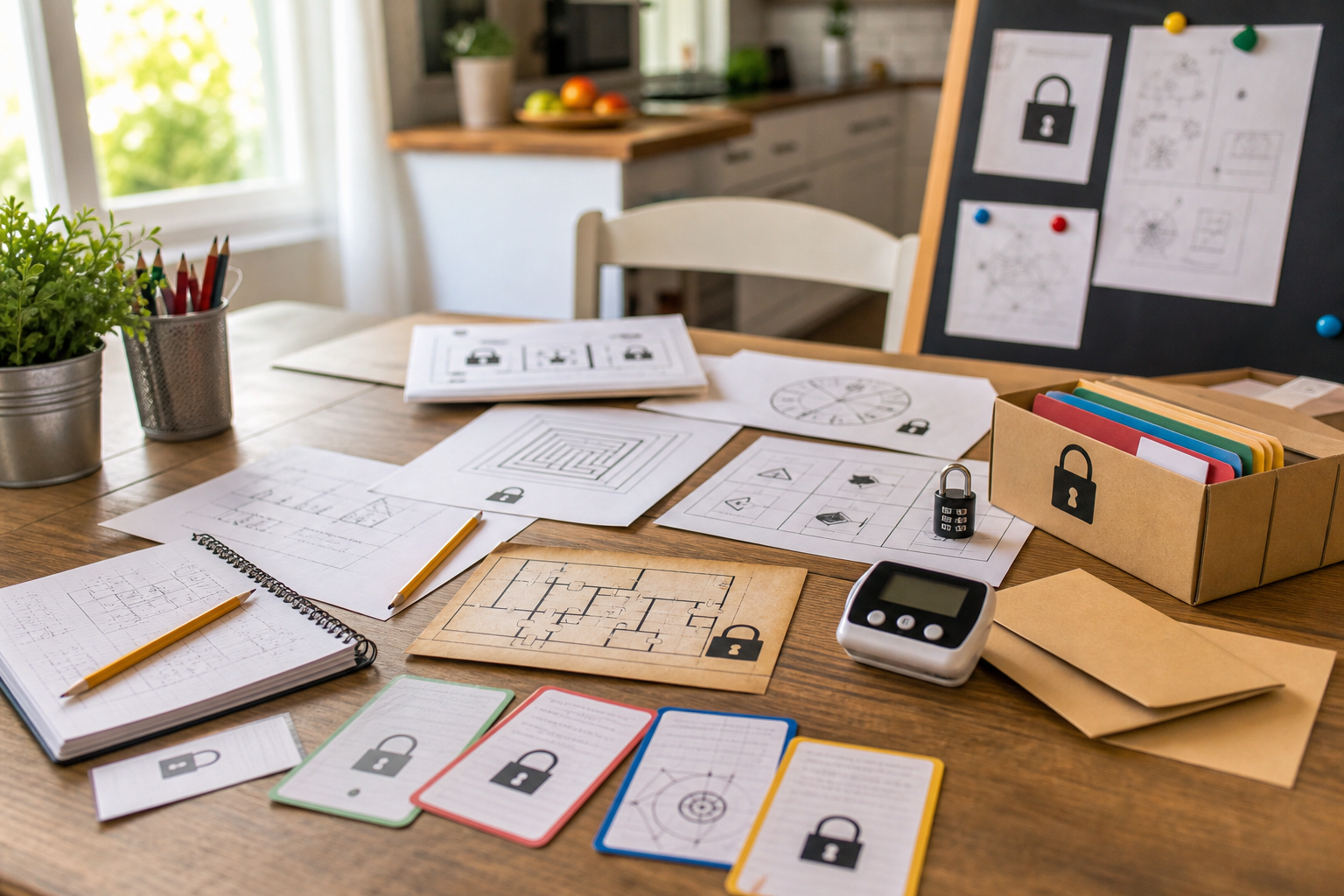


The before-school window is one of the easiest parts of the day to underestimate. One child is fully awake and ready early. Another is still settling in. A teacher or caregiver is handling arrivals, breakfast, attendance, or one more backpack question. Families, before-care teams, and classroom hosts often need one activity that starts right now without turning into a full lesson.
That is why a before-school puzzle pack fits this moment. Late July and early August are when families and schools start rebuilding routines, and major family-facing resources stay focused on school transitions and practical planning. The American Academy of Pediatrics keeps its school guidance and Family Media Plan tools live, the U.S. Department of Education continues to surface family-partnership resources, and National PTA keeps family resources easy to find as the back-to-school rush ramps up. In practical terms, this is a strong time for pencil-first printables that can live in a folder, basket, clipboard, or welcome table.
The goal is not to turn the early-arrival window into another heavy assignment. The goal is to give kids one calm, visible task that works before the bell, during before-care, at breakfast club, in a classroom soft start, or at the family table while the rest of the morning catches up.
One important note first: these pages work best as seated, low-supply activities during real transition windows. They are not a replacement for breakfast, movement, outdoor time, or instructions adults need children to hear right away.
Why a before-school puzzle pack works
A good early-arrival page does three jobs at once. It gives kids something clear to begin, gives adults a little breathing room, and creates a small finish line that still feels possible in five to fifteen minutes.
These printables help most in moments like these:
• while a parent needs ten quiet minutes to finish the morning handoff, label one item, or answer one school question.
• while a before-care or breakfast-club leader needs a table activity that works when kids arrive at different times.
• while a teacher wants a soft-start page for early arrivers before the whole class is ready for direct instruction.
• while siblings need one shared table activity that does not require the same reading level.
• while a family activity buyer wants one practical packet that can move from school mornings to after-school reuse without extra setup.
That is also why the packet should stay simple. Good before-school pages should work with a printer, pencil, optional crayons or colored pencils, and a flat surface. They should not depend on scissors, glue, timed internet games, or long verbal directions before anyone can begin.
What makes a good before-school printable
The strongest page matches the real pace of a school morning. It should look inviting at a glance and still make sense if the solver gets interrupted by announcements, breakfast, a late-arriving friend, or the bell.
Aim for:
• one clear task per page, such as search, sort, decode, trace, tally, maze, or finish the pattern.
• school-season themes that feel relevant right away, such as backpacks, calendars, breakfast trays, weather, classroom supplies, and welcome-week symbols.
• answer spaces large enough for clipboards, cafeteria tables, classroom bins, and family counters.
• pages that survive interruption, so a child can stop and still come back without feeling lost.
• directions short enough that another adult can hand over the page without reteaching the whole packet.
• a mix of easier visual pages and one or two stronger logic pages so mixed ages can share the same folder.
If a printable only works inside a perfect full-class block, it is not a strong before-school printable.
The 15 printable early-arrival games worth building first
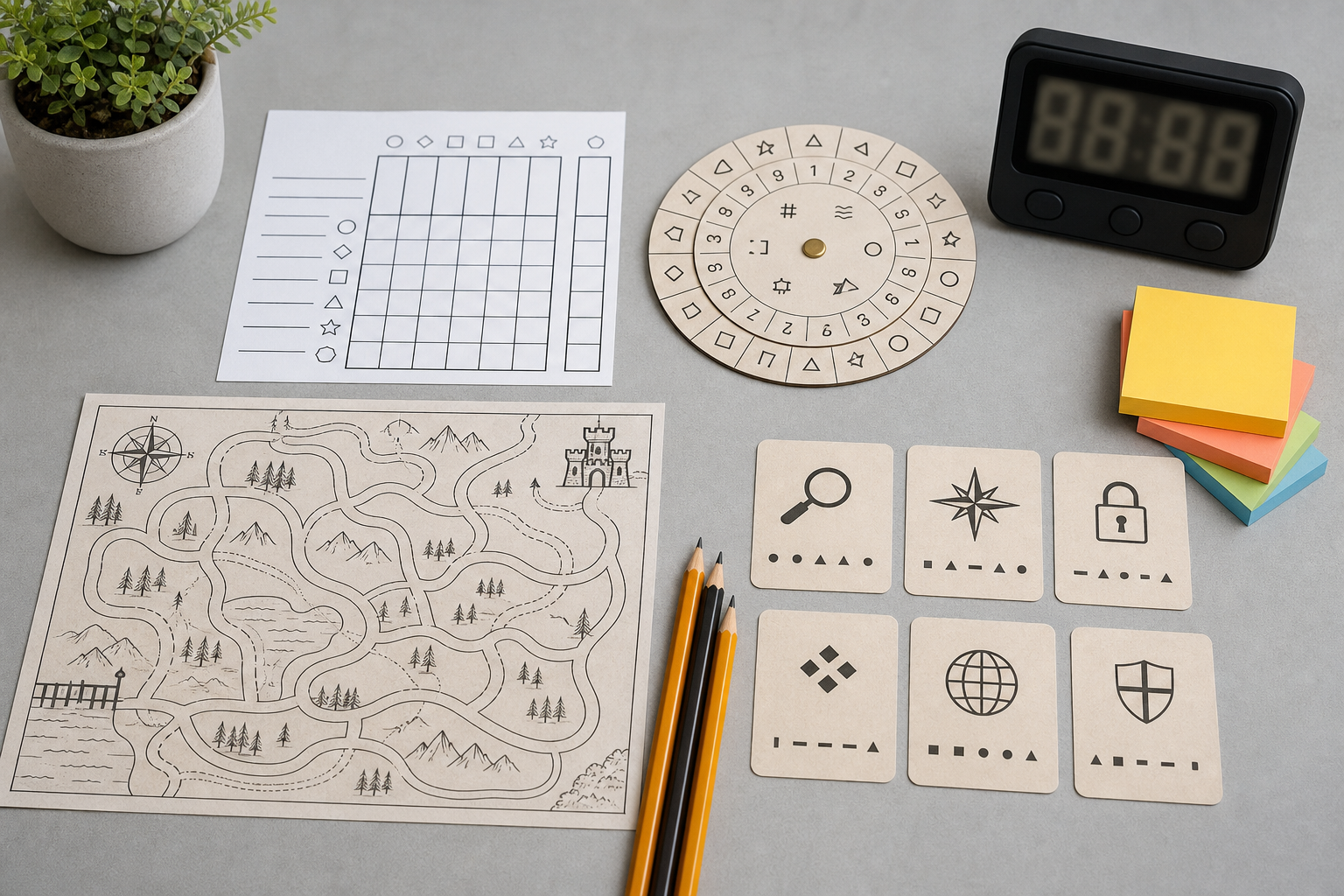
1. Morning-message word hunt
Hide approachable words such as bell, class, pencil, share, read, lunch, folder, and start in a compact grid. This is one of the fastest ways to give early arrivers an immediate win.
2. Backpack-bin picture sort
Show a mix of objects such as folder, snack, pajamas, glue stick, water bottle, and library book. Ask solvers to circle what belongs in a school setup and cross out what stays home.
3. Breakfast-club tally page
Scatter icons such as apples, cereal bowls, milk cartons, bananas, and juice cups around the page. Kids count and compare totals while they settle into the table.
4. Desk-to-calendar mini maze
Create a short path from a desk to a classroom calendar, morning bin, reading corner, or cubby without crossing blocked squares. It feels school-specific without needing much reading.
5. Weather-and-water-bottle icon sort
Mix suns, clouds, umbrellas, jackets, hats, and water bottles on one page. Ask solvers to group what belongs on a hot, rainy, or cool school morning.
6. A=1 morning codebreaker
Use a simple number key to reveal words such as READY, START, SHARE, TABLE, or LEARN. This adds challenge without adding supplies.
7. Pencil-pattern strip
Alternate icons such as pencil, star, backpack, and apple, then ask solvers to finish the pattern. Add one harder row underneath for older kids who want more.
8. Partner clue match
Split a short set of clues and answers across two halves of the page so solvers have to compare what they noticed. This is a low-pressure way to let kids talk with a purpose.
9. Direction-grid pencil path
Use arrows such as left, right, up, and down to guide a pencil through a simple grid. This makes a strong solo page for older solvers during a short quiet start.
10. Mini arrival logic puzzle
Use three kids, three favorite puzzle types, and three table colors with a few short clues. Keep it short enough to solve in under three minutes so it feels satisfying instead of heavy.
11. Rebus wake-up card
Use easy picture clues for words such as GOOD MORNING, BUS STOP, SHARE TIME, or START SMART. A one-page rebus gives mixed-age groups a fun shared entry point.
12. This-or-that morning choices
Ask players to circle favorites from simple pairs such as maze or riddle, apples or bananas, solo puzzle or partner puzzle, crayons or pencils. This helps kids ease in without every page feeling like a test.
13. One-letter word ladder
Build a small ladder such as BOOK to LOOK or GAME to SAME with one-letter changes. Older solvers often like this because it feels more like a puzzle than a worksheet.
14. First-task finish line card
Give four tiny boxes such as solve a riddle, spot the different icon, finish a pattern, and color one star. This choice-board format helps mixed-age groups begin at the easiest point.
15. Final START password page
Let answers from earlier pages reveal one letter each so the packet ends with START, READY, SCHOOL, or SMILE. A final password gives the folder a sense of finish without making it feel heavy.
Three quick mini examples
These can be built quickly and reused across before-care tables, classroom arrival bins, or family counters.
Example 1: short riddle
I wait by the door, carry folders and snacks, and come to school with you every day. What am I? Answer: backpack.
Example 2: simple code
Use A=1, B=2, C=3. 19 - 20 - 1 - 18 - 20. Answer: START.
Example 3: easy pattern
Pencil, apple, pencil, apple, __. Answer: pencil.
How to pack a before-school folder
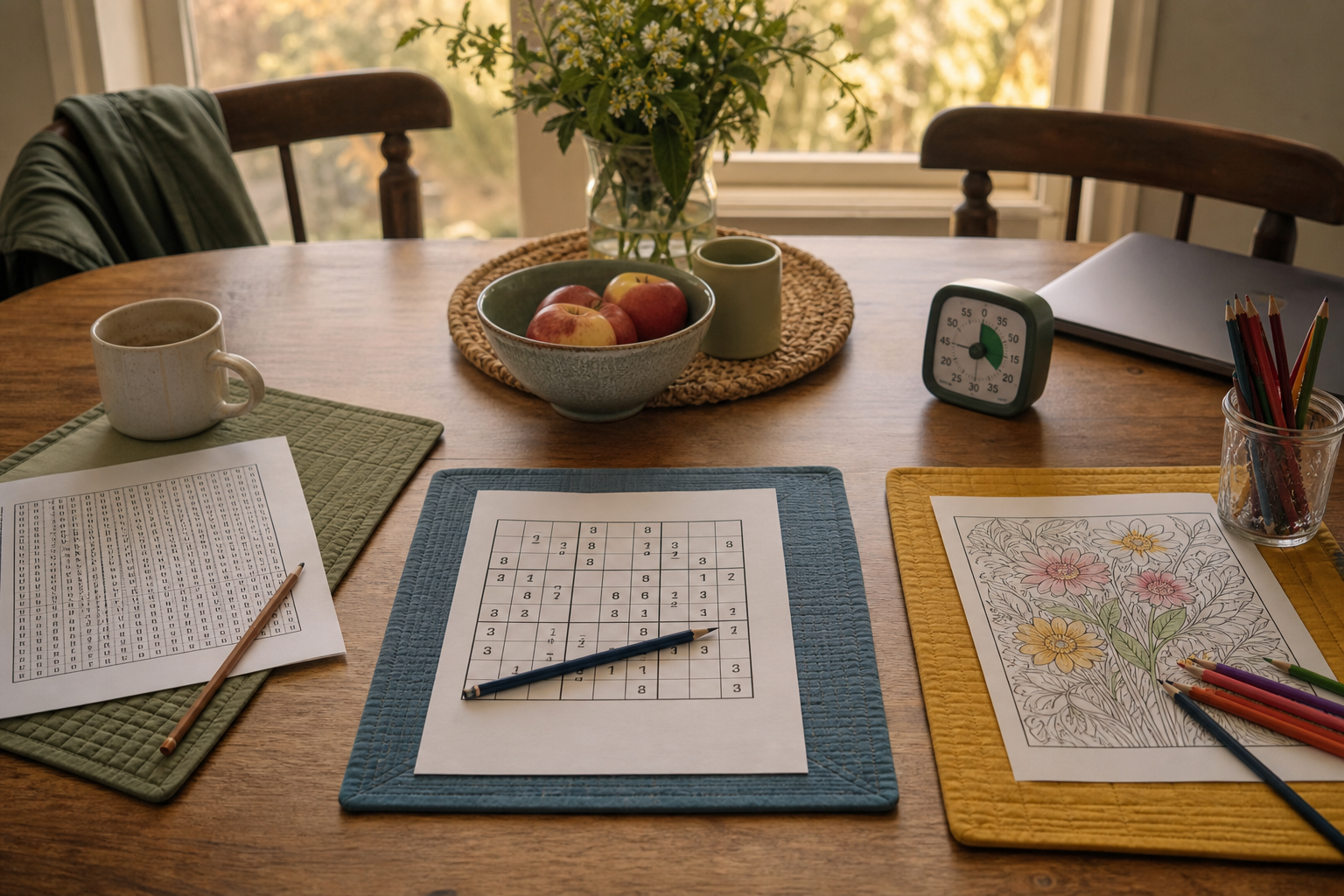
A strong early-arrival packet usually needs only six to nine pages.
Start with:
• 2 fast pages such as a word hunt or sort-and-circle page.
• 2 visual pages such as a maze, tally page, or pattern strip.
• 2 slightly stronger pages such as a codebreaker or simple logic mini.
• 1 choice-board or rebus page.
• 1 final password page.
• 1 answer key.
That mix is enough for a breakfast-club table, classroom arrival bin, sibling wait, car folder, or kitchen-counter reset without making the packet bulky.
A short reusable folder also makes it easier to stay intentional about screens. The AAP Family Media Plan is useful here because the same idea applies: decide ahead of time what the default will be when the morning gets rushed. If one or two pages are already printed and clipped together, adults do not have to improvise with a device every time a child finishes breakfast early or the room is not ready for the next step yet.
Before-care, classroom, and family-table version
For before-care leaders, start with the tally page, word hunt, and maze near the front of the packet so kids can begin with minimal explanation. Save the codebreaker, logic mini, and final password for older solvers or for the quieter part of the window after everyone has arrived.
For classroom teachers, use one page for early arrivers and keep the rest in a soft-start bin for the first two weeks. That way the same packet can cover arrival, indoor weather holds, or one unexpected schedule gap without needing a fresh plan every morning.
For families, keep one easy page for younger kids, one stronger page for an older sibling, and one page that can be colored if attention drops. The best mixed-age packet gives everyone the same table mood without forcing the same difficulty.
Fast answers to common buyer questions
What ages work best for before-school printables?
Most packs work best for ages 5 and up, with easier search, tally, sort, and color-friendly pages for younger solvers and code, logic, and word-ladder pages for older kids.
What supplies should the packet assume?
Assume only a printer, pencil, and optional crayons or colored pencils. If a page needs scissors, glue, exact brand-name supplies, or internet access to function, make that obvious before anyone prints it.
How long should a before-school puzzle session last?
Five to fifteen minutes is usually enough. The best packet fills one real early-arrival window instead of trying to take over the whole morning.
Do these pages only work before school?
No. The same pages can still work after school, at homework club, during indoor recess, in a substitute folder, at a tutoring table, or at the kitchen counter on weekends.
Common mistakes to avoid
Do not make every page so hard that sleepy kids need constant rescue before the day has even started.
Do not build the packet around supplies adults may not have ready during arrival.
Do not turn the whole folder into a lecture about rules with a few puzzle labels pasted on top.
Do not forget the real-morning context. Kids may be eating breakfast, finishing handoffs, waiting for the bell, or listening for announcements, so the printable has to survive interruption.
Internal link suggestions
Pair this topic with the Back-to-School Morning Routine Puzzle Pack, the Back-to-School Bus Ride Puzzle Pack, the Carpool Line Puzzle Pack, the Brain Break Puzzle Pack, the Early Finisher Puzzle Pack, and the free puzzles and games page. Readers who like this theme often want one more practical printable for the next school transition, waiting window, or family-table reset.
Call to action
Want more printable-style puzzle ideas that work in real family schedules, real school transitions, and real mixed-age tables? Browse PuzzlePlay Books for family-friendly puzzle guides, low-prep printables, free games, and practical screen-light activities that are easy to print and easy to reuse.