
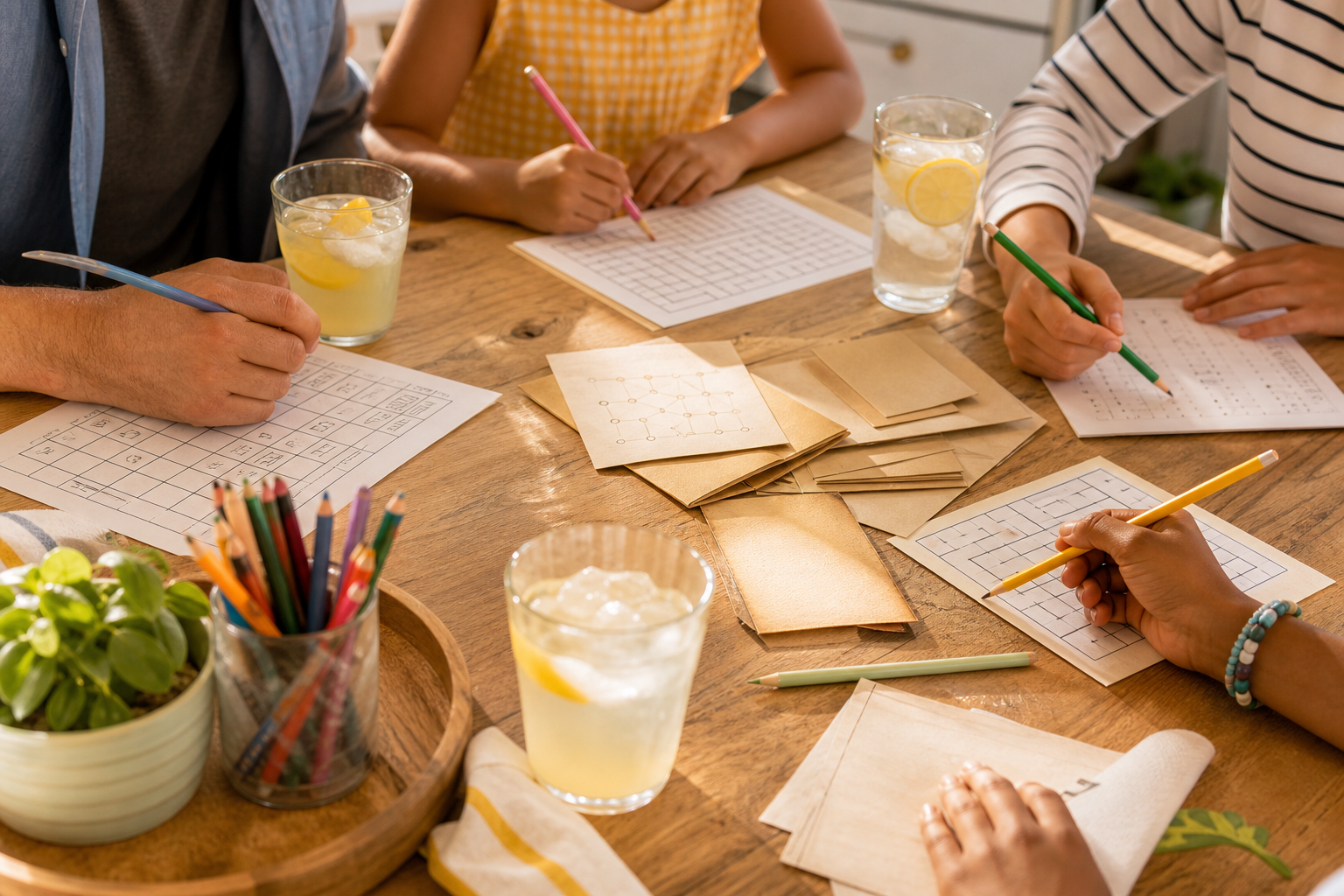


A beach day usually includes more waiting than people expect. There is the drive, the parking lot, the sunscreen round, the snack line, the shade break, the weather delay, and the part of the afternoon when one child still wants to stay while someone else needs a calmer table activity right now. That is why a beach day puzzle pack works. It turns those in-between moments into something specific, portable, and easy to reuse.
The timing also makes sense in mid-July. Families are deep into vacation season, camps need screen-light downtime that still feels themed, and teachers planning late-summer ocean or weather units often want printable pages they can use before school starts. A strong beach-themed packet can work in a beach bag, a condo rental, a campground, a boardwalk snack stop, or a classroom bin without needing special props.
National Weather Service beach safety guidance tells visitors to check local surf and rip current conditions before entering the water, and its heat guidance reminds families to plan for hot conditions, shade, and cooling breaks. CDC heat guidance makes the same general point from the health side: hot weather calls for hydration, cooler spaces, and attention to how the body is feeling. Printable puzzle pages fit that reality well because they give families a low-drama backup when the plan needs a pause.
The goal is simple: build one beach day packet that works before the water, after the water, in the car, under an umbrella, or at the table when everyone needs twenty calmer minutes.
Why a beach day puzzle pack works especially well right now
Late July and early August are full of real-world beach moments that are fun but not nonstop. Wind picks up. Sand gets too hot. A thunderstorm rolls through. A sibling needs a break from the waves. A parent wants something better than handing over a phone while waiting for food. A printable packet covers those moments without making the day feel overplanned.
The beach theme also travels well across ages. Younger kids can circle, trace, count, match, and color. Older kids can handle short codebreakers, map clues, word ladders, and logic minis. Adults can join the final shared puzzle without feeling like the activity was built only for preschoolers.
What makes a good printable beach packet
The best packet is not the biggest folder. It is the one people actually print before leaving the house and still want to use on day two.
Aim for:
• one clear task per page.
• black-and-white friendly layouts that do not waste ink.
• pages that work on a clipboard, cooler lid, or rental-house table.
• minimal loose pieces so wind does not turn the activity into cleanup.
• a mix of fast pages and slightly slower logic pages.
• themes tied to real beach-day moments such as packing, shade breaks, boardwalk snacks, shells, waves, maps, and weather pauses.
If a printable depends on glitter, glue, tiny cutouts, or a perfectly calm table, it is probably the wrong beach printable. Good beach pages stay sturdy, simple, and easy to put away fast.
The 15 printable seaside games worth building first
1. Beach bag word search
Hide approachable words such as towel, shell, bucket, shade, snack, wave, boardwalk, and sunscreen. This is an easy opener while everyone is still getting settled.
2. Sandcastle shape match
Use simple towers, flags, windows, and arches. Ask players to match identical castle pieces, spot the odd one out, or trace the pair that belongs together. This is strong for younger solvers because the task is obvious at a glance.
3. Umbrella-to-water maze
Create a path from the beach umbrella to the shoreline without crossing dunes, bags, or beach chairs. A good maze feels on-theme and portable without needing extra supplies.
4. Seashell pattern strip
Alternate shell, starfish, shell, starfish, then add a second harder pattern underneath using three icons instead of two. This gives early finishers a small next step without needing another full page.
5. Snack shack checklist scramble
Turn practical beach words into a word scramble or checklist challenge: water bottle, grapes, pretzels, napkins, shade clip, and pencil. Keep the vocabulary useful so the page still feels connected to the day.
6. Shoreline bingo
Use broad prompts such as gull, cooler, striped towel, footprints, snack wrapper in the trash can, lifeguard chair, cloudy patch, and blue umbrella. Broad prompts travel better than pages that depend on one exact beach.
7. Boardwalk sign codebreaker
Use a simple A=1 code or symbol key to reveal words such as PIER, SHADE, SHELL, or WATER. This makes a good older-sibling page without a long explanation.
8. Flip-flop category sort
List twelve words and ask solvers to sort them into groups such as things you wear, things you pack, and things you might spot near the shore. This adds a satisfying categories-style challenge without copying another game exactly.
9. Beach map coordinate clue
Build a tiny pretend map with letters on one side and numbers on the other. Players decode coordinates to find the snack stand, restroom, boardwalk gate, or shaded picnic table.
10. Wave-height comparison page
Use simple illustrated wave lines or bars and ask players to rank them from calmest to biggest. Keep it visual and basic instead of pretending to teach surf forecasting.
11. Ocean-object odd-one-out
Show four or five icons such as shell, bucket, towel, kite, and frying pan, then ask which item does not belong. This is quick, printable, and easy to explain in ten seconds.
12. Beach towel logic mini
Use three kids, three towel colors, and three snacks with two or three clues. Keep it short enough to solve in under three minutes so it feels satisfying instead of heavy.
13. One-letter beach word ladder
Build a tiny ladder such as WAVE to SAVE or DUNE to TUNE with one-letter changes. It adds a language challenge for older kids without needing extra materials.
14. Postcard puzzle prompt
Give players three lines to write a postcard message using a word bank, hidden phrase, or simple rule such as include one weather word, one sound word, and one snack word. This keeps the packet from becoming only grids and mazes.
15. Final beach-bag password
Let answers from earlier pages supply letters for one final word such as SHADE, SHELL, OCEAN, or BEACH. This is the page that turns a small folder into an actual event.
Three ready-to-use mini examples
These are simple enough to build before the next trip.
Example 1: quick riddle
Clue: I give you a place to sit and a place to build, but I am not a chair. What am I? Answer: sand.
Example 2: tiny codebreaker
Use A=1, B=2, C=3.
19 - 8 - 1 - 4 - 5
Answer: SHADE.
Example 3: mini logic clue
Maya, Theo, and June each picked one page: maze, bingo, and codebreaker.
• Maya did not pick the maze.
• Theo did not pick the codebreaker.
• June did not pick the bingo page.
Answer: Maya picked the codebreaker, Theo picked the bingo page, and June picked the maze.
How to package it for families, teachers, and activity buyers
A strong beach packet usually needs only six to ten pages.
Start with:
• 2 quick word, matching, or pattern pages.
• 2 observation or checklist pages.
• 2 logic or code pages.
• 1 writing, sketch, or postcard page.
• 1 final unlock page.
• 1 answer key.
That mix is enough for a beach bag, condo rainy-hour folder, boardwalk break, camp table, library summer program, or classroom ocean-theme bin without making the packet feel bulky.
Beach trip and vacation-rental version
For families, use the word search, checklist, and maze during the drive or while everyone is setting up the spot. Save bingo, the postcard prompt, and the final password for the late-afternoon shade break or the evening back at the rental. That pacing keeps the packet useful instead of burning through every page before lunch.
If weather, wind, or heat changes the plan, the packet still works. That is a big part of the value. A good beach printable should survive a changed schedule.
Classroom, camp, and library version
For teachers and program leaders, this theme works well for ocean-week stations, summer reading tables, travel-themed camps, and end-of-summer classroom bins. Use the shell pattern page, category sort, one map clue, and the final password puzzle as short stations, then keep the answer key nearby so the activity stays self-directed.
Camp leaders can also use the packet as a quiet-hour option before swimming blocks, after beach trips, or during weather holds. Keep pages on clipboards, avoid loose pieces, and make the answer box easy to find.
Fast answers to common buyer questions
What ages work best for beach day printables?
Most beach-themed printable packs work best for ages 5 and up, with easier matching, pattern, and maze pages for younger kids and logic or code pages for older kids, tweens, and mixed-age family groups.
What supplies should the packet assume?
Assume only a printer, pencil, and optional clipboard or folder. If a page needs colored pencils, scissors, or anything extra to function, make that obvious before anyone prints it.
How long should a beach puzzle session last?
Fifteen to thirty minutes is usually enough for a shade break, snack stop, condo quiet-time block, or weather pause. Shorter sessions are often easier to repeat on vacation than one long packet marathon.
Common mistakes to avoid
Do not make every page depend on one exact beach, one exact tide schedule, or one exact safety-flag system unless the printable is clearly customized for that location.
Do not overload the packet with dark backgrounds or ink-heavy decoration that prints poorly in a hurry.
Do not require cutting tiny pieces that can blow away or disappear into sand.
Do not turn the whole folder into a lecture. The puzzles should support the trip, not compete with it.
Internal link suggestions
Pair this topic with the Road Trip Puzzle Pack, the Camping Trip Puzzle Pack, the National Park Puzzle Pack, the free puzzles and games page, and the Kids Coloring Playroom. Readers who like this theme often want another printable-friendly activity for the drive, the rental table, or the next summer outing.
Call to action
Want more printable-style activity ideas that work on real tables, in real cars, and on real summer trips? Browse PuzzlePlay Books for family-friendly puzzle guides, road-trip games, and practical screen-light activities that are easy to print and easy to reuse.