
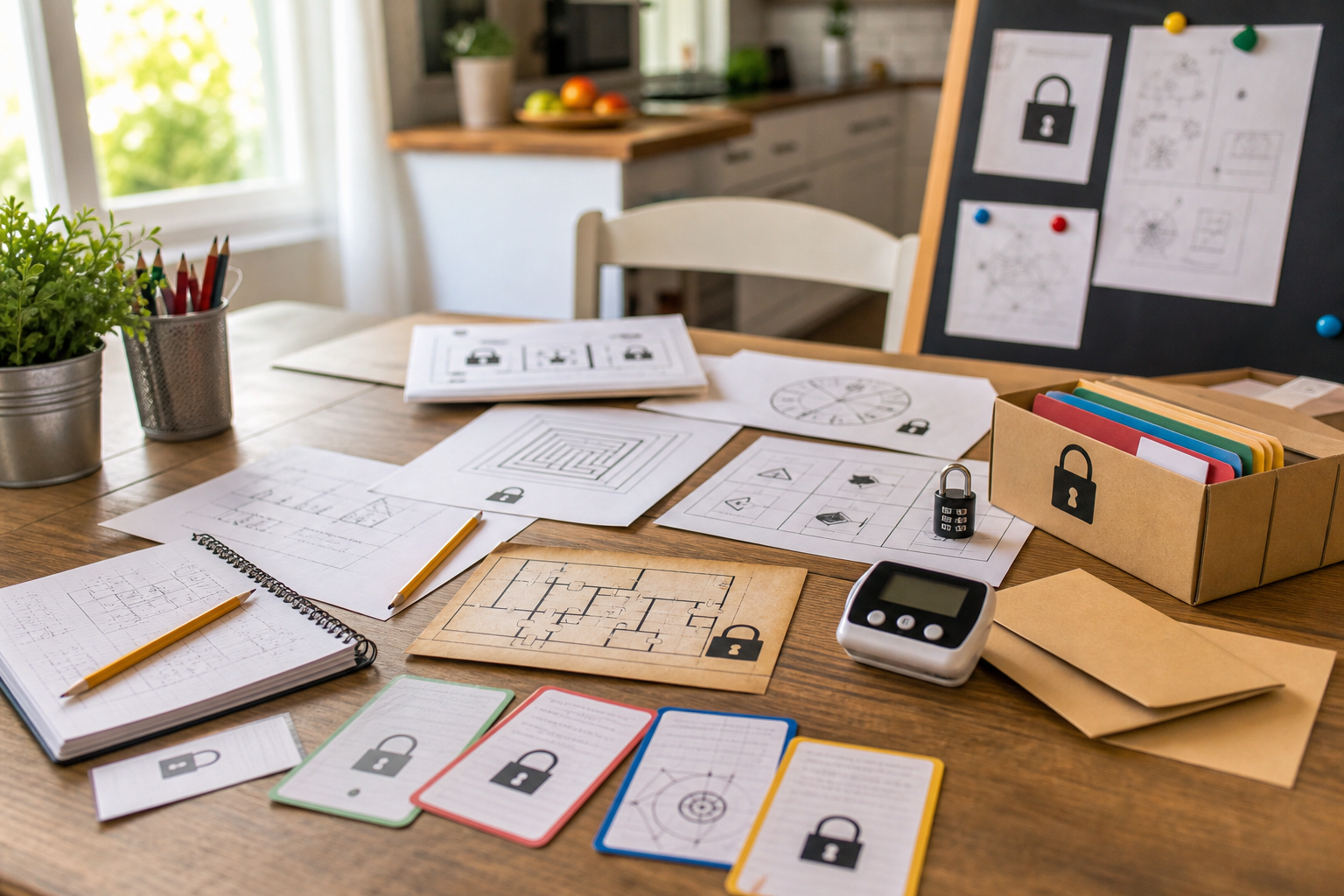


The first week of school needs activities that do more than fill time. Students are learning names, routines, classroom expectations, and how it feels to take a risk in front of new people. A printable back-to-school puzzle hunt gives that nervous energy somewhere useful to go: read a clue, test an idea, compare with a teammate, and unlock the next small win.
The same structure also works outside school. Parents can use it as a back-to-routine family night, homeschoolers can use it as a first-week warmup, and librarians or after-school leaders can run it as a no-screen table activity. The format feels like a mini escape room, but it does not require locks, apps, props, or a complicated story.
Why This Topic Has Strong Timing
Back-to-school content starts early because teachers, parents, and activity planners prepare before the first bell. Search and marketplace pages already show durable demand for printable escape-room and puzzle activities, including Teachers Pay Teachers search results for printable escape room materials. Education sites such as Edutopia and Common Sense Education continue to frame game-based learning as a practical way to increase engagement when the game mechanics serve a clear learning purpose.
Puzzle habits outside school also support the format. Daily games from major publishers have trained people to enjoy quick constraints, short clues, and satisfying reveals. A printable puzzle hunt borrows that rhythm without requiring students or families to use a device.
The Best Use Case
Use this activity when you need twenty-five to forty minutes of structured, low-prep teamwork. It fits the first week of school, a meet-the-teacher event, a rainy indoor recess, a library table, a homeschool kickoff, an after-school club, or a Sunday night family reset before school starts.
The ideal age range is roughly seven and up, with adult reading help for younger players. Older students and adults can handle harder ciphers, more subtle logic clues, or a timed final code. The important design rule is simple: every clue should be solvable from what is printed on the page.
Build the 4-Station First-Week Puzzle Hunt
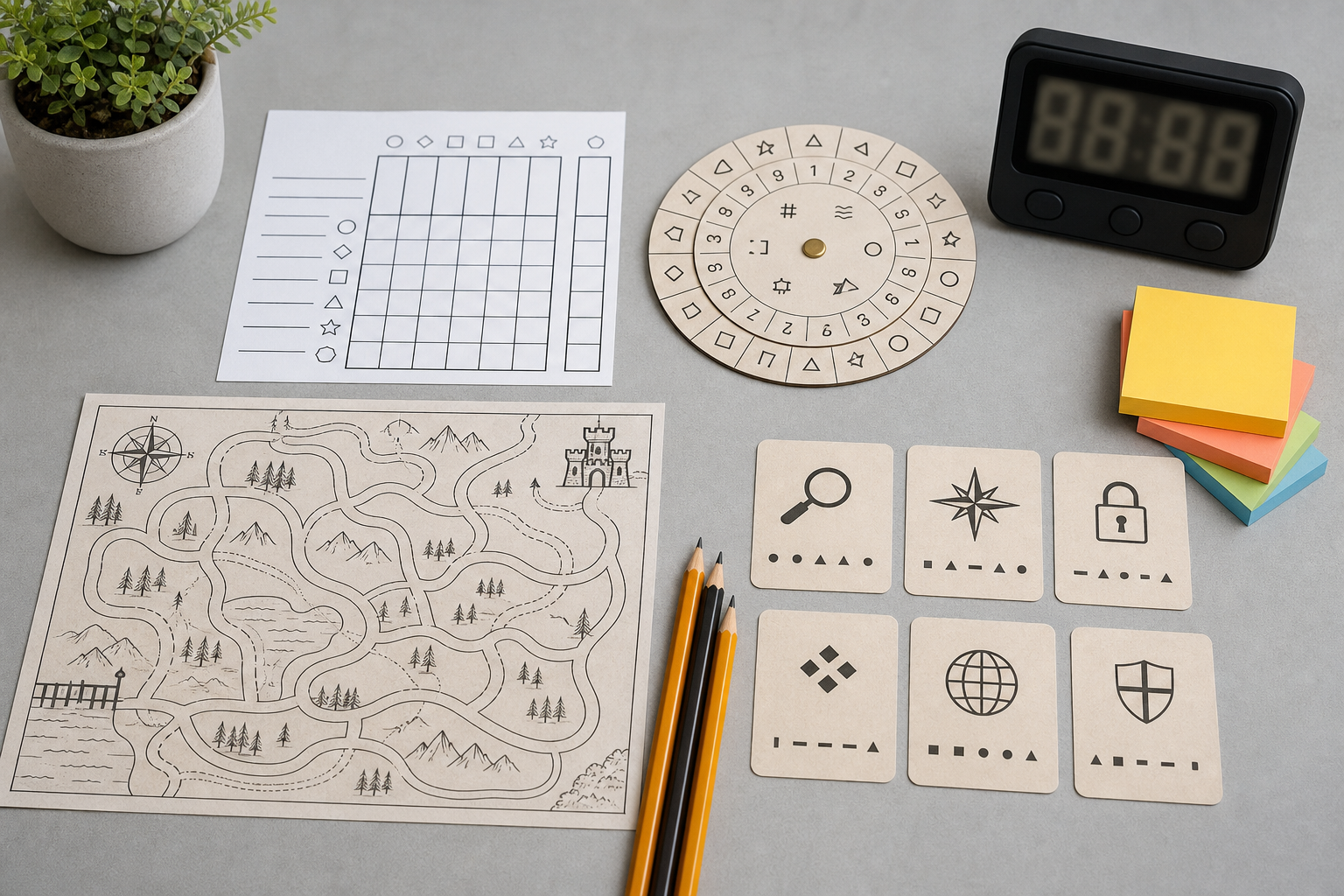
Start with four paper stations. Each station gives one answer. The four answers combine into a final phrase, door code, classroom motto, snack location, or silly group challenge.
Station 1: Name-Grid Logic
Give players a tiny logic puzzle with four students, four favorite puzzles, and four backpack colors. Keep the clues direct: Mia did not pick Sudoku; the maze fan has the green backpack; Leo picked the word search. The answer can be the name of the student with the blue backpack. This warms up deduction without requiring a full-page grid.
Station 2: Classroom Map Maze
Print a simple room map with labeled stops: library shelf, pencil cup, window, puzzle table, supply bin. Give directions such as two steps north, one step east, turn at the star, then collect the letter at the final square. This station helps students notice the room while solving something concrete.
Station 3: Word Switch Card
Use a short word ladder tied to school vocabulary. Change DESK to TASK by changing one letter at a time, or change BOOK to LOOK to LOCK if you want a mini escape-room ending. Word-switch cards are easy to explain, fast to check, and friendly for mixed groups.
Station 4: Pattern Passcode
Create a visible number or symbol pattern. Example: pencil equals 3, book equals 4, ruler equals 5 because the answer is the number of letters in the word. Then give three icons that produce the final three-digit code. The pattern should be discoverable within one minute once players slow down and compare examples.
How to Run It in a Classroom
Put students in groups of three or four and assign roles before anyone touches a clue. Use a reader, recorder, materials manager, and reporter. Roles reduce chaos because every student knows how to participate without grabbing the page or shouting the answer.
Set a visible timer for six minutes per station. When time is up, groups rotate whether or not they solved the clue. Give each group one hint card they may spend during the hunt. This keeps the room moving and prevents one hard clue from stalling the whole activity.
After the final reveal, ask each group one reflection question: Which clue felt fair? Which clue made your team change its mind? What did your group do when the first guess failed? Those questions turn a fun activity into useful information about collaboration and reasoning.
Printable Setup Checklist
Print one station page per group, one answer key for the host, and one final-code sheet. Number every page. Put the answer box in the same place on every station. Use large type, generous workspace, and short instructions. If a clue depends on color, add a shape or label too so the puzzle still works in black and white.
Test the hunt before using it with a real group. A fair first-week puzzle should be solvable by a fresh tester with no more than one hint per station. If the tester needs repeated explanation, rewrite the clue instead of blaming the players.
Family Game-Night Version
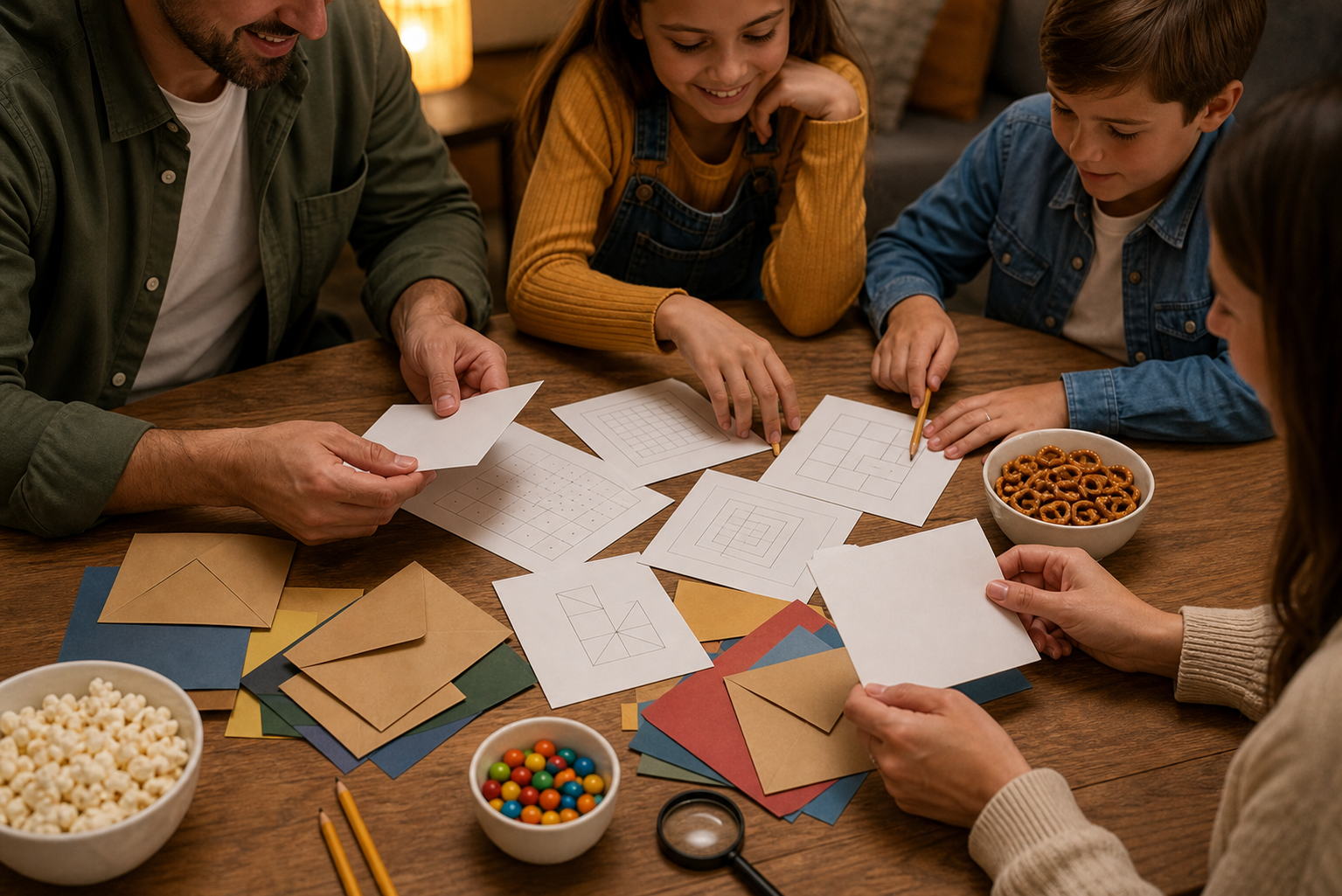
At home, turn the same four stations into a table game. Put each station in an envelope. Let younger kids open envelopes and manage the timer while older players handle the harder reasoning. Each solved answer earns one letter of a final school-year phrase, such as READY, START, BRAVE, or FOCUS.
The family version works best when the reveal is small but tangible. The final phrase can point to dessert, a new pencil pouch, tomorrow's lunch note, or the next board game. The reward does not need to be expensive; it just needs to make the last clue feel like it mattered.
Mini Escape-Room Upgrade
To make the hunt feel more like an escape room, connect the outputs. The logic station gives a name. The map station gives a place. The word-switch station gives a verb. The pattern station gives a number. Together they form a final instruction, such as 'Mia opens drawer 3' or 'Look under table 4.'
You do not need real locks. Paper locks are enough: four blank boxes for a code, a drawn envelope seal, or a final riddle that accepts the combined answers. Players usually care more about the chain of discovery than the hardware.
Common Mistakes to Avoid
Do not make the theme all rules and procedures. A back-to-school hunt can introduce the room, expectations, and teamwork, but it should still feel like play. Mix practical clues with light mystery and visible progress.
Do not rely on trivia about the teacher, school, or classmates unless every player has access to the answer on the page. A fair puzzle rewards observation and reasoning, not insider knowledge.
Do not skip reset planning. If multiple groups will use the hunt, avoid cutting tiny pieces that scatter, envelopes that are hard to refill, or answers written directly on reusable cards. Put consumable answer sheets in front and keep master clue cards clean.
Internal Link Suggestions
Pair this article with the mini paper escape rooms guide, the printable puzzle relay team game, the one-clue brain teasers printable game, the summer brain camp printable puzzle stations article, and the free puzzles and games page. Readers who like this format are likely looking for either a classroom-ready event or a faster printable warmup.
Call to Action
Want more screen-free puzzle ideas that work at a classroom table, kitchen table, or game-night table? Explore PuzzlePlay Books for printable-style puzzle formats, puzzle books, and free games built for families, educators, and puzzle lovers.