
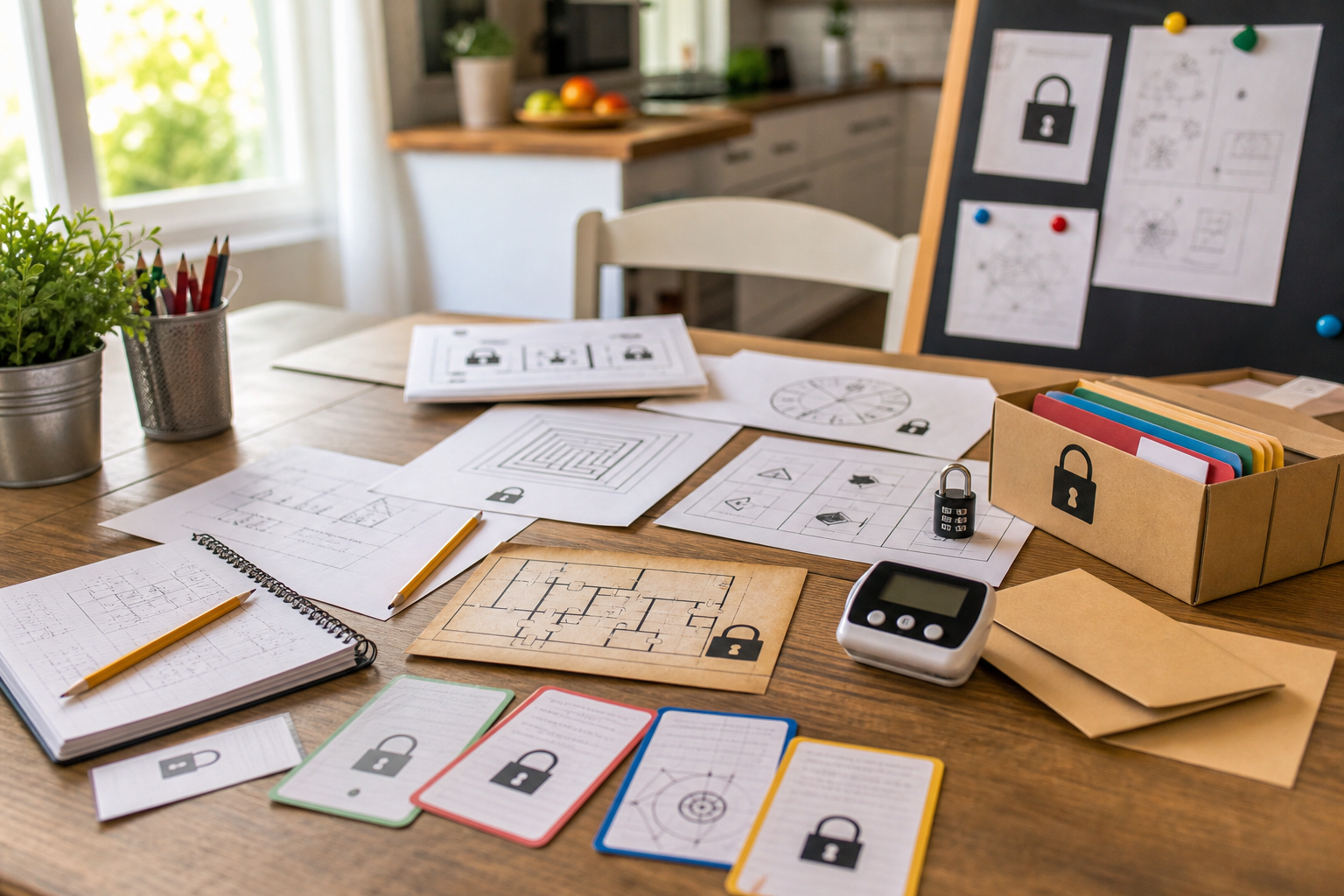


A child seeing their own name on the first week of school is a bigger moment than adults sometimes remember. Name tags, cubbies, sign-in sheets, folders, helper boards, and desk labels all show up at once, and many kids want to touch every one of them. That is exactly why a back-to-school name practice puzzle pack works. It turns that curiosity into a short paper activity instead of one more wait-your-turn reminder.
For teachers, the value is practical. You need a page that can live in a morning bin, a welcome-night stack, a quiet corner, or a sibling waiting table without a long explanation. For parents and homeschoolers, the same pages can make school readiness feel lighter at the kitchen table. For family activity buyers, name-themed printables are one of the easiest school-season formats to understand at a glance.
The timing makes sense right now. The American Academy of Pediatrics keeps a live school and education resource hub for families during back-to-school season. Its Family Media Plan tool is also useful when adults want a better default than handing every school transition back to a phone. The U.S. Department of Education keeps family partnership resources live to support conversations between parents, schools, and communities, and National PTA continues to surface family resources that help adults support student success through the school year.
That is why this kind of printable earns its place. It is low prep, easy to pause, simple to personalize, and useful in more than one setting. A page built around names can work during welcome week, at a school open house, in a classroom center, inside a homeschool folder, during tutoring, or at home the night before day one.
Why a name-practice puzzle pack works
Name practice is one of the few back-to-school themes that feels instantly personal without depending on one exact classroom rule or school policy.
Printables help most in these moments:
• while families wait to enter the room, sign forms, or meet the teacher.
• while a child wants to look for their desk, cubby, folder, or name tag but needs one clear task first.
• while a teacher needs a calm arrival page that still feels relevant to the first week.
• while a parent or homeschooler wants a school-themed printable that feels more specific than a random maze.
• while younger siblings need a pencil-first activity that matches the room around them.
Because the theme is concrete, it also works across ages. Younger kids can trace, sort, match, and circle. Older kids can use codebreakers, length comparisons, alphabet ordering, and logic-style pages built around names and school words.
What makes a good printable name-practice packet
The strongest packet is not the one with the most pages. It is the one adults can print quickly and actually reuse during a busy back-to-school week.
Aim for:
• one clear task per page.
• black-and-white friendly layouts that do not waste ink.
• large answer spaces that work on desks, clipboards, laps, and waiting-room style tables.
• prompts tied to real school objects such as name tags, cubbies, folders, desks, sign-in sheets, backpacks, and class lists.
• room to personalize the page with one child's name, a small class list, or a short group of family names.
• a mix of fast visual wins and one or two slightly slower pages for older solvers.
If a printable depends on one exact class roster, heavy cutting, or a long explanation before anyone can begin, it stops being a practical school-season helper.
The 15 printable name games worth building first
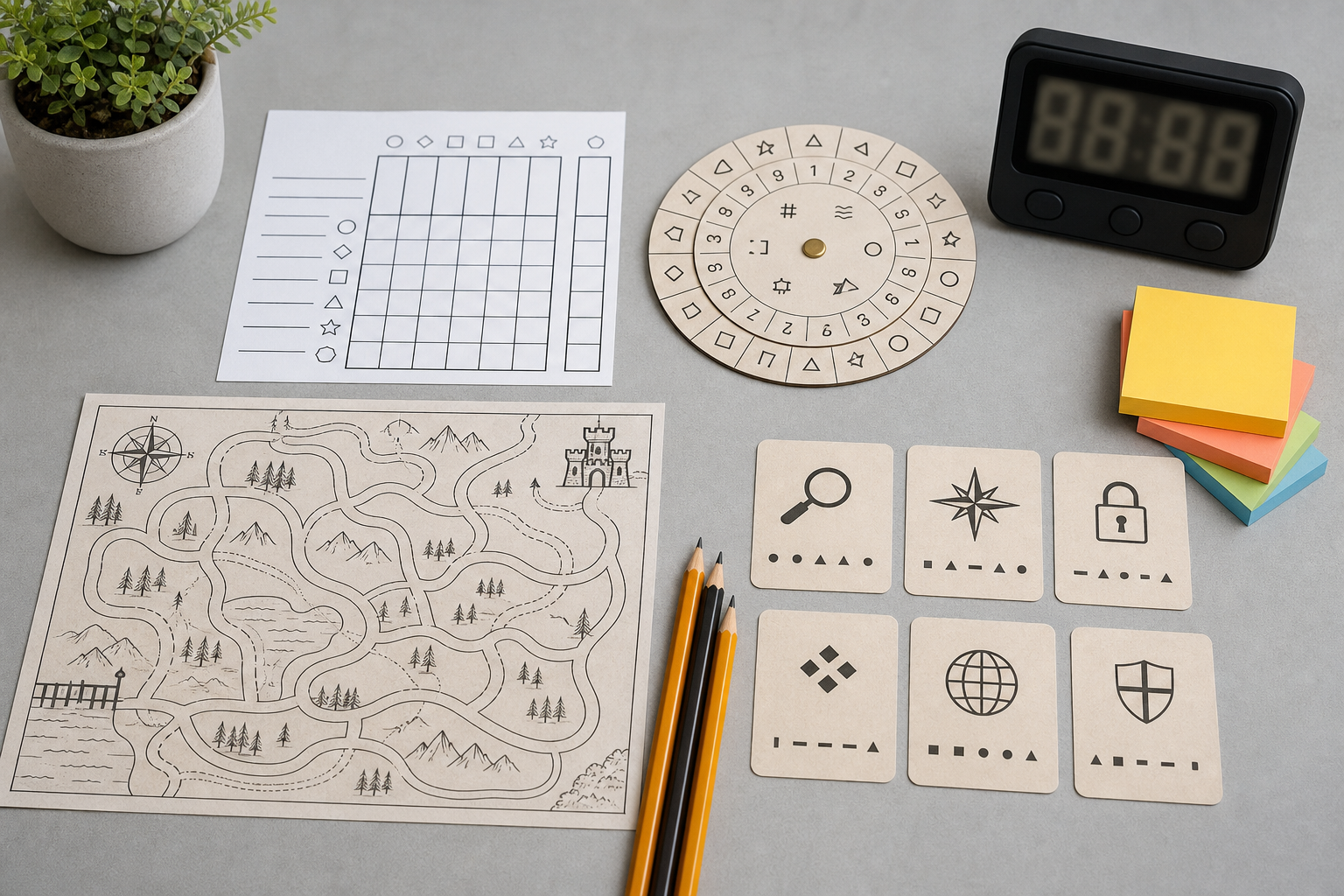
1. Name search sprint
Hide one student's name or a small group of names in a simple letter grid along with school words such as desk, folder, pencil, bus, library, and lunch. This is a fast opener because most kids understand the task immediately.
2. Trace, circle, and color strip
Put the same name in dotted letters three times, then add one clean version to circle and one bubble-letter version to color. This gives younger kids a page that feels active without needing extra materials.
3. Desk-tag maze
Create a short maze from the classroom door to the desk label with the correct name. Add a few wrong turns with other school words so the page feels like a real find-your-seat challenge.
4. Letter-tile build-a-name card
Give players a mixed row of letters and ask them to point to the letters that build the target name. This is easy to personalize and works well for table bins, folders, and early-finisher cards.
5. Cubby-label match page
List a few names on one side and a few cubby icons, backpack colors, or folder patterns on the other, then ask solvers to match each name to the right label using clues printed on the page. Keep the clues visible so the page rewards observation, not insider knowledge.
6. Initial sort card
Use broad school initials such as A, B, C, and M, then sort names or school words into the right starting-letter groups. This is one of the easiest ways to mix visual sorting with name familiarity.
7. Missing-letter name code
Print names with one or two letters missing and ask players to fill the blanks from a small letter bank. This page feels more like a puzzle than a handwriting drill.
8. Name-length order strip
Give four names and ask solvers to place them from shortest to longest. Add a second line that asks which names have the same number of letters. It is simple, useful, and easy to explain during a noisy first-week moment.
9. Vowel highlight hunt
Ask players to circle the vowels in one target name, then compare them with a few other names or school words. Keep the page visual and roomy so it works for children who are still getting comfortable with pencil control.
10. Backpack-tag tally page
Show a row of backpack tags with names or initials and ask players to tally how many start with the same letter, have five letters, or end with the same sound. This gives adults a quick counting-and-noticing page that still fits the school theme.
11. Alphabet path puzzle
Write one name in scrambled order and ask players to connect the letters in the correct sequence, or put several name cards in alphabetical order. This works well for clipboards and arrival-time stacks.
12. Sign-in path puzzle
Create a path from the front door to a sign-in sheet, then place several letters along the route. Players follow the path and stop only on the letters that spell the target name. The page feels like a mission instead of another worksheet.
13. Partner-name compare card
Put two names side by side and ask what is the same and what is different: first letter, last letter, total letters, vowels, or repeated letters. This is a useful pair page for siblings, partners, or buddy tables.
14. Roll-and-build a name
Use a die chart where each number adds one letter tile, color, or pattern to a target name card. Even without a real die, the page can work by choosing numbers in order or circling a path with a pencil.
15. Final name password
Let answers from earlier pages supply one letter each for a final word such as NAME, READY, CLASS, HELLO, or BEGIN. This is the page that makes the packet feel complete instead of loose.
Three ready-to-use mini examples
These are simple enough to build before the next welcome week begins.
Example 1: quick missing-letter card
A _ a. Letter bank: v, m, s. Answer: Ava.
Example 2: tiny name-length compare
Kai, Emma, Noah, and Lily. Put them in order from shortest to longest. One correct order is Kai, Emma, Noah, Lily because Kai has 3 letters and the others have 4.
Example 3: mini initial sort
Sort these words under B or M: Ben, Bus, Map, Mia, Book, Marker. Answer: B gets Ben, Bus, Book. M gets Map, Mia, Marker.
How to package it for parents, teachers, and activity buyers
A strong name-practice packet usually needs only six to ten pages.
Start with:
• 2 quick trace, search, or match pages.
• 2 visual sort or compare pages.
• 2 slightly harder code, order, or clue pages.
• 1 final password or completion page.
• 1 answer key.
That mix is enough for a classroom arrival bin, welcome-night stack, homeschool folder, tutoring packet, school-readiness basket, or kitchen-table routine without making the pile feel bulky.
Classroom, homeschool, and family-table version
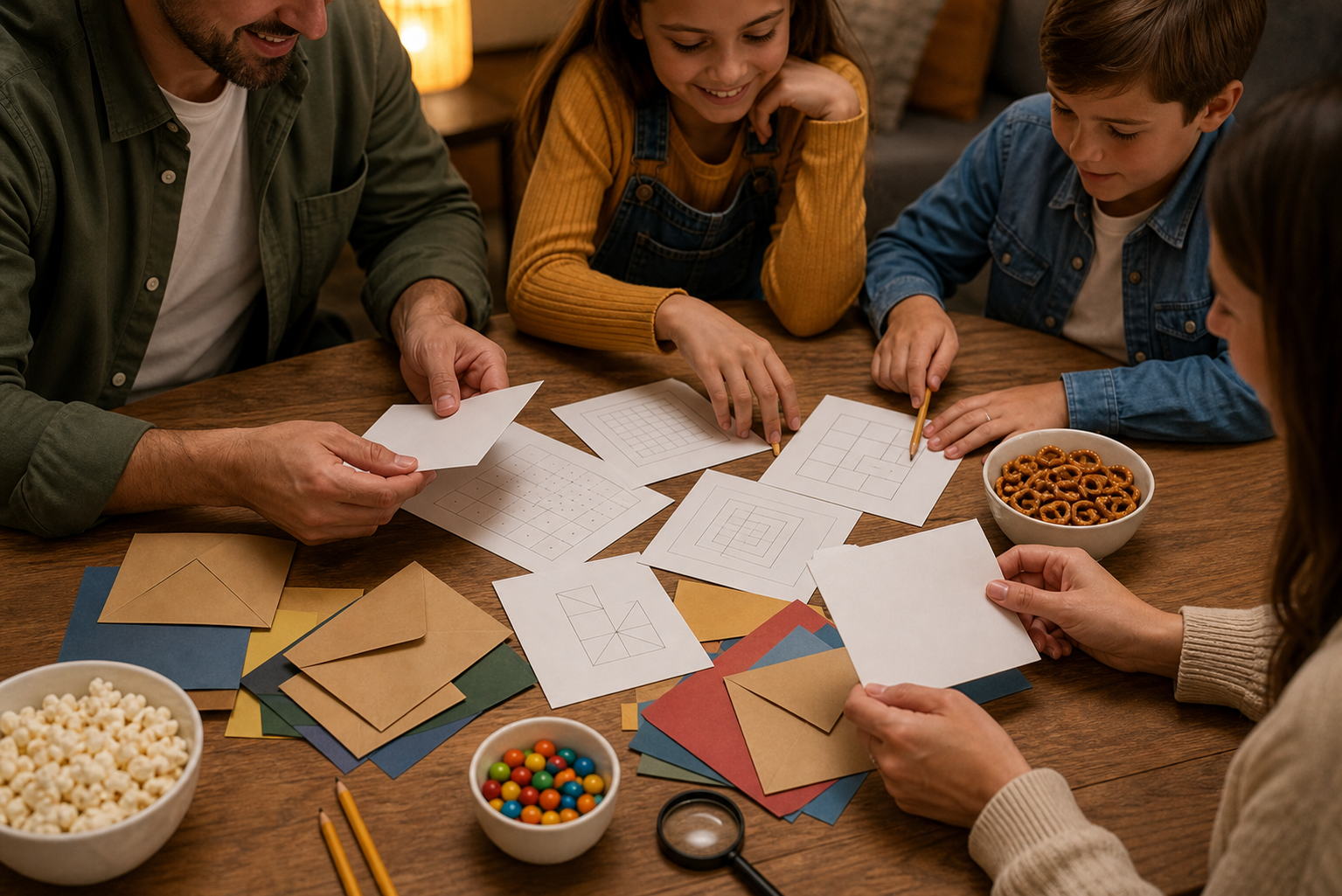
For teachers, start with the name search, desk-tag maze, and missing-letter card during arrival time or open-house waiting windows. Save the compare page, length-order strip, and final password for later in the week when kids already know the room and want a puzzle that feels a little more complete.
For parents, homeschoolers, librarians, tutors, and family activity buyers, this theme works well for first-week routine resets, welcome-night sibling tables, backpack-prep evenings, and short after-school school-readiness blocks. Use the trace strip, one matching page, one sort page, and the final password as quick stations, then keep the answer key nearby so the activity stays self-directed.
Because the theme is broad, the packet can keep working after day one. Kids can use the same pages to notice letters, compare words, and talk about names, school objects, and routines without needing one exact classroom setup.
Fast answers to common buyer questions
What ages work best for name-practice puzzle pages?
Most name-practice printable packs work best for ages 4 and up, with easier tracing, matching, and coloring pages for younger solvers and compare, clue, or code pages for older kids, siblings, and mixed-age family groups.
Do the pages need one exact class roster?
No. The easiest packet uses one target name or a small editable group of names, plus school words that still make sense even if the class list changes.
What supplies should the packet assume?
Assume only a printer and pencil, with crayons or colored pencils as optional extras. If a page needs scissors, laminators, or internet access to function, make that obvious before anyone prints it.
How long should a name-practice puzzle session last?
Ten to fifteen minutes is usually enough for arrival time, a welcome-night wait, a school-readiness basket, a sibling table, or a short after-school routine block. Shorter sessions are easier to repeat than one long packet marathon.
Common mistakes to avoid
Do not make every page handwriting-heavy. Many children will engage longer if at least half the packet involves matching, sorting, noticing, or solving instead of tracing alone.
Do not use tiny letters or cramped answer spaces that fail on clipboards, crowded tables, or classroom desks.
Do not depend on one exact class list, one exact teacher name, or one exact desk map. The more flexible the page is, the more useful it becomes for buyers and families.
Do not turn the whole packet into a test. The value is that it gives kids a visible task while they learn the names, labels, and routines around them.
Internal link suggestions
Pair this topic with the Meet-the-Teacher Puzzle Pack, the Classroom Jobs Puzzle Pack, the Back-to-School Morning Routine Puzzle Pack, the Back-to-School Lunchbox Riddles article, the free puzzles and games page, and the Kids Coloring Playroom. Readers who like this theme often want another practical printable for the next school transition, waiting block, or family-table reset.
Call to action
Want more printable-style puzzle ideas that work in real family schedules, real school transitions, and real classroom routines? Browse PuzzlePlay Books for family-friendly puzzle guides, back-to-school activity ideas, and practical screen-light printables that are easy to print and easy to reuse.