
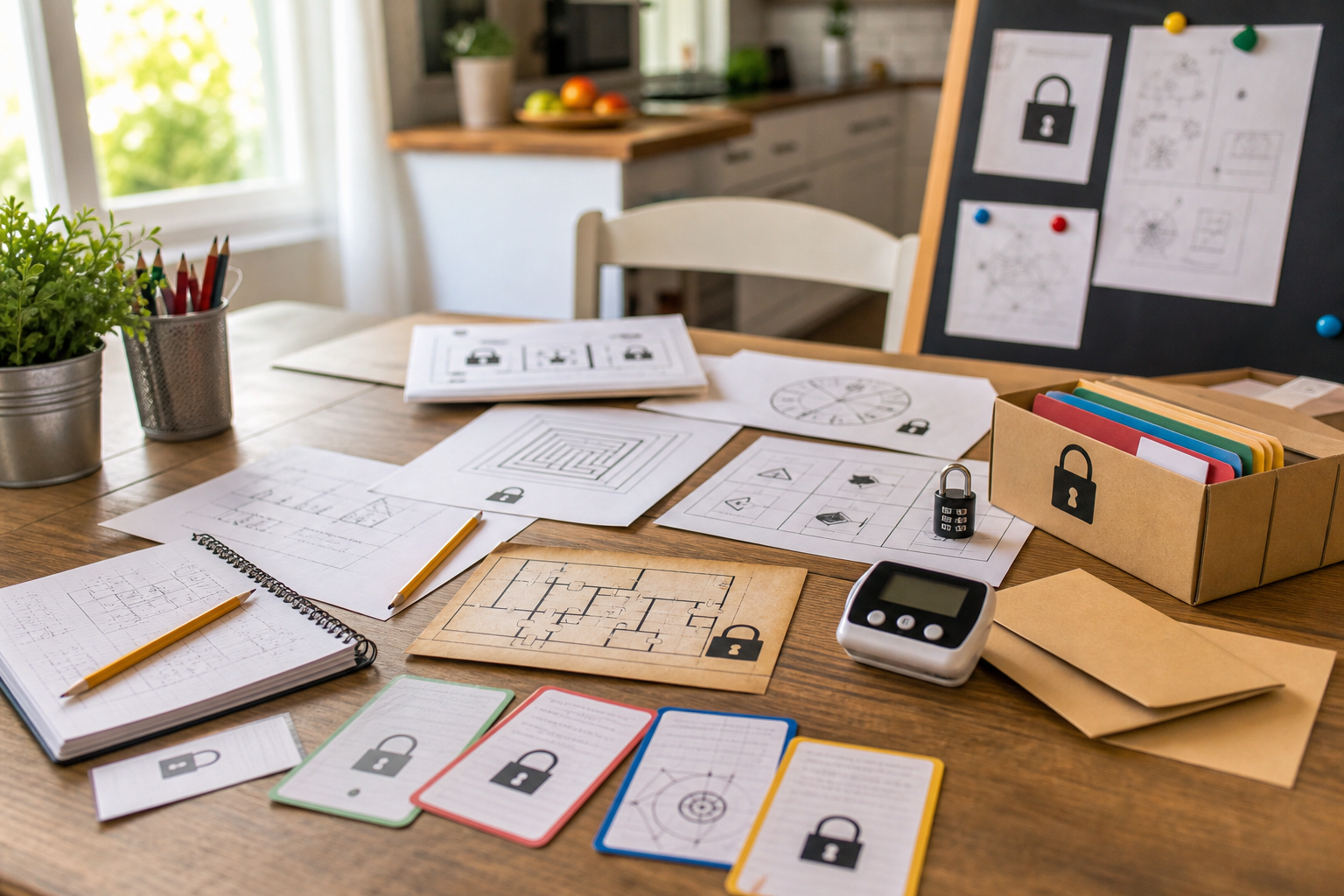


The first week of school usually needs a better opener than an awkward round of introductions. Kids walk in with different energy levels, different comfort levels, and different ideas about whether they want to talk at all. A printable icebreaker puzzle pack works because it gives people something to solve together before anyone has to perform.
That is the real advantage of puzzle-style team games. They create a shared task fast. One student notices a clue, another spots a pattern, another fills in the answer box, and suddenly the room has a purpose that feels lighter than a scripted get-to-know-you worksheet.
The timing makes sense right now. The American Academy of Pediatrics keeps school and education resources available for families during back-to-school season, its Family Media Plan helps adults build more intentional screen-light routines, the U.S. Department of Education keeps family partnership resources live for schools and caregivers, and National PTA continues to surface family resources that support smoother school-year habits. In practical terms, late July and early August are when many adults start gathering the repeatable welcome activities that make the first school weeks feel less stiff and more connected.
That is why this kind of printable works. It is low prep, easy to explain, simple to pause, and flexible enough to move from homeroom to advisory, co-op, library program, tutoring group, or family game night without needing a new set of directions every time.
Why a back-to-school icebreaker puzzle pack works
A strong icebreaker should give students a reason to talk that is not just talking. Puzzles do that well because they create small next steps: sort these words, decode this note, compare these pictures, finish this pattern, solve this final word.
Printables help most in these moments:
• while a teacher wants a first-week activity that starts fast and does not depend on a slideshow.
• while a parent, homeschooler, or co-op leader wants a social warmup that still feels structured.
• while a librarian, tutor, or after-school leader needs a mixed-age welcome page that works with a pencil and table space.
• while siblings or new classmates need a shared task that feels easier than open-ended conversation.
• while a family activity buyer wants printables that work for real groups instead of only in one ideal classroom setup.
That is also why the packet should stay simple. Good icebreaker pages should work with a printer, pencil, clipboard, folder, or table. They should not depend on apps, exact seating charts, or a long speech before anyone can begin.
What makes a good printable team-game packet
The best packet is not the one with the most pages. It is the one people can pick up, understand, and finish together without the adult narrating every move.
Aim for:
• one clear task per page.
• partner or small-group friendly formats.
• black-and-white friendly layouts that do not waste ink.
• answer spaces large enough for desks, clipboards, and shared pencils.
• broad school words, familiar pictures, and simple logic steps instead of one exact curriculum page.
• one short finish-line moment such as a code word, pattern answer, or final box that feels satisfying.
If a printable depends on long setup, tiny cut pieces, or teacher-only context before anyone can start, it stops being a practical first-week icebreaker.
The 15 printable team games worth building first
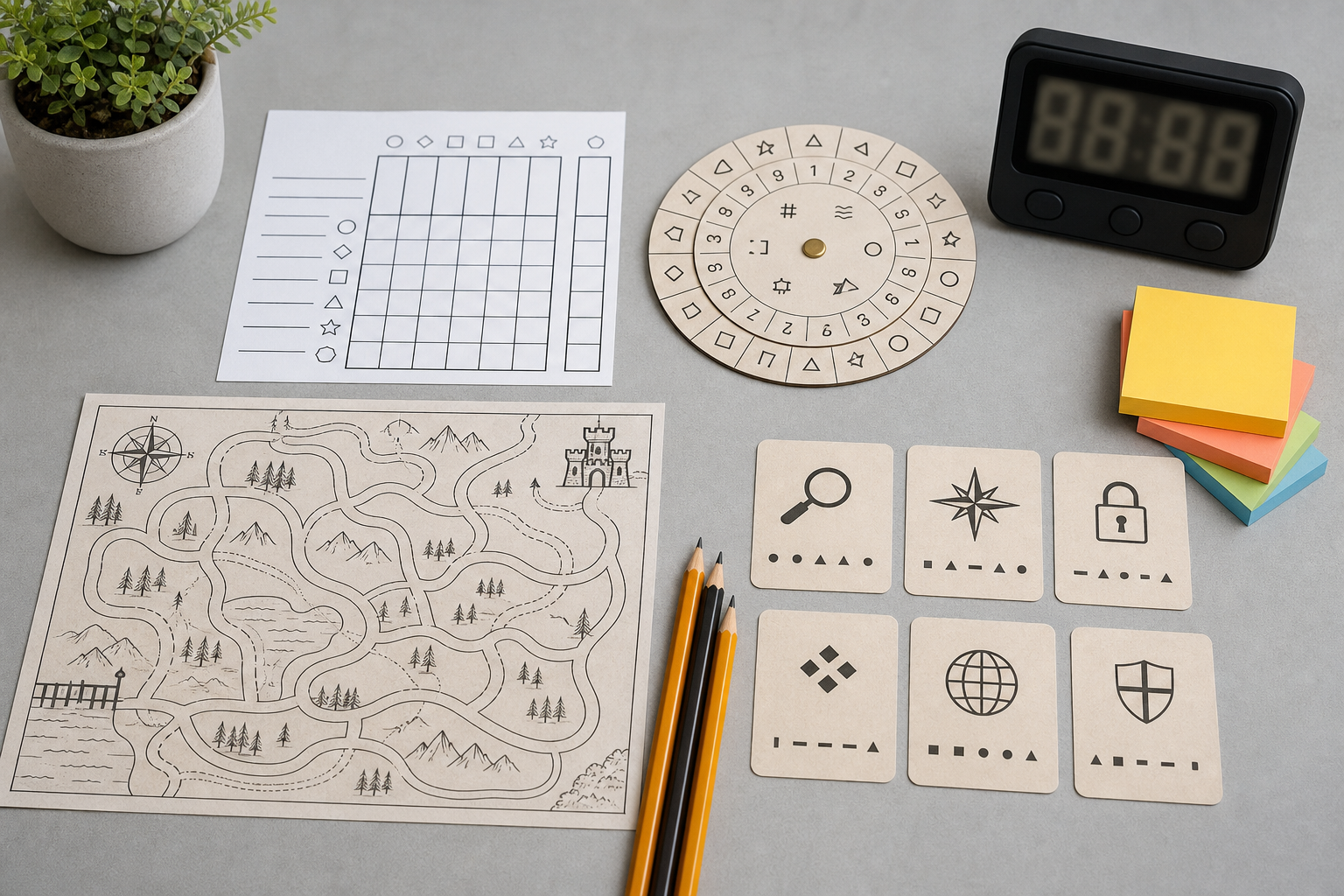
1. Name-grid match
Put a short grid of first names, favorite colors, or simple interest clues on one page and ask pairs to match the right combinations. It creates low-pressure conversation because the page gives people something specific to notice.
2. Classroom category relay
Mix words such as marker, library, lunch, ruler, music, backpack, recess, and scissors, then ask teams to sort them into clear categories. This works well because every student can contribute one answer quickly.
3. Welcome-note decoder
Use an easy A=1 or picture-symbol key to reveal a short message such as WELCOME, READY, SHARE, or START. A decoder page gives the group an obvious finish line without needing extra supplies.
4. Partner spot-the-difference desk scene
Show two simple classroom or backpack scenes with a handful of changed details. One student can scan while the other checks the list, which makes the teamwork feel natural instead of forced.
5. School-map route maze
Create a simple map from classroom to library, cubbies to carpet, or front door to homeroom, then ask teams to trace the best path around a few blocked spaces. It feels like a mission immediately and does not require much reading.
6. Picture Sudoku pairs
Swap numbers for pencils, apples, books, and buses in a small 4x4 grid. This introduces logic in a visual way and works well when the group has mixed reading levels.
7. Word-ladder baton
Use a short ladder such as MAP to MOP to HOP or BUS to BUN to SUN, with each teammate adding one step. It gives the activity a turn-taking rhythm without slowing the group down.
8. Pattern-pass strip
Print a few school-themed icon patterns and ask teams to fill in the missing shapes or fix the wrong one. Pattern pages are great when you want quick momentum before a slightly harder puzzle.
9. Tiny logic grid
Use three students, three backpacks, and three colors with a few short clues. Keep it short enough to solve in under three minutes so the page feels smart without becoming a full-period project.
10. Rebus clue chain
Combine small pictures and letter clues to reveal a familiar school word or short phrase. Rebus pages work well because one student can notice the picture clue while another tests the word idea.
11. Tally-and-graph vote card
Ask small groups to tally simple class preferences such as pencils or pens, cats or dogs, reading nook or art table, then turn the totals into a mini graph. The puzzle is still light, but it gives people a reason to compare answers together.
12. This-or-that clue card
Show two choices such as library or cafeteria, sunny day or rainy day, art class or music class, then give a few clues that help teams choose the better fit. This keeps the page interactive without needing everyone to stand up and move.
13. Story-order strip
Give four small first-week school pictures and ask teams to number them in the most likely order. This adds sequencing and conversation without turning the page into a long reading exercise.
14. One-clue riddle exchange
Give each pair a short school riddle with one answer line, then let them swap pages with another pair after solving. The puzzle stays small, but the page still creates a second round of interaction.
15. Final password page
Let answers from earlier pages supply one letter, number, or symbol each for a final word such as CLASS, READY, FRIEND, or SOLVE. This is the page that makes the packet feel complete instead of random.
Three ready-to-use mini examples
These are simple enough to build before the next homeroom, co-op welcome block, or family table night.
Example 1: quick decoder
Use A=1, B=2, C=3. 23 - 5 - 12 - 3 - 15 - 13 - 5. Answer: WELCOME.
Example 2: short category relay
Sort these into school supplies and places: ruler, library, glue, cafeteria. One possible answer is ruler and glue for supplies, library and cafeteria for places.
Example 3: pattern pass
Book, bus, book, bus, __. Answer: book.
How to package it for parents, teachers, and activity buyers
A strong icebreaker packet usually needs only six to ten pages.
Start with:
• 2 quick search, match, or spot-the-difference pages.
• 2 visual or pattern pages.
• 2 stronger puzzle pages such as a codebreaker, word ladder, or tiny logic grid.
• 1 short vote, riddle, or sequencing page.
• 1 final password page.
• 1 answer key.
• 1 short adult note explaining which pages work best for pairs and which pages work best for groups of three or four.
That mix is enough for a homeroom folder, advisory opener, co-op welcome stack, library table, tutoring warmup, or family game-night binder without making the pile feel bulky.
Classroom, home, and homeschool version
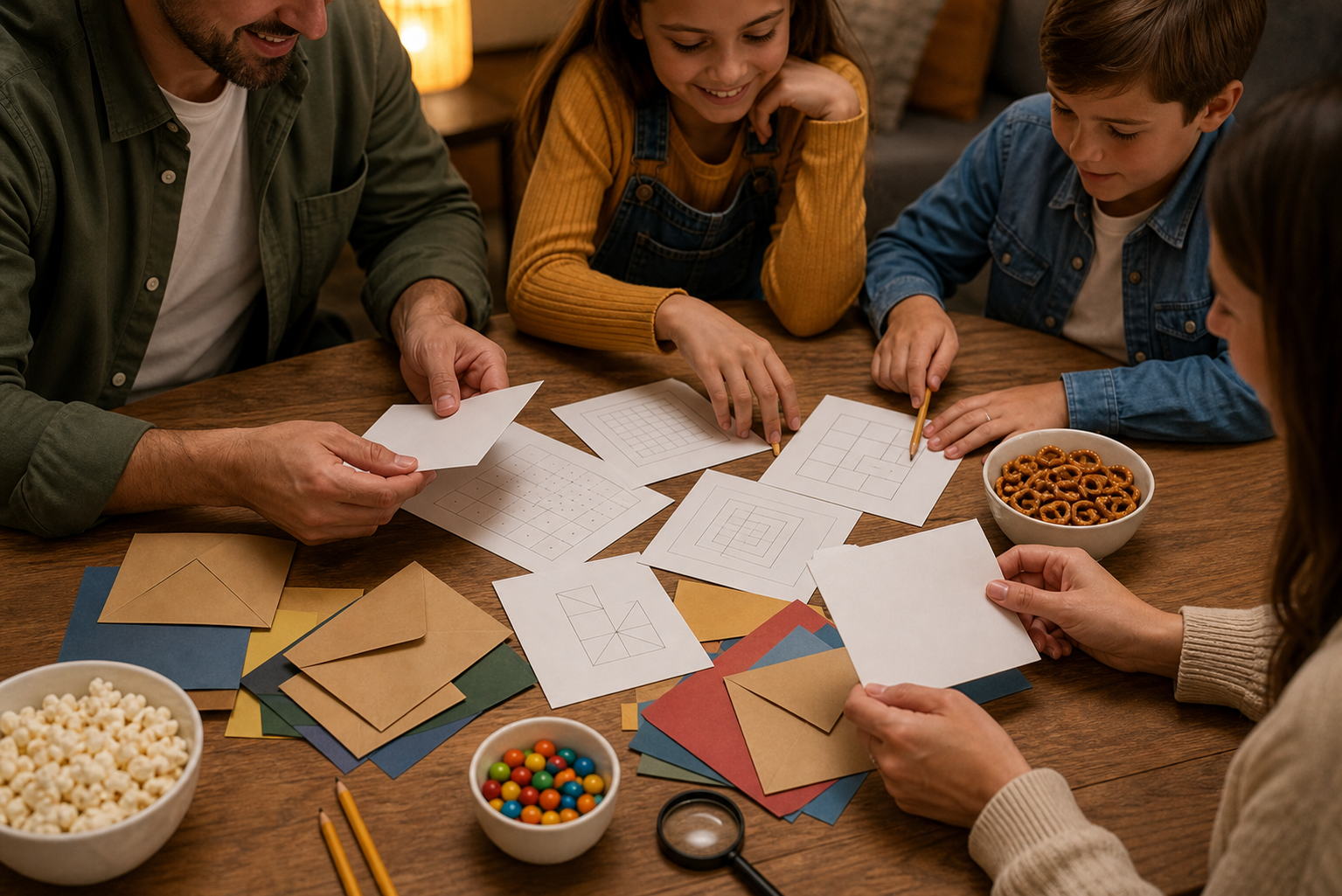
For teachers, start with the category relay, spot-the-difference page, and pattern strip during arrival or the first ten minutes of homeroom. Save the word ladder, logic grid, and final password for later in the week when students already understand the routine and want something that feels a little more complete.
For parents, homeschoolers, tutors, librarians, and family activity buyers, this theme works well for co-op openings, sibling waits, welcome-night tables, club kickoffs, and family puzzle nights. Use the map maze, one visual page, one decoder, and the final password as short stations, then keep the answer key nearby so the activity stays self-directed.
Because the theme is broad, the packet can keep working after the first week of school. Kids can use the same pages to notice patterns, compare details, sort ideas, and solve short clues without depending on one exact class roster, one district pacing guide, or one family schedule.
Fast answers to common buyer questions
What ages work best for icebreaker puzzle printables?
Most icebreaker packs work best for ages 6 and up, with easier search, match, and picture pages for younger solvers and code, ladder, or logic pages for older kids, siblings, and mixed-age groups.
What supplies should the packet assume?
Assume only a printer and pencil, with crayons or colored pencils as optional extras. If a page needs scissors, glue, laminators, or internet access to function, make that obvious before anyone prints it.
Do these pages need one exact class size?
No. The most practical packet uses broad prompts and flexible puzzle types so the same pages still work in pairs, trios, co-op groups, tutoring tables, and family activity nights.
How long should an icebreaker puzzle block last?
Five to fifteen minutes is usually enough for a homeroom opener, advisory reset, co-op welcome, library table, or family-table warmup. Shorter sessions are easier to repeat than one long packet marathon.
Common mistakes to avoid
Do not make every page reading-heavy. Many groups will stay with the packet longer if at least half the pages involve noticing, matching, sorting, tracing, or solving before any longer written response.
Do not use tiny type or cramped answer spaces that fail on desks, clipboards, or shared tables.
Do not promise that one printable packet creates instant friendships by itself. The real value is that it gives new groups a visible task that is easier to start and easier to share.
Do not build every page around one exact class list, one room setup, or one school tradition. Flexibility is what makes the packet useful to real buyers, real teachers, and real families.
Internal link suggestions
Pair this topic with the Meet-the-Teacher Puzzle Pack, the Classroom Jobs Puzzle Pack, the Early Finisher Puzzle Pack, the Back-to-School Morning Routine Puzzle Pack, the free puzzles and games page, and the Kids Coloring Playroom. Readers who like this theme often want another practical printable for the next welcome block, center bin, or family-table reset.
Call to action
Want more printable-style puzzle ideas that work in real family schedules, real classroom routines, and real school-season transitions? Browse PuzzlePlay Books for family-friendly puzzle guides, back-to-school activity ideas, and practical screen-light printables that are easy to print and easy to reuse.