
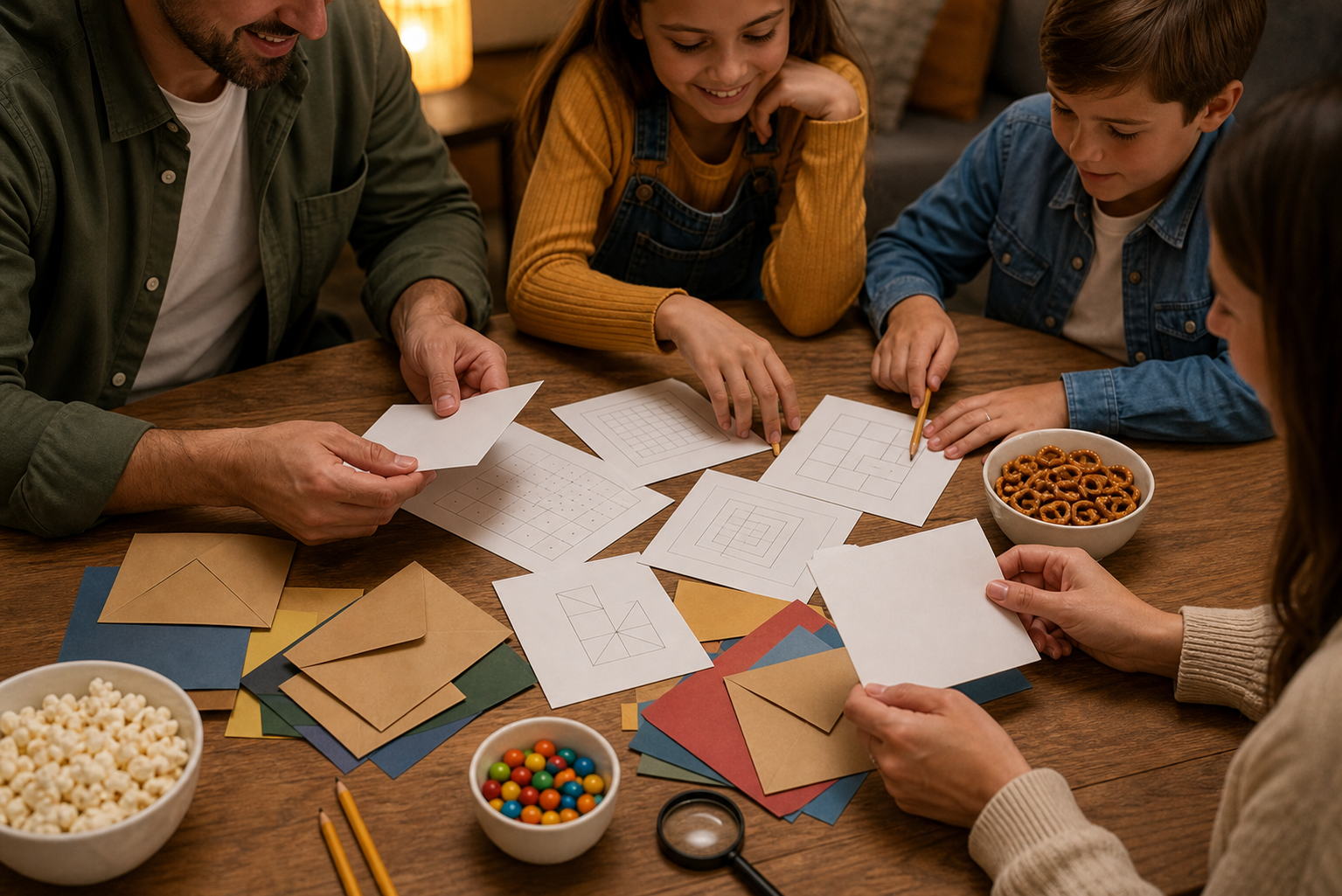


The night before school has its own kind of chaos. Backpacks need one more check. Lunches are half planned. Shoes have to be found again. Younger siblings want attention at the exact moment adults are signing forms, labeling folders, and trying not to let the whole evening drift into one long round of just grab a screen for a minute.
That is why a back-to-school eve puzzle pack can be useful right now. The American Academy of Pediatrics keeps school and education guidance live for families, its Family Media Plan tool is still a practical way to think ahead about everyday routines, the U.S. Department of Education continues to surface family partnership resources, and National PTA keeps family resources available as school-year planning accelerates. In plain terms, late July and early August are a good time for low-prep printable pages that can sit on a table and actually help an evening move forward.
The goal is not to turn the night before school into a lesson. The goal is to give families one calm, pencil-first option that fits between real tasks. A good packet works while an adult packs a bag, waits for a shower to finish, reviews a supply list, or needs one child busy for eight minutes without starting a full game.
One important note first: these pages work best as short seated activities during real transition windows. They are not a replacement for sleep, outdoor time, or instructions adults need kids to hear right away.
Why a back-to-school eve puzzle pack works
The best night-before-school activity is easy to start, easy to pause, and easy to reuse the next morning. Puzzle pages fit because they create one visible task without demanding a big setup. A child can finish a clue, a maze, or a word hunt in the same stretch of time it takes an adult to pack a lunchbox or set aside tomorrow's papers.
These printables help most in moments like these:
• while a parent needs ten quiet minutes to check forms, supplies, medications, or pickup details.
• while siblings need one shared table activity that does not require the same reading level.
• while a teacher wants one family-friendly printable to send home after open house, setup day, or orientation.
• while an after-school leader, tutor, or caregiver wants a school-themed warmup that still feels playful.
• while a family activity buyer wants one practical packet that works before day one and again during the first week.
That is also why the packet should stay simple. Good back-to-school eve pages should work with a printer, pencil, crayons or colored pencils, and a flat surface. They should not depend on scissors, glue, timers, special apps, or a long explanation before anyone can begin.
What makes a good printable school-night page
The strongest page matches the real evening. It should look inviting at a glance and still feel useful if the family only has five to ten minutes before the next routine move.
Aim for:
• one clear task per page, such as match, search, decode, sort, trace, or finish a pattern.
• school-season themes that feel immediately relevant, such as backpacks, supplies, names, lunch notes, weather, schedules, and welcome-week symbols.
• answer spaces large enough for a kitchen table, clipboard, or couch tray.
• pages that survive interruption, so a child can stop for bath, bedtime, or one last backpack check and still return later.
• directions short enough that another adult can hand over the page without reteaching the whole packet.
• a mix of easier visual pages and slightly stronger logic pages so different ages can share the same folder.
If a printable only works in a perfect classroom block, it is not a strong night-before-school printable.
The 15 printable bedtime and backpack games worth building first
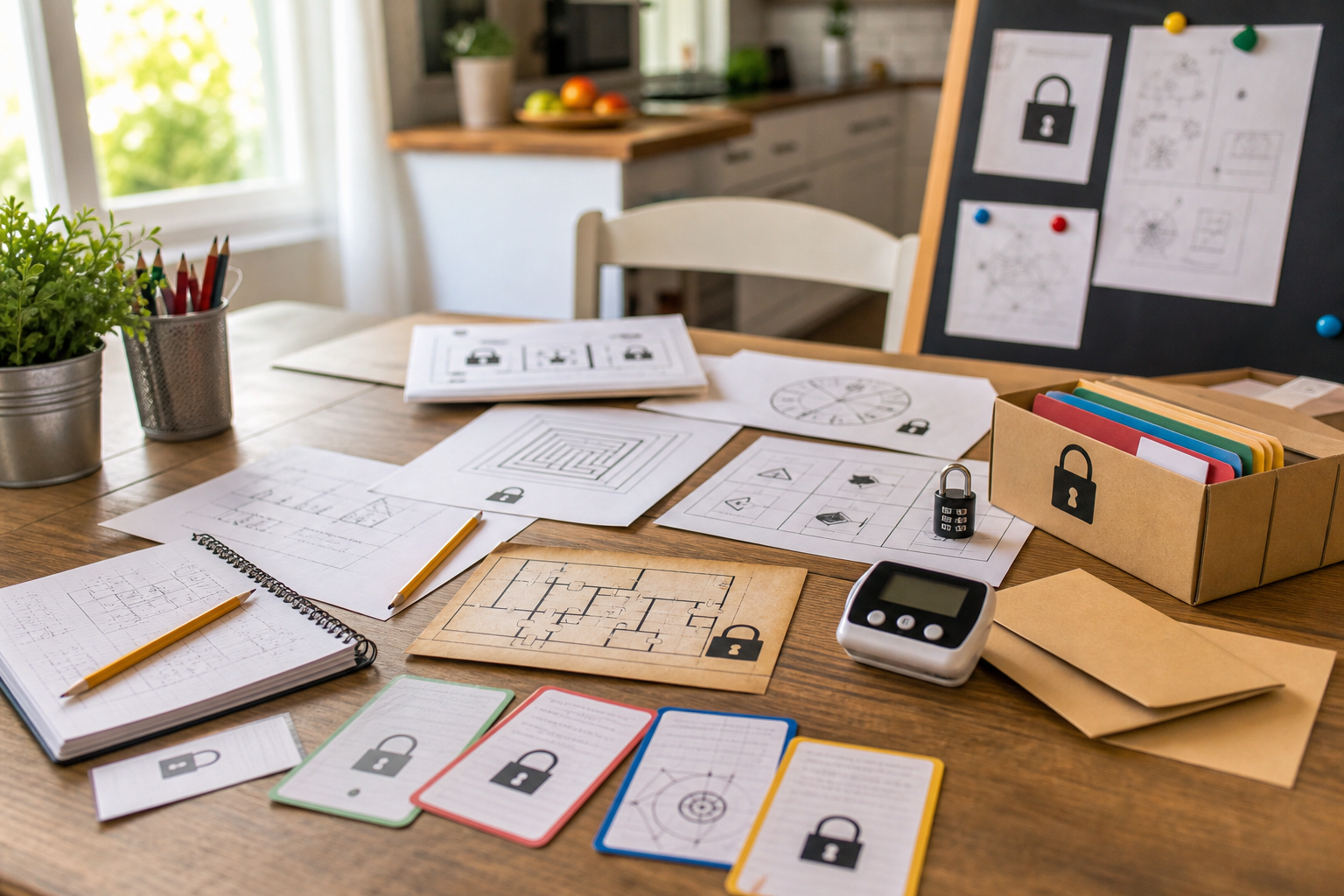
1. Backpack checklist codebreaker
Turn familiar items such as folder, water bottle, snack, pencil case, and library book into a simple picture-to-letter code. When kids decode the list, they reveal what still belongs in the backpack.
2. School-supply word hunt
Hide words such as glue, ruler, crayons, binder, eraser, and notebook in a compact grid. This is one of the easiest ways to fill five quiet minutes while adults label or sort the real supplies nearby.
3. Lunchbox note riddle card
Use one short riddle that can double as tomorrow's lunchbox note. The page becomes both a bedtime activity and a next-day surprise with no extra prep.
4. Pack or leave at home sort
Show a mix of objects such as pajamas, scissors, toothbrush, lunch bag, soccer ball, folder, and crayons. Ask solvers to circle what belongs in tomorrow's school setup and cross out what stays home.
5. Route-to-the-door mini maze
Create a simple path from bedroom to kitchen to front door to bus stop or car. The page works because it feels school-specific without requiring much reading.
6. First-day outfit tally page
Scatter shirts, socks, shoes, jackets, and backpacks around a page. Ask kids to count each item, color them, and compare totals. Younger solvers can focus on counting while older solvers record the numbers.
7. Alarm-clock number ladder
Build a small number puzzle around the wake-up time. Example: start at 7, add 1, subtract 2, add 4. Which number do you land on? Keep the math light so the page stays playful.
8. Name-tag design challenge
Print a simple name badge frame and add one puzzle rule such as use exactly three colors, hide two stars, or repeat one pattern around the border. This works well for welcome-week excitement without needing a full craft station.
9. Teacher-note decoder
Write a short coded message such as SEE YOU SOON, READY TO LEARN, or YOU FOUND THE CLUE. A tiny decoder makes the packet feel more like a game than a worksheet.
10. Bedtime sequence card
List four to six bedtime steps out of order and ask solvers to number them correctly before coloring the scene. Think backpack by door, bath, pajamas, story, lights out, and alarm set.
11. Folder-match memory mini
Show pairs such as lunch to lunchbox, pencils to pouch, shoes to door mat, and papers to folder. Younger kids can draw lines while older kids explain why each match belongs.
12. Weather-check icon sort
Mix suns, clouds, rain boots, umbrellas, jackets, and water bottles on one page. Ask solvers to group what belongs together for hot, rainy, or cool school mornings.
13. What-goes-in-the-desk logic mini
Give four school items and four spots such as desk, cubby, backpack pocket, and take-home folder. Add a few easy clues so kids solve where each item belongs before they fill in the grid.
14. Morning path choice board
Offer four boxes such as solve a maze, finish a pattern, answer a riddle, or color a bookmark. This helps mixed-age siblings because everyone can start with the box that feels easiest.
15. Final READY password page
Let answers from earlier pages reveal one letter each so the packet ends with READY, SCHOOL, START, or SMILE. A final password gives the folder a sense of finish without making it feel heavy.
Three quick mini examples
These can be built fast and reused across the first week.
Example 1: short riddle
I go to school every day but I am not a student. I carry folders, pencils, and lunch. What am I? Answer: backpack.
Example 2: simple code
Use A=1, B=2, C=3. 18 - 5 - 1 - 4 - 25. Answer: READY.
Example 3: easy sequence
Put these in order: brush teeth, set backpack by the door, put on pajamas, read one story. One reasonable answer is pajamas, brush teeth, set backpack by the door, read one story.
How to pack a back-to-school eve folder
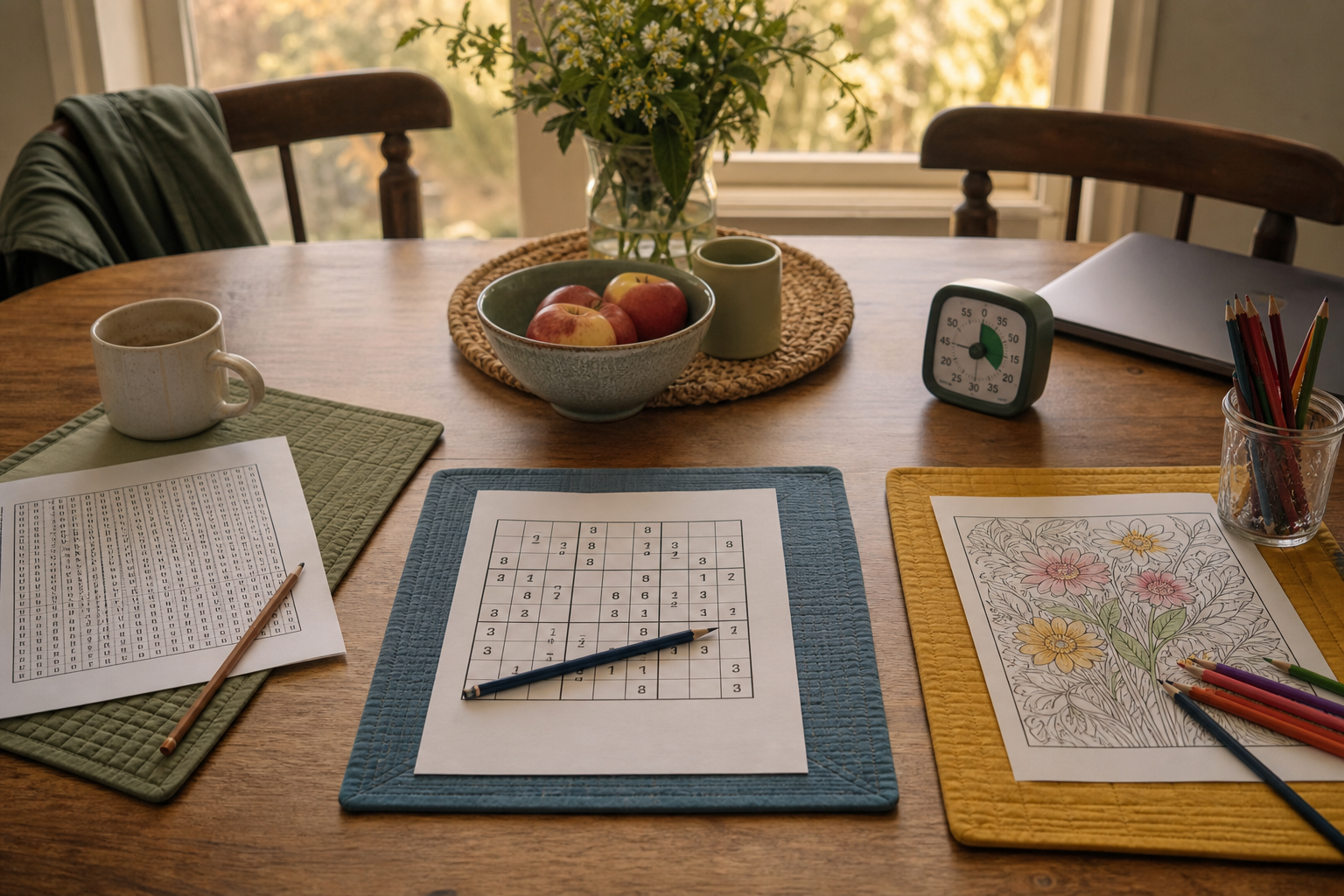
A strong school-night packet usually needs only six to nine pages.
Start with:
• 2 fast pages such as a word hunt or sort-and-circle page.
• 2 visual pages such as a maze, tally page, or name-tag design prompt.
• 2 slightly stronger pages such as a codebreaker or simple logic mini.
• 1 choice-board or bookmark page.
• 1 final password page.
• 1 answer key.
That mix is enough for a family table, a take-home folder, a sibling wait, a welcome-night handout, or a first-week backup bin without making the packet bulky.
A short reusable folder also makes it easier to stay intentional about screens. The AAP Family Media Plan is useful here because the same idea applies: decide ahead of time what the default will be when the evening gets busy. If one or two pages are already printed and clipped together, adults do not have to improvise when a child finishes dinner early or the backpack check takes longer than expected.
Family-table, sibling, and welcome-folder version
For family tables, start with the word hunt, tally page, and route maze near the front of the packet so younger kids can begin quickly. Save the codebreaker, logic mini, and final password for older solvers or for the last five minutes before lights out.
For siblings, keep one page that feels easy for everyone, one page that rewards a stronger reader, and one page that can be colored if attention drops. The best mixed-age packet gives children one shared table mood without forcing the same difficulty on everybody.
For teachers, open-house organizers, tutors, and co-op leaders, this same packet can become a take-home welcome folder. Families can use it the night before day one, then reuse leftover pages for breakfast, carpool, or after-school reset later in the week.
Fast answers to common buyer questions
What ages work best for night-before-school printables?
Most packs work best for ages 5 and up, with easier search, match, tally, and color pages for younger solvers and code, logic, and multi-step clue pages for older kids.
What supplies should the packet assume?
Assume only a printer, pencil, and optional crayons or colored pencils. If a page needs scissors, glue, exact school-supply brands, or internet access to function, make that obvious before anyone prints it.
How long should a school-night puzzle session last?
Five to fifteen minutes is usually enough. The best packet fills one real transition window instead of trying to take over the entire evening.
Do these pages only work the night before day one?
No. The same pages can still work during the first week of school, at breakfast, in carpool, during bus-stop waits, in after-school programs, or at the kitchen table after homework.
Common mistakes to avoid
Do not make every page so hard that tired kids need constant rescue at the end of the day.
Do not build pages around supplies families may not have unpacked yet.
Do not turn the packet into a lecture about rules with a puzzle border pasted around it.
Do not forget the real evening context. Families may be moving between dinner, showers, labels, forms, and lights-out, so the printable has to survive interruption.
Internal link suggestions
Pair this topic with the Back-to-School Morning Routine Puzzle Pack, the Back-to-School Bus Ride Puzzle Pack, the Meet-the-Teacher Puzzle Pack, the back-to-school lunchbox riddles article, the Back-to-School Name Practice Puzzle Pack, and the free puzzles and games page. Readers who like this theme often want one more practical printable for the next school transition, waiting window, or family-table reset.
Call to action
Want more printable-style puzzle ideas that work in real family schedules, real school transitions, and real mixed-age tables? Browse PuzzlePlay Books for family-friendly puzzle guides, low-prep printables, free games, and practical screen-light activities that are easy to print and easy to reuse.