
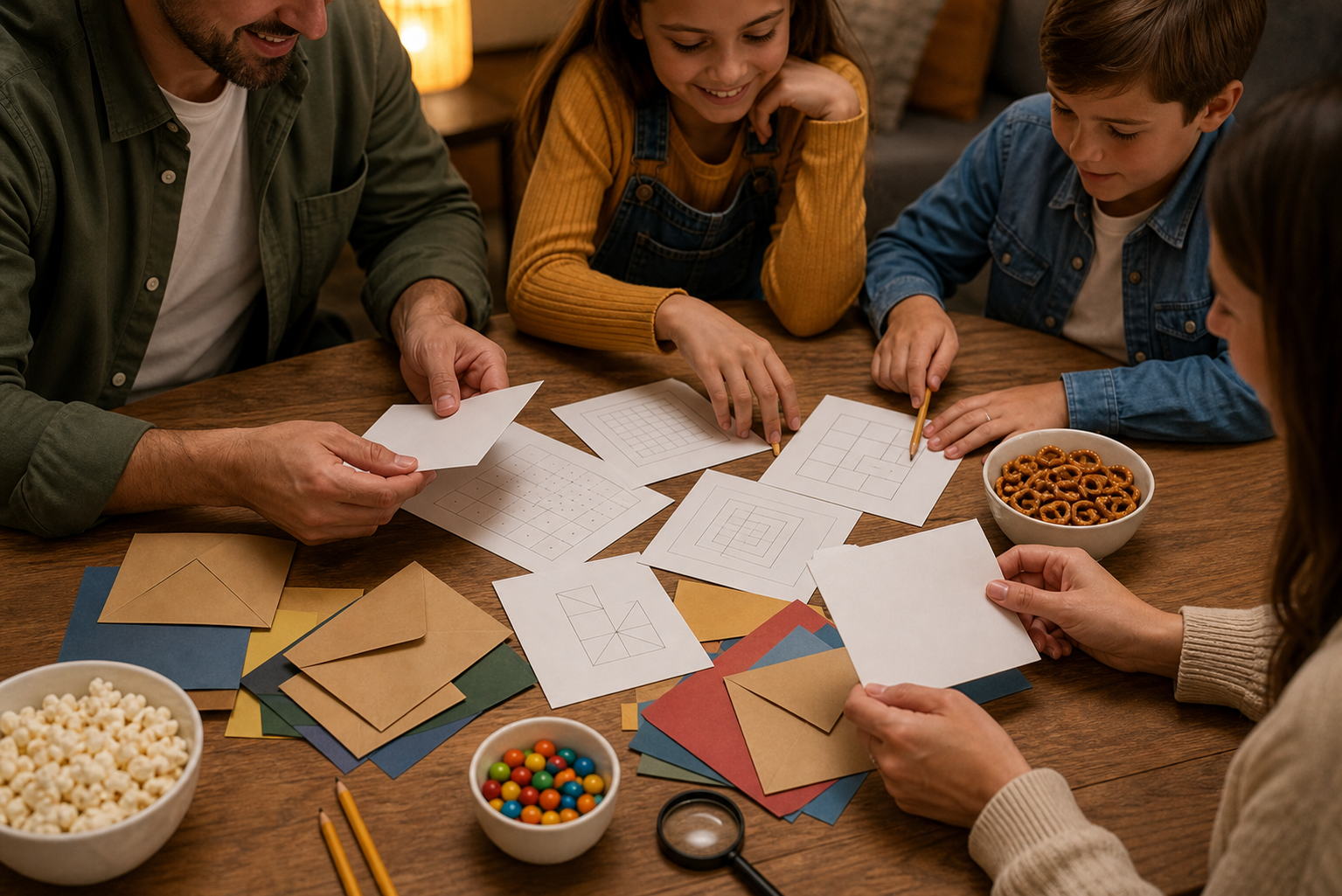


Back-to-school lunch feels simple until the school year actually starts. One table finishes fast. Another table is still waiting for trays. A younger sibling is done eating and ready to talk. A rainy day sends everyone indoors at once. That is exactly where a cafeteria puzzle pack can help. It gives schools and families a quiet paper-first option that fits the real gaps around lunch without turning the lunch period into another lesson.
The timing works right now. USDA keeps the National School Lunch Program front and center as a core school-year routine, while the American Academy of Pediatrics Family Media Plan, National PTA family resources, and U.S. Department of Education family-partnership guidance all support simple repeatable routines that help families and schools handle transitions with less friction. In practical terms, a short printable packet makes sense for supervised seated windows before cleanup, after lunch is finished, during rainy indoor lunch, in lunch bunch groups, and during after-school table resets.
One important note comes first. These pages work best when a school, teacher, aide, or family wants a quiet seated activity and local rules allow it. They are not for serving lines, active eating, walking through the cafeteria, or any moment when students need both hands free for food, cleanup, or movement. Think supervised table time before or after the meal, not during the busiest part of it.
Why a cafeteria puzzle pack works
Lunch periods create short waiting windows. Those windows are too short for a full game, too unstructured for some students to just sit comfortably, and often noisy enough that adults do not want to explain complicated rules. Short printable pages solve that problem because each page has one visible task, one small finish line, and one clear stopping point when the bell, cleanup call, or next transition arrives.
This angle also works for more than one setting. Families can reuse the same pages after school, on teacher-workday childcare days, during indoor recess spillover, in library homework rooms, or at the kitchen table before activities start. That makes the topic useful for parents, teachers, aftercare leaders, librarians, homeschool planners, and family activity buyers at the same time.
What makes a good lunch-table packet
The best packet is not the thickest packet. It is the one an adult can print quickly and hand over with one sentence of directions.
A strong packet usually keeps the pages broad and practical. Think trays, napkins, backpacks, lunchboxes, milk cartons, fruit cups, tables, cleanup bins, and school-day words instead of food-brand references or pages that depend on one exact cafeteria setup.
It also helps when the pages are black-and-white friendly, easy to solve on a table or clipboard, and flexible enough to work at home after school. If every page depends on color printing, lots of cutting, or a full twenty-minute block, the packet stops being useful for real lunch routines.
The 15 lunch-table games worth building first
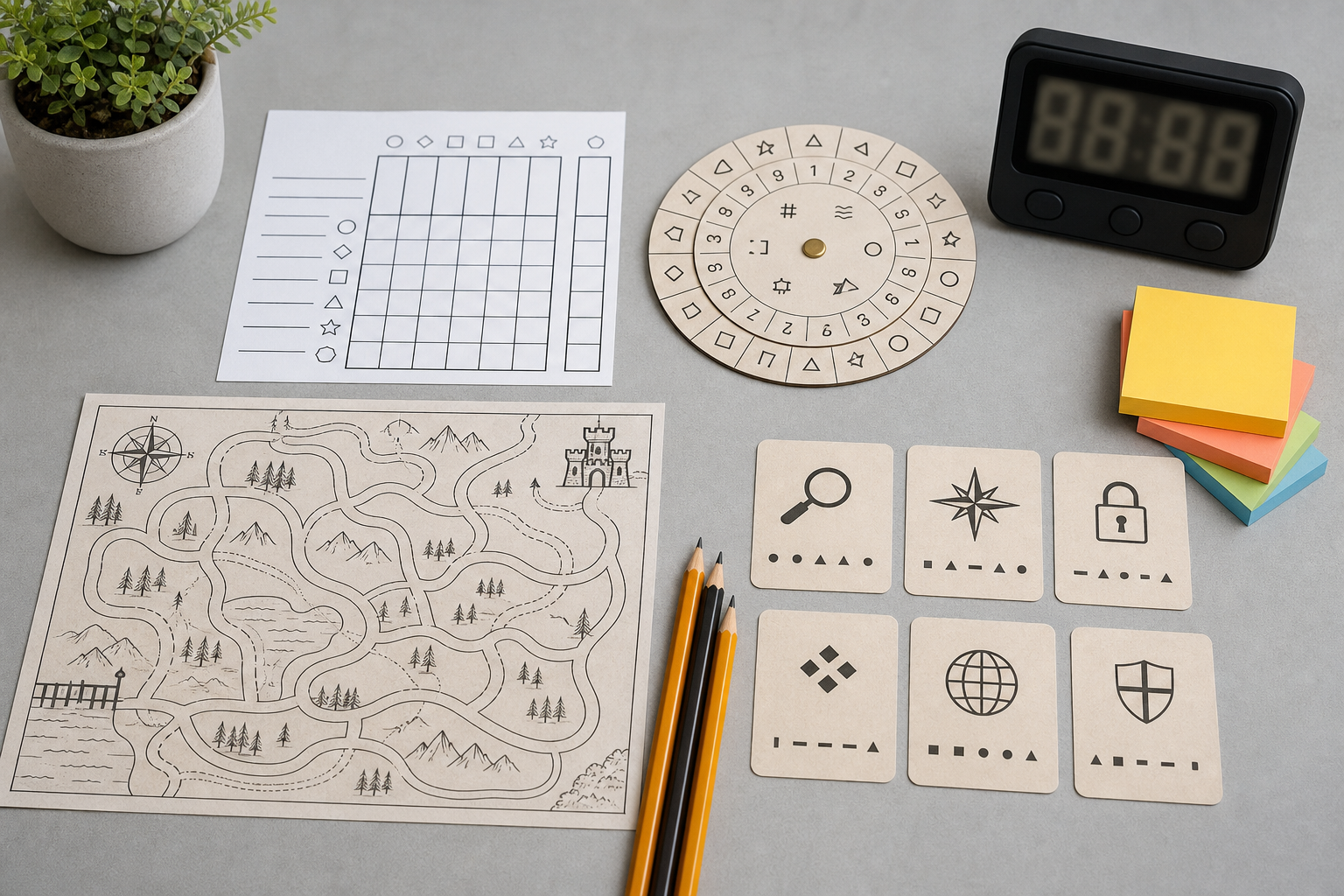
1. Cafeteria word search
Hide approachable words such as TRAY, LUNCH, TABLE, NAPKIN, FRUIT, SCHOOL, CLEAN, and FRIEND. This is the easiest opener for mixed ages and tired students who need a fast start.
2. Tray-to-trash maze
Draw a simple route from a lunch tray to the cleanup station without crossing blocked squares, puddles, or crowded table legs. A short maze works well when attention spans are low and time is limited.
3. Lunchbox category sort
Give a short list of school-day words and ask solvers to sort them into groups such as foods, table items, cleanup tools, and school supplies. This adds structure without slowing the room down.
4. Napkin symbol Sudoku
Use a mini 4x4 Sudoku with napkin, apple, water bottle, and lunch tray icons instead of numbers. Younger solvers get a clean logic page, while older students still have something worth solving.
5. Milk-carton pattern strip
Use repeating icons such as carton, apple, carton, apple, then add a slightly harder second row with tray, spoon, cup, and napkin shapes. Pattern pages are strong when someone wants a quick win before cleanup starts.
6. Spot-the-difference tray scene
Show two simple lunch-table scenes with a few changes such as one missing fork, one extra grape bunch, or one moved cup. This works across ages and still feels themed without a lot of reading.
7. LUNCH codebreaker
Use a simple A=1 code to reveal words such as LUNCH, SHARE, CLEAN, or TABLE. This adds challenge without adding extra supplies.
8. Table-talk clue card
Give two choices such as indoor lunch or picnic lunch, sandwich or pasta, library table or cafeteria table, then ask solvers to follow clue lines to the best answer. This keeps the page interactive without turning the table into a loud debate.
9. Fruit-and-tray tally page
Scatter broad lunch icons across the page and ask players to count each one, compare totals, and circle which appeared most. Younger solvers can complete it even if older students move on to harder pages.
10. Rebus menu strip
Use simple pictures and letters to suggest words such as TRAY, CUP, MAP, EAT, or REST. Rebus-style pages are easy to understand at a glance and travel well between school and home.
11. Lunch-table odd-one-out
Show four small groups of school lunch items and ask solvers to cross out the one that does not belong. This turns familiar objects into a quick reasoning task.
12. Lunch-bunch logic mini
Use three students, three seats, and three snack choices with a few short clues. Keep it short enough to solve in under three minutes so the page still works during real lunch interruptions.
13. First-next-last cleanup sequence
Give simple steps such as finish meal, clear trash, wipe space, line up and ask solvers to number them in order. This is especially useful for younger kids who like visible structure.
14. Cafeteria riddle row
Add five short riddles about napkins, trays, water bottles, lunch bags, and tables. This is strong for mixed-age groups because one person can read while others guess.
15. Final SHARE password page
Let answers from earlier pages reveal one letter each so the packet ends with SHARE, TABLE, CLEAN, or LUNCH. A final password page makes the packet feel complete instead of random.
Three quick mini examples
These are simple enough to build before the next rainy indoor lunch, lunch bunch group, after-school snack table, or family quiet block.
Example 1: short riddle
I hold your lunch, but I am not the table. What am I? Answer: a tray.
Example 2: simple code
Use A=1, B=2, C=3. 12 - 21 - 14 - 3 - 8. Answer: LUNCH.
Example 3: easy logic clue
Ava, Ben, and Noor each sat in one spot: window side, middle table, and end seat. Ava did not sit by the window. Ben did not sit at the end seat. Noor did not sit at the middle table. Answer: Ava sat at the middle table, Ben sat by the window, and Noor sat at the end seat.
How to package a lunch-table folder
A strong cafeteria packet usually needs only six to eight pages. Start with two fast pages such as the word search and pattern strip, add two visual pages such as the maze and spot-the-difference scene, include two slightly stronger pages such as the codebreaker and mini logic puzzle, then finish with one riddle page, one final password page, and one answer key.
That mix is enough for a cafeteria clipboard, teacher folder, lunch bunch binder, library homework bin, or kitchen-table backup without making the packet feel bulky. It also fits the same practical thinking behind the AAP Family Media Plan. When one visible paper-first option is already ready, adults do not have to improvise every time a child finishes lunch early or a rainy day changes the room plan.
How to use a cafeteria puzzle pack at school and at home
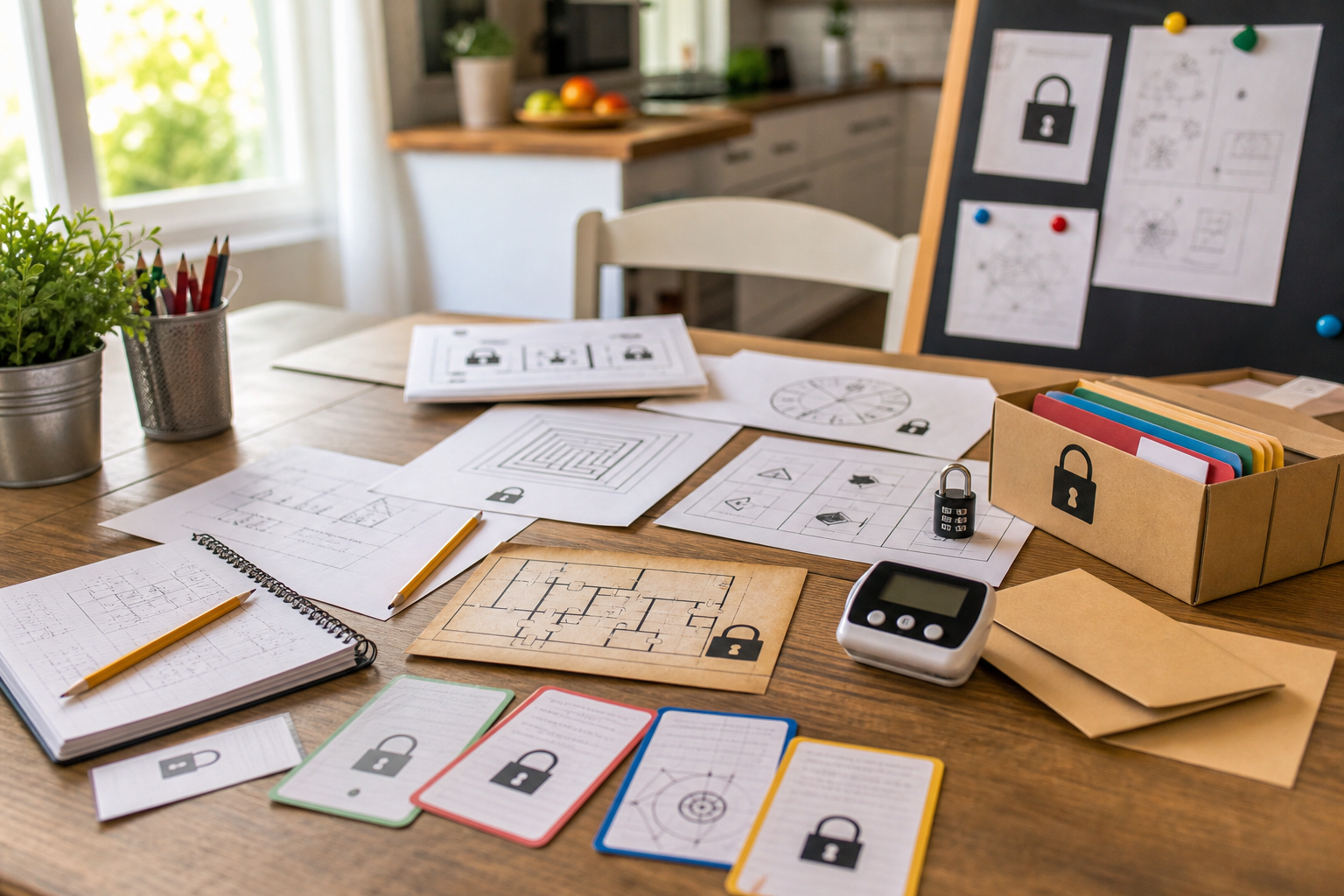
For schools, the packet works best in quiet seated windows where staff already wants a low-prep option: rainy indoor lunch, lunch bunch, counselor lunch groups, early finishers waiting for cleanup, indoor overflow tables, or supervised after-school snack time. Use the category sort, one visual page, one codebreaker, and the final password page as short rotations, then keep the answer key nearby so the packet stays self-directed.
For families, the same folder can come home for after-school snack time, homework warmups, carpool waits, sibling pickup windows, and kitchen-table calm-down blocks before practice or dinner. Because the theme is broad, it still works after the first week of school and can come back out whenever routines feel noisy.
Fast answers to common buyer questions
What ages work best for cafeteria printables?
Most packs work best for ages 6 and up, with easier count, maze, and pattern pages for younger solvers and code, logic, and rebus pages for older kids.
What supplies should the packet assume?
Assume only a printer, pencil, and optional clipboard or folder. If a page needs crayons, scissors, glue, or color matching to function, make that clear before anyone prints it.
How long should a lunch-table puzzle session last?
Five to ten minutes is usually enough for a lunch-period waiting window. Shorter sessions are easier to repeat than one long packet marathon.
Do these pages only work in a cafeteria?
No. The same packet should still work at home, in aftercare, in a library homework room, during rainy indoor lunch, at a homeschool co-op table, or during an after-school reset.
Common mistakes to avoid
Do not make every page depend on active eating, food handling, or one exact cafeteria menu.
Do not overload the packet with long trivia paragraphs before anyone gets to solve anything.
Do not assume a school has extra time for craft setup, color copies, or cutting stations in the middle of lunch.
Do not forget the practical goal. The printable should help adults start one calm activity quickly, not add a new layer of supervision.
Internal link suggestions
Pair this topic with the Before-School Puzzle Pack, the Back-to-School Morning Routine Puzzle Pack, the After-School Puzzle Pack, the Rainy Day Puzzle Pack, the Indoor Recess Puzzle Pack, and the free puzzles and games page. Readers who like this theme often want one more practical printable for the next school-day transition, family wait, or mixed-age table.
Call to action
Want more printable-style puzzle ideas that fit real school days, real family schedules, and real mixed-age tables? Browse PuzzlePlay Books for family-friendly puzzle guides, low-prep printables, free games, and practical screen-light activities that are easy to print and easy to reuse.